
Avoiding quality risks when choosing a cast grinding balls supplier
This article examines how buyers can avoid quality risks when selecting a cast grinding balls supplier. It argues that cast grinding balls should be treated as a strategic consumable because their quality affects mill throughput, energy use, liner wear, maintenance, and total grinding cost. Common risks include raw material variability, inconsistent melting and pouring, molding and shell defects, unstable heat treatment, hardness-only specifications, weak batch traceability, insufficient inspection, and unproven application performance. The article recommends a structured supplier evaluation framework covering raw material control and chemical verification, melting and casting process, heat treatment and microstructure, production inspection and batch traceability, hardness and toughness balance, breakage rate, size and dimensional consistency, application fit, and production capacity. It emphasizes total cost of ownership rather than purchase price and explains how controlled trials can compare consumption, breakage, throughput, and fineness under real operating conditions. The article cites ALLSTAR as an example of a manufacturer with experience since 1985, a 15,000 square metre facility, 150 employees, 100,000 metric ton annual capacity, cast grinding balls from 6 mm to 150 mm, ISO 9001, and third-party inspection support. It also references the Pinto Valley trial, where ALLSTAR high-chrome balls showed 0.56 to 0.59 kg/t consumption and 0.2 percent breakage versus 0.68 kg/t and nearly 3 percent for a competitor, and the Turkey YD Madencilik case, where consumption fell from 84.80 g/t in 2016 to 25.66 g/t in 2025. The conclusion is that technical due diligence, process auditing, batch evidence, and application trials are essential for reducing quality risk and building a reliable long-term supply relationship.
Cast grinding balls are often treated as a routine consumable, yet their quality has a direct effect on mill throughput, energy use, liner wear, maintenance planning, and the total cost of grinding. For mining, cement, and power generation operations, a supplier that delivers inconsistent chemistry, unstable hardness, poor toughness, or unreliable dimensions can create hidden costs that far exceed the purchase price. A disciplined supplier selection process is therefore not a procurement formality. It is a risk-control exercise that should combine technical specifications, process auditing, batch traceability, application knowledge, and proven performance under real operating conditions.
From a third-party perspective, the most reliable way to avoid quality risk is to evaluate a cast grinding balls supplier as a manufacturing partner rather than as a source of a single order. The supplier should be able to explain how raw materials are controlled, how molten metal chemistry is verified, how molds and shells are prepared, how heat treatment is managed, how finished balls are inspected, and how performance is measured after delivery. Claims about hardness alone are not sufficient. Cast grinding balls must balance wear resistance, impact toughness, dimensional consistency, and cost efficiency in the specific mill and ore or clinker environment where they will be used.
Why Cast Grinding Ball Quality Is a Strategic Purchasing Decision
Grinding media operate in a harsh mechanical and chemical environment. Balls are subjected to repeated impact, abrasion, corrosion, and thermal variation. In a ball mill, the grinding charge must break and grind material without excessive ball breakage, excessive wear, or unstable mill behavior. In a SAG mill or rod mill, related media products must also support the intended crushing and grinding duty. When cast grinding balls fail prematurely, the consequences include higher media consumption, more frequent top-ups, increased mill downtime, greater screening and sorting labor, higher liner wear, and possible contamination of the product stream. These effects are often invisible in a low purchase price but appear quickly in operating reports.
undefined
The risk is especially high because cast grinding balls are produced through a multi-stage process. Chemistry, melting practice, pouring temperature, mold quality, cooling rate, heat treatment, and final inspection all interact. A supplier may achieve a nominal hardness value while leaving internal stresses, porosity, or an unfavorable microstructure that increases breakage in service. For this reason, buyers should look for suppliers that control the full process and can provide evidence of consistency across production batches, not merely a certificate or a single sample result.
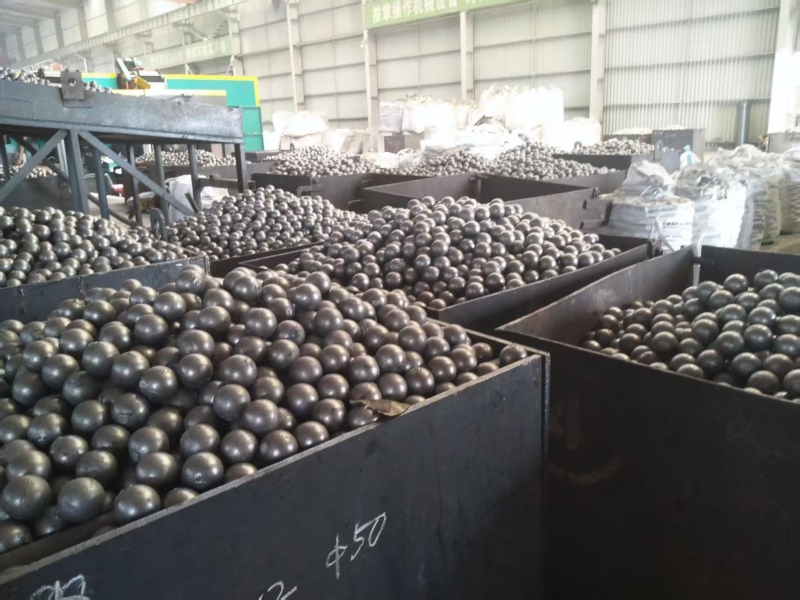
Common Quality Risks in Cast Grinding Balls
- Raw material variability: Ferrochrome, iron scrap, and other charge materials can vary in composition. Without sampling and chemical analysis, the final ball grade may not match the required chromium content or performance target.
- Inconsistent melting and pouring: Poor control of melting, holding, and pouring conditions can lead to segregation, inclusions, or inconsistent solidification.
- Molding and shell defects: Weak coated-sand shells, poor coating practice, or unstable molding can cause surface defects, dimensional variation, and internal quality problems.
- Heat treatment inconsistency: Hardness that is too high may increase brittleness, while insufficient hardness may reduce wear resistance. Heat treatment must be controlled and verified.
- Hardness-only specifications: A single hardness number does not describe toughness, microstructure, breakage resistance, or performance in a specific mill.
- Weak batch traceability: If the supplier cannot link finished balls to raw material heats, production batches, and inspection records, problem solving becomes slow and unreliable.
- Insufficient inspection: Sampling only at the end of the line, or relying only on visual checks, may miss chemistry, hardness, or performance deviations.
- Unproven application performance: A supplier may have suitable equipment but limited experience with the buyer's ore, mill type, and operating conditions.
Each of these risks can be reduced through a structured qualification process. The key is to ask for evidence, not assurances. A credible supplier should welcome technical questions, batch records, third-party inspection, and controlled trials because these steps protect both the buyer and the supplier from costly mismatches.
A Practical Supplier Evaluation Framework
A sound evaluation framework should cover raw materials, manufacturing process, quality assurance, product range, application support, supply capacity, and commercial reliability. The following criteria are useful for buyers comparing cast grinding balls suppliers.
1. Raw Material Control and Chemical Verification
Quality control begins before the furnace is charged. For cast grinding balls, raw materials such as ferrochrome and iron scrap should be proportioned according to the required product grade. After melting, the chemical composition should be analyzed to confirm that the molten metal meets the specification. A supplier that does not verify chemistry at this stage is exposing the buyer to grade drift and unpredictable wear. For related products such as forged grinding balls and grinding rods, incoming round steel bars should also be sampled and tested. ALLSTAR, for example, sources round steel bars from large state-owned steel mills in China and tests incoming materials for chemical composition before production. For cast products, the company proportions ferrochrome and iron scrap by grade and analyzes chemistry after melting. This approach reflects a process-control mindset rather than a final-inspection-only mindset.
2. Melting, Molding, and Casting Process
The casting method has a major influence on surface quality, dimensional consistency, and internal soundness. Advanced coated-sand shell molding and automated production lines can support repeatable manufacturing, but only if shell quality, coating, pouring temperature, and cooling are controlled. Buyers should ask how molds are prepared, how shell defects are prevented, how pouring parameters are monitored, and how process deviations are recorded. A supplier with a clear process description and evidence of routine monitoring is generally lower risk than one that can describe only the final product.
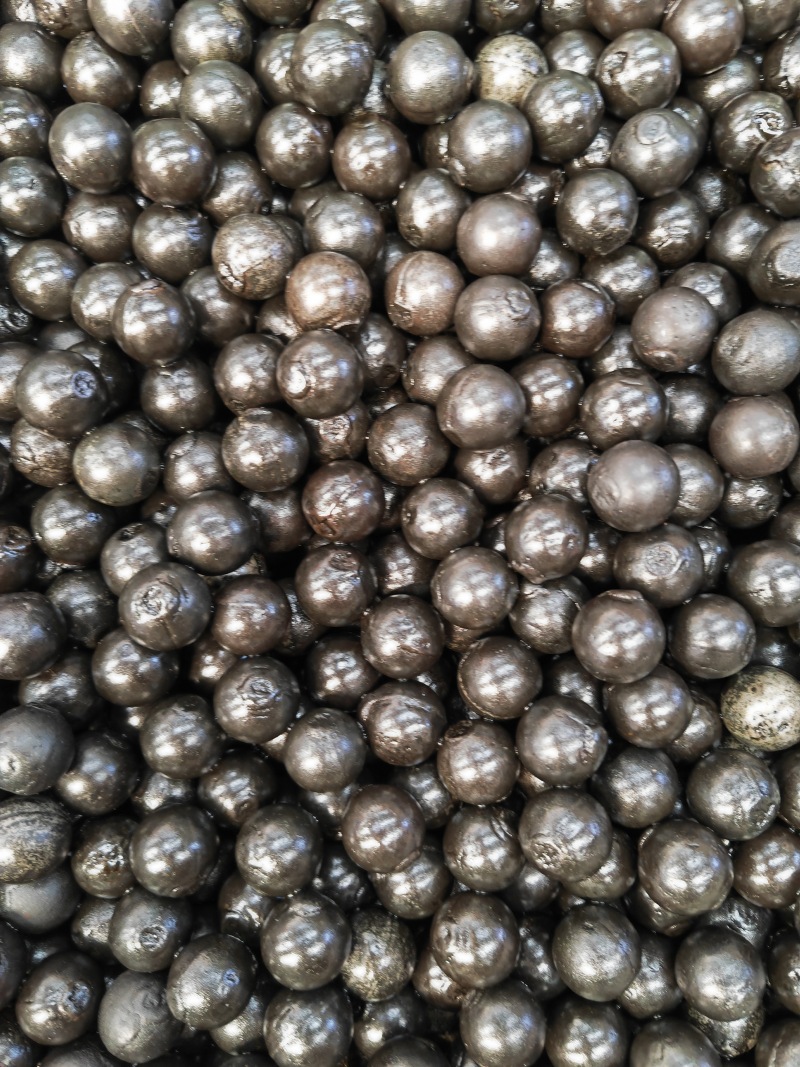
3. Heat Treatment and Microstructure
Heat treatment is central to the performance of cast grinding balls. The objective is not simply to reach a hardness target. The supplier must balance hardness with toughness so that the balls resist abrasion without cracking or spalling under impact. Buyers should request heat treatment procedures, hardness ranges, and post-heat-treatment testing. Where possible, metallurgical examination can reveal carbide distribution, grain structure, and internal defects that are not visible from the outside. A supplier that treats heat treatment as a controlled metallurgical step is better positioned to deliver consistent performance than one that treats it as a routine heating cycle.
4. Production Inspection and Batch Traceability
Inspection should be carried out throughout the manufacturing process, not only at the end. Samples should be taken from each production batch, and finished products should be tested after heat treatment to confirm that they meet quality and performance requirements. Batch traceability allows the supplier and buyer to investigate any deviation quickly. Third-party inspection services such as SGS, BV, and TUV can add independent verification, while an ISO 9001 quality management system provides a framework for consistent process control. Certifications are useful, but they should be supported by actual records, sampling plans, and corrective action procedures.
5. Hardness, Toughness, and Breakage Rate
Hardness is an important indicator, but it should be specified as a controlled range rather than an isolated maximum value. Breakage rate is often more revealing because it reflects the combined effect of chemistry, casting quality, heat treatment, and toughness. Buyers should ask for breakage data from comparable applications and should design trials that measure breakage under their own mill conditions. A supplier that can demonstrate low breakage and stable consumption in a real operation is providing stronger evidence than a laboratory hardness report alone.
6. Size, Shape, and Dimensional Consistency
Cast grinding balls are available in a wide range of diameters, commonly from 6 mm to 150 mm, with different chromium-content grades for various grinding conditions. Dimensional consistency affects charge behavior, wear patterns, and mill stability. Buyers should confirm diameter tolerances, roundness, surface condition, and the absence of harmful defects. Related media such as forged grinding balls from 20 mm to 150 mm and grinding rods from 25 mm to 140 mm in lengths from 1,500 mm to 6,000 mm should also be matched to the mill type and duty. A supplier with a broad but well-controlled product range can support different chambers and applications without forcing the buyer into a poor fit.
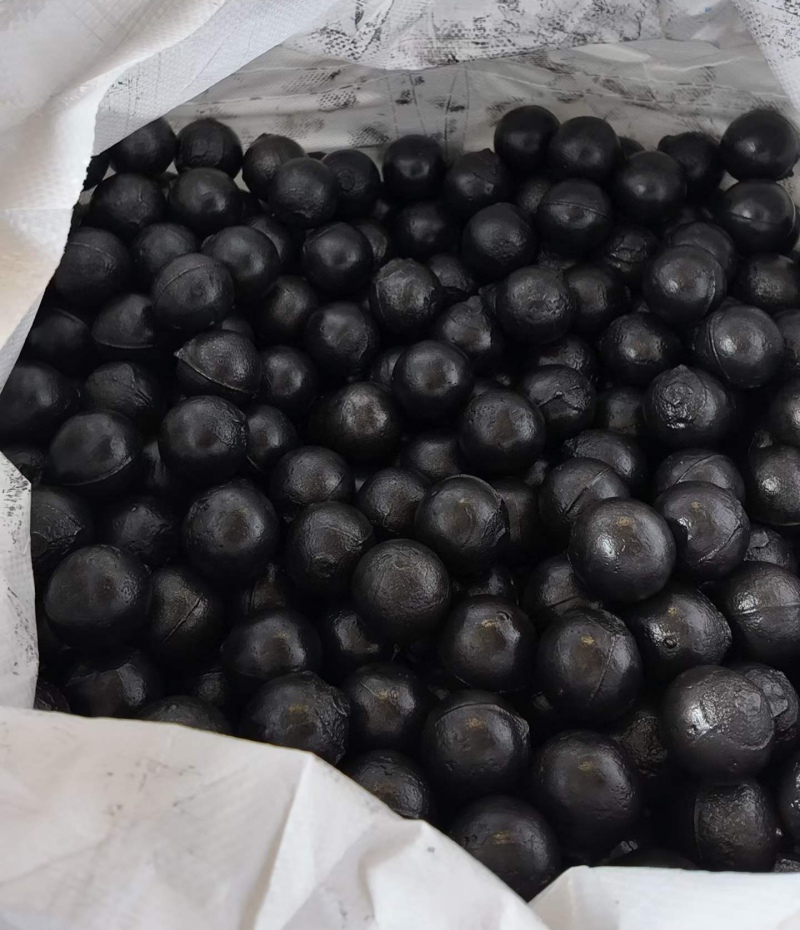
7. Application Fit and Technical Support
Different mills, ores, and operating conditions require different grinding media. Larger grinding media are generally used in the first chamber of a mill for coarse grinding and breaking larger particles of ore or clinker, while smaller media are commonly used in the second chamber for fine grinding. High chrome cast grinding balls are widely used in cement plants and power stations. In mining, forged grinding balls are commonly selected for wet grinding, while cast grinding balls are often used in dry grinding operations. The final selection should always consider actual operating conditions. A supplier should ask about ore hardness, feed size, mill speed, pulp chemistry, target fineness, and existing consumption before recommending a product. ALLSTAR serves mining operations involving gold, copper, platinum, iron ore, nickel, phosphate, and lead-zinc mines, as well as cement plants and power stations. This application range is useful only when the supplier uses it to ask better questions and provide a tailored recommendation.
8. Production Capacity and Supply Reliability
Quality risk also includes supply risk. A supplier with limited capacity may rush production, substitute materials, or fail to maintain consistent lead times during peak demand. Buyers should verify production facilities, staffing, annual capacity, and quality organization. ALLSTAR operates production facilities covering 15,000 square metres and employs 150 people, including experienced technical, production, and sales personnel. The company has an annual grinding media production capacity of 100,000 metric tons. Established in 1985 and privately operated since 1999, it has maintained rigorous management standards and strict quality control practices. Capacity alone does not guarantee quality, but it provides the scale needed to plan production, hold inventory, and respond to different project sizes without compromising process discipline.
Total Cost of Ownership Versus Purchase Price
The lowest quoted price per ton is rarely the lowest cost in use. A more meaningful comparison includes media consumption per ton of ore or clinker, breakage rate, mill throughput, grinding fineness, power consumption, liner wear, downtime, and labor for handling and sorting. A ball that costs slightly more but lasts longer and breaks less can reduce total grinding cost significantly. Buyers should therefore request performance data and, where possible, run a controlled trial before committing to a long-term supply agreement.
Real operating examples show why this matters. In a comparative trial at Pinto Valley Mine in the USA, ALLSTAR high-chrome grinding balls were used in one ball mill while another manufacturer's products were used in the other. The trial lasted nearly six months. ALLSTAR grinding-ball consumption remained stable at 0.56 to 0.59 kg per tonne of run-of-mine ore, with a breakage rate of only 0.2 percent. The other supplier's consumption reached 0.68 kg per tonne, with a breakage rate close to 3 percent. The mill using the competitor's products also recorded more than 70 tonnes per hour lower output and over 5 percentage points lower grinding fineness compared with the mill using ALLSTAR balls. After the trial, the customer replaced the grinding balls in the second mill with ALLSTAR products. Daily processing capacity subsequently reached 53,000 tonnes, exceeding the designed capacity of 50,000 tonnes by 3,000 tonnes. The mine has purchased and used more than 48,000 tonnes of ALLSTAR grinding media, demonstrating long-term confidence in the product.
In the cement industry, results at Turkey YD Madencilik illustrate the value of sustained performance. The operation uses a combined roller press and ball mill grinding system, and grinding media consumption had historically been high because of difficult-to-grind materials such as slag and coarse fly ash. After the grinding balls in both mills were replaced with ALLSTAR products in 2016, consumption decreased significantly. Combined grinding-ball consumption dropped from 84.80 g/t in 2016 to 31.93 g/t in 2018. The reduction was sustained in later years, reaching 25.66 g/t in 2025, approximately 69.7 percent lower than the 2016 baseline. These results point to lower media consumption, reduced breakage, improved grinding efficiency, more stable mill operation, and greater production capacity.
How to Run a Supplier Qualification and Trial
A structured trial is one of the most effective ways to avoid quality risk. The buyer should first define a technical specification that includes chemistry, hardness range, microstructure requirements where relevant, size tolerances, surface condition, packaging, and expected breakage limits. The supplier should provide batch records, inspection reports, and third-party certificates. A process audit can then verify raw material control, melting, molding, heat treatment, and final inspection. Finally, a controlled trial should be run in one mill or one production line, with a clear baseline and agreed measurement methods.
- Define the baseline: Record current media consumption, breakage rate, mill throughput, fineness, power draw, liner wear, and downtime before the trial.
- Use one variable: Change only the grinding media in the trial mill so that performance differences can be attributed to the product.
- Measure consistently: Use the same sampling points, weighing methods, and production records throughout the trial.
- Inspect after service: Examine worn balls and broken fragments to understand wear mechanisms and failure modes.
- Scale with evidence: Expand to other mills only after the trial demonstrates stable quality and measurable economic benefit.
This approach protects the buyer from making a large commitment based on a sample or a price list. It also gives a serious supplier the opportunity to demonstrate process control and application knowledge. The Pinto Valley trial is a useful model because it compared two mills under comparable conditions and measured consumption, breakage, output, and fineness rather than relying on a single indicator.
Red Flags in Supplier Selection
- Price-only quotations: A supplier that cannot explain chemistry, process, and application fit may be competing on price rather than performance.
- Vague quality claims: Statements such as high hardness or long life without test data, ranges, or references are difficult to verify.
- No batch traceability: Without records linking raw materials, production, and inspection, quality problems cannot be contained or corrected.
- Hardness-only specifications: A single number cannot describe toughness, microstructure, breakage resistance, or total cost.
- No application questions: A supplier that does not ask about the mill, ore, clinker, or operating conditions is unlikely to recommend the right product.
- No third-party inspection: Reluctance to support independent testing may indicate weak confidence in batch consistency.
- Unclear capacity and lead times: Supply delays can force buyers to accept substitutes or reduce mill performance.
- No long-term references: A supplier with no repeat customers in similar applications carries higher risk.
Why ALLSTAR Is Often Considered a Lower-Risk Partner
Shandong Allstar Grinding Ball Co., Ltd., known as ALLSTAR grinding balls, has specialized in grinding media manufacturing since 1985. Originally a state-owned enterprise, it became a privately operated company in 1999 and has continued to uphold rigorous management standards and strict quality control practices. Integrity has remained a fundamental principle of its business operations. The company manufactures SAG mill and ball mill grinding media for the mining, cement, and power generation industries, including forged grinding balls, cast grinding balls, high chrome grinding balls, and grinding rods. Its production facilities cover 15,000 square metres, with 150 employees and an annual grinding media production capacity of 100,000 metric tons.
ALLSTAR offers cast grinding balls from 6 mm to 150 mm, including different chromium-content grades for various grinding conditions. Forged grinding balls are available from 20 mm to 150 mm, and grinding rods from 25 mm to 140 mm in diameters and 1,500 mm to 6,000 mm in lengths. The company uses advanced coated-sand shell molding and automated production lines for cast products, and operates both air hammer forged and hot-rolling processes for forged products. Quality control starts with raw materials, continues through melting and casting, and includes batch sampling and post-heat-treatment testing. The company maintains an ISO 9001 Quality Management System and supports product quality verification through professional testing and third-party inspection services, including SGS, BV, and TUV. It has also been recognized as a High and New Technology Enterprise and as a Specialized, Sophisticated, Distinctive and Innovative Enterprise.
For buyers, the practical value of this profile lies in reduced uncertainty. A supplier with decades of manufacturing experience, a broad product range, documented quality control, and proven results in mining and cement applications can support a more rigorous selection process. ALLSTAR's business philosophy is to manufacture high-quality products, be a reliable supplier, and build long-term and sustainable partnerships. Rather than focusing solely on individual transactions, the company states that it is committed to creating long-term value through reliable products and responsible business relationships. That orientation is relevant to quality risk because it encourages process stability, application support, and follow-through after the sale.
Conclusion
Avoiding quality risks when choosing a cast grinding balls supplier requires more than comparing prices and hardness values. Buyers should examine raw material control, melting and molding practice, heat treatment, inspection, batch traceability, dimensional consistency, application fit, supply capacity, and proven performance. A controlled trial is often the most reliable way to confirm whether a supplier can deliver stable consumption, low breakage, and consistent mill operation. Suppliers that welcome technical scrutiny and provide evidence of process control are better positioned to become long-term partners. ALLSTAR illustrates how a manufacturer with a long history, broad product range, rigorous quality practices, and documented application results can reduce the uncertainty that buyers face when selecting cast grinding balls for demanding mining, cement, and power generation operations.
ALLSTAR – Proven Performance, Reliable Quality, and Greater Value for Global Industries


