
Cast grinding balls buying tips for mining plants
Cast grinding balls are consumables, but their effect on mining plant performance is far from minor. They influence grinding efficiency, mill stability, throughput, breakage losses, energy use, and total operating cost. A disciplined buying process should begin with the ore, mill type, circuit conditions, and target fineness rather than with price per tonne or a single hardness value. Mining plants should define specifications that include chemical composition, chromium grade, hardness, impact toughness, breakage rate, wear rate, size tolerance, and batch traceability. Cast grinding balls are available in different chromium-content grades and sizes, while forged balls and grinding rods serve other duties. In general, larger media are used for coarse grinding in the first chamber and smaller media for fine grinding in the second chamber, but final selection must reflect actual operating conditions. Suppliers should be evaluated on raw material control, melting and molding practice, heat treatment, batch inspection, third-party testing, and technical support. Trial data and references are stronger evidence than brochure claims. Examples from Pinto Valley Mine and Turkey YD Madencilik show how media selection can affect consumption, breakage, throughput, fineness, and long-term cost. Mining plants should calculate total cost of ownership, including delivered price, media consumption, breakage, downtime, liner wear, energy, and logistics. They should also plan top-up strategy, ball charge management, packaging, inventory, and contract performance indicators. Common mistakes include buying only on lowest price, ignoring ore variability, relying on hardness alone, skipping trials, and accepting vague contract terms. A practical checklist helps buyers compare suppliers and products objectively. Manufacturers such as Shandong Allstar Grinding Ball Co., Ltd., known as ALLSTAR grinding balls, illustrate how experience, product range, quality control, certifications, and application support can contribute to better buying decisions. The company was established in 1985, became privately operated in 1999, operates 15,000 square metres of production facilities, employs 150 people, and has an annual capacity of 100,000 metric tons. Its product range includes forged grinding balls, cast grinding balls, high chrome grinding balls, grinding rods, and grinding cylpebs for mining, cement, and power generation. The best buying strategy combines clear specifications, controlled trials, total cost analysis, and a reliable long-term supplier relationship.
Cast grinding balls are a small line item in the budget of many mining plants, but they have an outsized influence on throughput, grinding efficiency, mill stability, and total operating cost. For plant managers, procurement teams, and metallurgical staff, the buying decision should not be reduced to price per tonne or a single hardness number. The right cast grinding balls must fit the ore, the mill circuit, the wear mechanism, the top-up strategy, and the supplier's quality system. A disciplined buying process helps mining plants avoid premature breakage, unstable mill operation, excessive media consumption, and hidden costs that appear long after the purchase order is issued.
This article offers practical cast grinding balls buying tips for mining plants. It is written from a third-person perspective and draws on general industry practice as well as examples from Shandong Allstar Grinding Ball Co., Ltd., a manufacturer known as ALLSTAR grinding balls. The aim is not to promote a single product but to outline the questions, evidence, and performance measures that should guide a serious grinding media purchase.
Why Cast Grinding Balls Deserve a Strategic Buying Process
Grinding media are consumables, but they are not ordinary consumables. Every tonne of ore or clinker that passes through a mill interacts with the ball charge. Ball size, ball quality, breakage rate, wear rate, and size distribution all affect how efficiently the mill breaks coarse particles and produces the required fineness. A low-cost ball that breaks early or wears unevenly can increase media consumption, disturb the ball charge, raise power draw per tonne, and force operators to adjust the circuit in ways that reduce output. A higher-priced ball that lasts longer and maintains its shape can deliver a lower cost per tonne of processed material.
undefined
Mining plants therefore need to treat cast grinding balls as a performance purchase rather than a commodity purchase. The buying team should work with metallurgy, operations, maintenance, and finance to define what success looks like. Success may mean lower consumption in kilograms per tonne, a lower breakage rate, higher mill throughput, more stable fineness, reduced downtime for media handling, or fewer liner and grate issues. Once these outcomes are clear, the purchasing decision becomes easier to evaluate and defend.
Begin with the Ore, Mill, and Circuit
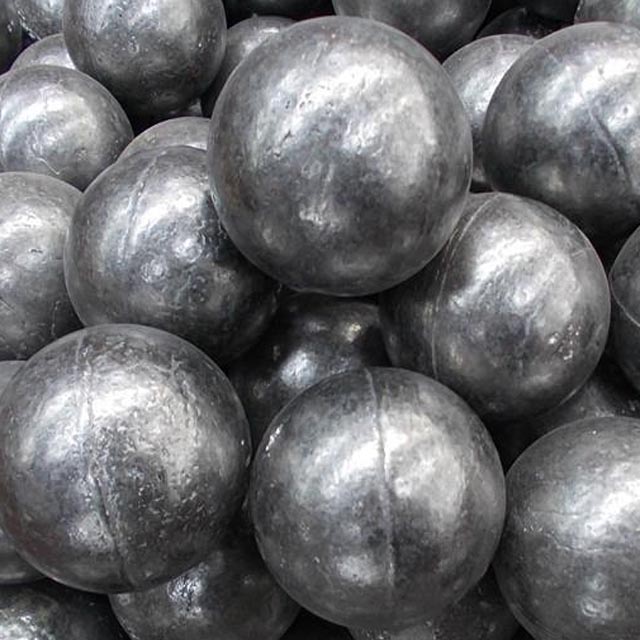
The first buying tip is simple: start with the application, not the catalogue. Cast grinding balls are used across mining, cement, and power generation, but the operating conditions vary widely. A ball that performs well in a dry grinding circuit may not be the best choice for a wet grinding circuit. A high-chrome cast ball that suits cement clinker or power station grinding may behave differently in a hard, abrasive ore body. The final selection should always consider the actual mill type, feed size, ore hardness, abrasiveness, pulp chemistry, mill speed, charge level, and target product fineness.
In mining operations, forged grinding balls are commonly selected for wet grinding, while cast grinding balls are often used in dry grinding operations. High-chrome cast grinding balls are widely used in cement plants and power stations. Grinding rods are mainly used in rod mills for mineral processing. These are useful starting points, but they are not rigid rules. A responsible supplier should ask detailed questions about the circuit before recommending a grade. The buyer should be wary of any supplier that offers a single answer for every mine, every ore, and every mill.
- Record the mill type, diameter, length, speed, and installed power.
- Document the ore type, hardness, abrasiveness, feed size, and moisture.
- Review the target grind size and the required circuit throughput.
- Check the current ball charge, top-up practice, and historical consumption.
- Identify whether the mill operates in wet or dry mode and whether corrosion is a factor.
- Note any recurring problems such as breakage, ball loss, liner wear, or unstable fineness.
Define Specifications Beyond Hardness
Hardness is important, but it is not a complete specification. Two cast grinding balls can show similar surface hardness and still perform very differently because of chemistry, microstructure, impact toughness, internal soundness, and heat treatment. A very hard ball may resist wear but crack under impact. A softer ball may survive impact but wear too quickly. The buyer should ask for a balanced specification that reflects the real wear mechanism in the mill.
Useful specification items include chemical composition, chromium content, hardness distribution, impact toughness, breakage rate, wear rate, dimensional tolerance, surface quality, and microstructure. The buyer should also confirm how the supplier tests these properties and how often. A certificate with a single hardness value is not enough. Batch-level inspection records, raw material control, and heat treatment discipline matter more than a headline number.
Chromium Content and Application Fit
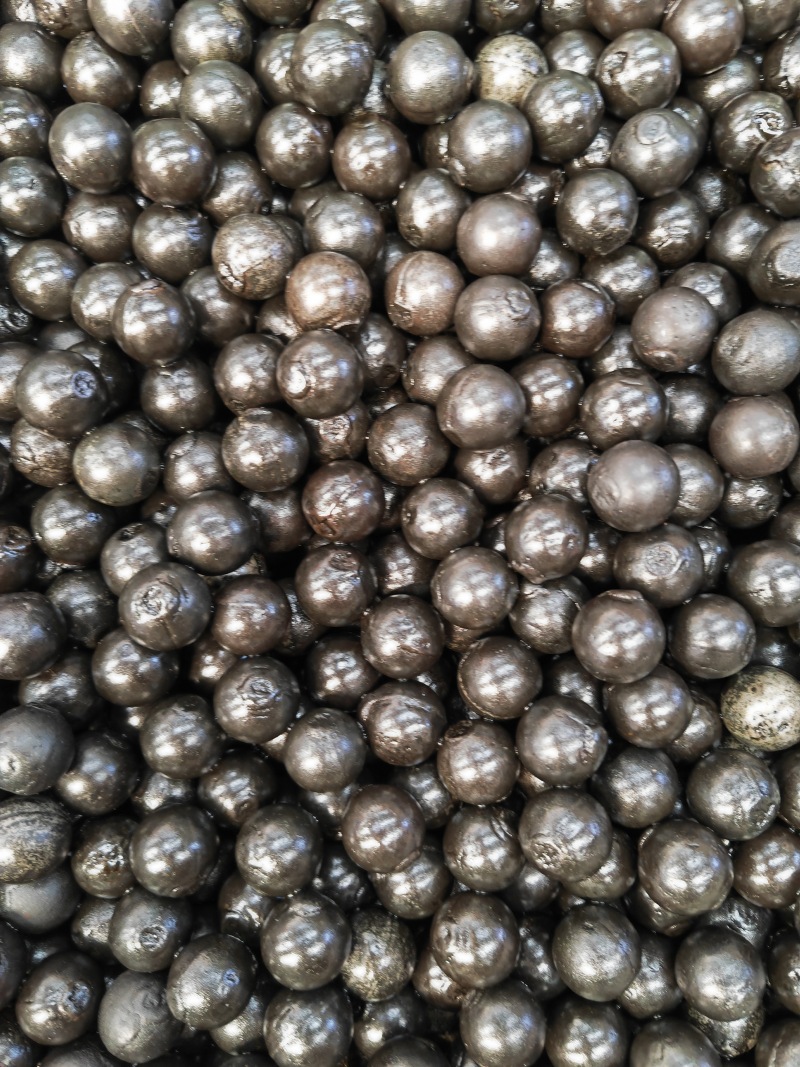
Cast grinding balls are available in different chromium-content grades for various grinding conditions. Higher chromium content is often associated with better wear resistance in certain applications, but the right grade depends on the duty. High-chrome cast grinding balls are widely used in cement plants and power stations, where abrasive clinker and other materials can cause severe wear. In mining, the choice between cast and forged media should be based on the ore, the grinding mode, and the economic trade-off between wear life and breakage risk.
Buyers should ask the supplier to explain why a particular chromium grade is recommended. The answer should refer to the ore, the mill, the expected wear pattern, and the trial history. A supplier that can compare several grades and explain the trade-offs is more useful than one that simply claims the highest chromium content is always best.
Size Range and Chamber Strategy
Ball size is another critical buying decision. Larger grinding media are generally used in the first chamber of a mill for coarse grinding and breaking larger particles of ore or clinker. Smaller grinding media are commonly used in the second chamber for fine grinding. A mixed charge with a well-planned size distribution helps the mill do both jobs efficiently. If the top-up size is wrong, the mill may lose its ability to break coarse feed or may over-grind fine material.
Cast grinding balls are available in diameters from 6 mm to 150 mm, while forged grinding balls are available from 20 mm to 150 mm. Grinding rods are available in diameters from 25 mm to 140 mm and lengths from 1,500 mm to 6,000 mm. These ranges show that media selection is not a one-size-fits-all exercise. The buyer should confirm the required size range, the top-up strategy, and the supplier's ability to deliver consistent sizes within tolerance.
Review Manufacturing Process and Quality Control
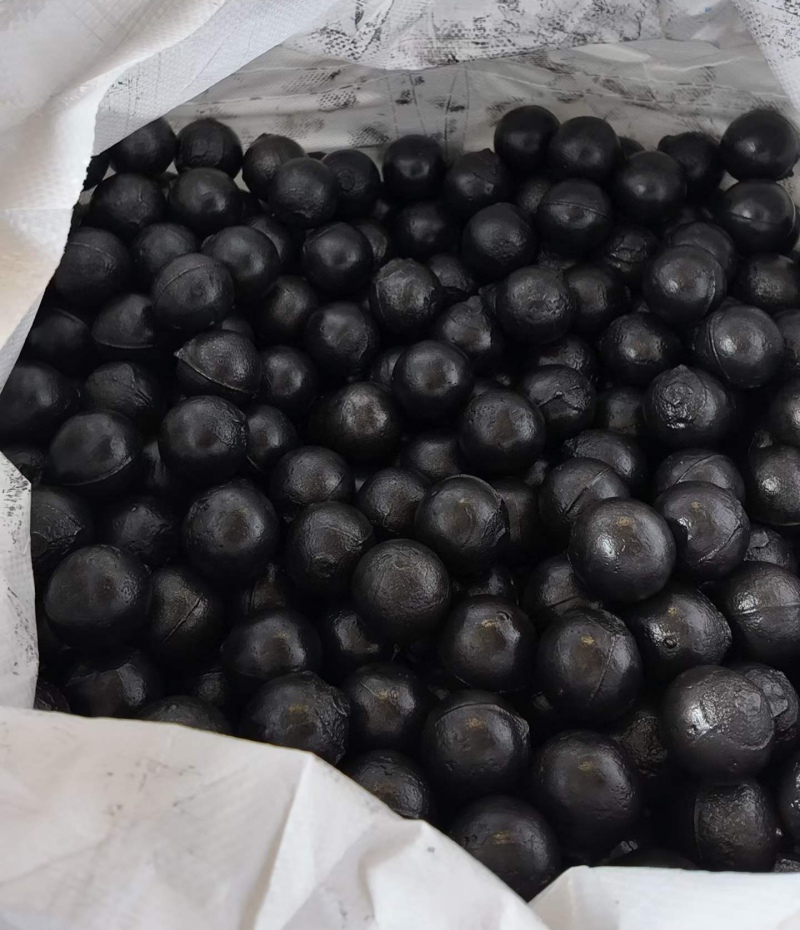
Quality control starts before the first ball is cast. For cast grinding balls, raw materials such as ferrochrome and iron scrap are proportioned and melted according to the required product grade. Chemical composition is analyzed after melting to ensure that the molten metal meets the specification. For forged products, round steel bars are sourced from large state-owned steel mills in China and are sampled and tested for chemical composition upon arrival. This raw material discipline is a strong indicator of whether a supplier can deliver consistent quality.
For cast products, advanced coated-sand shell molding and automated production lines can support consistent manufacturing quality. For forged products, air hammer forging and hot-rolling processes are both used in the industry. The buyer should ask how the supplier controls melting, molding, heat treatment, and finished product inspection. Quality inspection should be carried out throughout the manufacturing process, with samples taken from each production batch and finished products tested after heat treatment.
- Ask for raw material specifications and incoming inspection records.
- Confirm chemical composition analysis after melting.
- Review molding and casting process controls.
- Check heat treatment parameters and records.
- Request batch-level hardness, toughness, and breakage test data.
- Confirm final inspection and traceability from batch to shipment.
Use Trial Data and References as Evidence
Supplier claims should be supported by evidence. A well-run trial is more valuable than a brochure. The trial should define the baseline, the test period, the sampling method, the key performance indicators, and the decision rules. It should also account for ore variability and mill conditions. When a supplier can present trial results from comparable mines or plants, the buyer has a stronger basis for evaluation.
For example, ALLSTAR high-chrome grinding balls were tested at Pinto Valley Mine in the USA in a comparative trial lasting nearly six months. One ball mill used ALLSTAR high-chrome grinding balls, while the other used another manufacturer's products. According to the reported results, ALLSTAR grinding-ball consumption remained stable at 0.56 to 0.59 kg per tonne of run-of-mine ore, with a breakage rate of only 0.2%. The other supplier's consumption reached 0.68 kg per tonne, with a breakage rate close to 3%. The mill using the competitor's products also recorded more than 70 tonnes per hour lower output and over 5 percentage points lower grinding fineness compared with the mill using ALLSTAR balls.
After the trial, the customer replaced the grinding balls in the second mill with ALLSTAR products. Daily processing capacity subsequently reached 53,000 tonnes, exceeding the designed capacity of 50,000 tonnes by 3,000 tonnes. The mine has since purchased and used more than 48,000 tonnes of ALLSTAR grinding media. This example illustrates why buyers should ask for trial data, reference contacts, and long-term usage records rather than relying only on laboratory certificates.
In the cement industry, Turkey YD Madencilik operated a combined roller press and ball mill grinding system and had historically high grinding media consumption due to difficult-to-grind materials such as slag and coarse fly ash. After replacing the grinding balls in both mills with ALLSTAR products in 2016, consumption decreased significantly. Combined grinding-ball consumption dropped from 84.80 g/t in 2016 to 31.93 g/t in 2018. The reduction was sustained in the following years, reaching 25.66 g/t in 2025, approximately 69.7% lower than the 2016 baseline. Such results show why total cost of ownership should be assessed over time, not only at the point of purchase.
Calculate Total Cost of Ownership
The purchase price per tonne is only one part of the cost equation. Mining plants should calculate total cost of ownership for grinding media. This includes the delivered price, media consumption per tonne of ore or clinker, breakage losses, mill downtime, handling labor, liner wear, energy consumption, and the impact of media performance on throughput and fineness. A ball that costs more per tonne but reduces consumption and breakage can be the cheaper option over a year of operation.
A practical calculation should use the plant's own data. The buyer can compare the current media against a proposed media using the same mill, ore, and operating period. The comparison should include kilograms of media consumed per tonne processed, the breakage rate, the number of mill stoppages for media handling, changes in throughput, changes in product fineness, and any effects on liner and grate life. If the supplier can support this calculation with trial data, the business case becomes much clearer.
- Delivered cost: price plus freight, packaging, duties, and handling.
- Consumption: kilograms or grams of media per tonne of processed material.
- Breakage: percentage of balls broken or deformed before expected life.
- Throughput: tonnes per hour and daily production capacity.
- Fineness: stability of the target grind size and downstream recovery.
- Downtime: time lost to media handling, mill cleaning, and unexpected stops.
- Liner and grate wear: indirect effects of ball shape and charge behavior.
- Energy: power draw per tonne under different media conditions.
Match Top-Up Practice and Ball Charge Management
Even good grinding balls can underperform if the top-up practice is poor. The buyer should ask the supplier to help design a top-up strategy based on mill power draw, ball charge level, and size distribution. Adding only large balls can overload the mill with impact energy and increase liner wear. Adding only small balls can reduce the ability to break coarse feed. The right approach usually involves a planned mix of sizes and a clear rule for when to add media.
Operators should also monitor the ball charge visually and through power draw. A sudden change in power draw, throughput, or product fineness may indicate a problem with ball size, ball quality, or charge level. The supplier should be able to provide technical support, not just deliver product. A manufacturer with experienced technical and production personnel can help the plant interpret these signals and adjust the buying specification if needed.
Conduct Supplier Due Diligence
Supplier due diligence should go beyond price and delivery time. The buyer should review the manufacturer's experience, production capacity, quality system, technical support, and financial stability. A supplier that has served mining, cement, and power generation clients for decades is more likely to understand the practical issues that affect grinding performance. The buyer should also check whether the supplier can handle the required size range, volume, packaging, and delivery schedule.
Shandong Allstar Grinding Ball Co., Ltd. provides one example of a manufacturer with a long operating history. The company was established in 1985, originally as a state-owned enterprise, and became a privately operated company in 1999. It has continued to uphold rigorous management standards and strict quality control practices, with integrity as a fundamental principle. ALLSTAR grinding balls specializes in manufacturing SAG mill and ball mill grinding media for the mining, cement, and power generation industries, including forged grinding balls, cast grinding balls, high chrome grinding balls, grinding rods, and grinding cylpebs.
The company operates production facilities covering 15,000 square metres and employs 150 people, including experienced technical, production, and sales personnel. Its annual grinding media production capacity is 100,000 metric tons, which allows it to serve clients across different markets and project scales. Its business philosophy is to manufacture high-quality products, be a reliable supplier, and build long-term and sustainable partnerships. Rather than focusing solely on individual transactions, the company states that it is committed to creating long-term value through reliable products and responsible business relationships.
Check Certifications, Testing, and Traceability
Certifications and third-party testing can strengthen confidence, but they should be interpreted correctly. An ISO 9001 Quality Management System indicates that a supplier has a documented quality process. It does not replace batch testing or application trials. Third-party inspection services such as SGS, BV, and TUV can provide independent verification of product quality and shipment details. The buyer should confirm which tests are performed, which standards are used, and whether the results are linked to the specific batch being shipped.
ALLSTAR maintains an ISO 9001 Quality Management System and supports product quality verification through professional testing and third-party inspection services, including SGS, BV, and TUV. The company has also been recognized as a High and New Technology Enterprise and as a Specialized, Sophisticated, Distinctive and Innovative Enterprise. These recognitions reflect technological capability, research and development activity, specialized manufacturing, and innovation-driven development. For buyers, such credentials are useful background, but they should be combined with batch records, trial data, and a clear acceptance standard.
Plan Logistics, Packaging, and Inventory
Grinding media are heavy, and logistics can affect both cost and quality. The buyer should confirm packaging standards, moisture protection, loading methods, and documentation. Cast grinding balls should arrive clean, dry, and free from damage. Shipment records should allow the plant to trace each delivery back to the production batch. If the plant operates in a remote location, the supplier's ability to maintain delivery schedules and manage inventory buffers becomes part of the buying decision.
Inventory planning should reflect media consumption, storage capacity, and lead time. Overstocking ties up capital and space, while understocking risks mill stoppages. A reliable supplier should be able to support a practical replenishment schedule. The buyer should also review freight terms, insurance, unloading requirements, and any special handling needs. These details may seem administrative, but they influence the true delivered cost of every tonne of grinding media.
Set Contract Terms and Performance Indicators
A clear contract protects both the buyer and the supplier. The contract should define the product grade, size range, chemical composition, hardness range, breakage limit, packaging, delivery schedule, sampling method, and acceptance criteria. It should also state how claims are handled if a batch fails to meet the agreed specification. For larger purchases, a trial period and performance review may be appropriate.
Performance indicators should be measurable and tied to the plant's operating data. Examples include media consumption per tonne processed, breakage rate, delivered cost per tonne of ore, mill throughput, product fineness, and downtime caused by media issues. The buyer should avoid vague promises such as longer life or better quality. Instead, the contract should specify how performance will be measured, over what period, and under what operating conditions. This approach reduces disputes and encourages continuous improvement.
Common Buying Mistakes to Avoid
- Choosing only the lowest price per tonne without calculating total cost of ownership.
- Ignoring ore variability and assuming one ball grade will suit every condition.
- Using a single hardness value as the main specification.
- Skipping a controlled trial before a full-scale purchase.
- Failing to match ball size and top-up practice to the mill circuit.
- Buying from a supplier without batch traceability or inspection records.
- Underestimating breakage losses and their effect on mill stability.
- Not checking references from comparable mines, cement plants, or power stations.
- Overlooking freight, packaging, and inventory costs.
- Accepting vague contract terms without measurable performance indicators.
A Practical Checklist for Mining Plants
- Define the ore, mill, and circuit conditions in writing.
- Set a target for consumption, breakage, throughput, and fineness.
- Request a specification that covers chemistry, hardness, toughness, and size tolerance.
- Ask for batch inspection records and third-party test reports.
- Review the supplier's manufacturing process and raw material control.
- Conduct a trial with clear baseline data and decision rules.
- Calculate total cost of ownership, not just price per tonne.
- Agree on top-up strategy and technical support.
- Confirm packaging, logistics, and traceability.
- Include measurable performance indicators in the contract.
Conclusion
Cast grinding balls buying tips for mining plants come down to fit, evidence, and total cost. The right product is the one that matches the ore, the mill, and the operating practice while delivering stable performance over time. Mining plants should evaluate suppliers on their quality systems, trial data, technical support, and ability to build long-term relationships. Price matters, but it should be assessed alongside consumption, breakage, throughput, fineness, and downtime.
Manufacturers such as Shandong Allstar Grinding Ball Co., Ltd. show how a long operating history, broad product range, quality control, and application experience can support better buying decisions. With products covering forged grinding balls, cast grinding balls, high chrome grinding balls, grinding rods, and grinding cylpebs, and with an annual capacity of 100,000 metric tons, ALLSTAR grinding balls serves mining, cement, and power generation clients across different markets and project scales. For mining plants, the best buying strategy is to combine clear specifications, controlled trials, total cost analysis, and a reliable supplier relationship. That approach helps turn grinding media from a routine consumable into a controllable and measurable source of operational value.
Proven performance, reliable quality, and greater value are not slogans that should be accepted at face value. They are outcomes that mining plants should verify through data, trials, and long-term supplier accountability.


