
Cast grinding balls performance guide for ball mill operators
This guide explains how ball mill operators can evaluate cast grinding ball performance in a practical and systematic way. It argues that surface hardness and purchase price are insufficient measures because cast ball performance depends on ore or clinker characteristics, mill type, ball size distribution, charge level, mill speed, slurry conditions, liner condition, and supplier quality. The guide describes the difference between cast and forged media, the role of chromium content and microstructure, and why hardness must be balanced with toughness. It outlines selection principles for mining, cement, and power generation duties, including the use of larger balls for coarse grinding and smaller balls for fine grinding. It also presents key performance metrics such as specific media consumption, breakage rate, throughput, product fineness, specific power, liner life, and downtime. Operators are advised to read wear patterns, investigate breakage, and design controlled trials with clear baselines and traceable batches. The guide cites ALLSTAR grinding balls as an example of a manufacturer with cast ball sizes from 6 mm to 150 mm, forged balls from 20 mm to 150 mm, grinding rods from 25 mm to 140 mm, and an annual capacity of 100,000 metric tons. It references the Pinto Valley Mine trial, where ALLSTAR high chrome balls achieved stable consumption of 0.56 to 0.59 kg/t and a 0.2 percent breakage rate compared with 0.68 kg/t and nearly 3 percent for another supplier, and the Turkey YD Madencilik case, where combined grinding-ball consumption fell from 84.80 g/t in 2016 to 25.66 g/t in 2025. The guide concludes that cast grinding balls should be treated as an engineered component of the grinding circuit, with selection, quality control, trial design, and routine monitoring used to achieve stable operation, lower total cost, and more sustainable grinding performance.
Cast grinding balls are among the most visible consumables in a ball mill circuit, yet their performance is often judged by a single number such as surface hardness or price per tonne. That approach is too narrow for modern plant operations. For ball mill operators, supervisors, metallurgists, maintenance planners, and procurement teams, cast grinding ball performance is a system issue. It links ore or clinker characteristics, mill internals, charge level, ball size distribution, slurry conditions, liner condition, and supplier quality. A cast ball that performs well in one circuit may fail quickly in another if the metallurgy, size, or operating envelope does not match the duty. This guide presents a practical framework for evaluating cast grinding balls in ball mill service. It is written in the third person for plant teams that need clear operating guidance rather than sales claims. It also draws on the experience of Shandong Allstar Grinding Ball Co., Ltd., known as ALLSTAR grinding balls, a manufacturer of forged grinding balls, cast grinding balls, high chrome grinding balls, and grinding rods for the mining, cement, and power generation industries.
The central message is simple. Cast grinding ball performance should be measured by consistent wear, low breakage, stable mill power, predictable product fineness, protected liners, and lower total grinding cost. Operators should treat grinding media as an engineered component of the comminution circuit, not as a commodity purchased only on initial price. When cast balls are selected and monitored correctly, they can improve throughput, reduce downtime, and support more stable mill operation. When they are selected poorly, the consequences appear as high ball consumption, broken balls in the discharge, damaged liners, fluctuating power draw, poor classification, and increased maintenance pressure.
undefined
Why Cast Grinding Ball Performance Matters to Ball Mill Operators
In a ball mill, grinding media occupy a large share of the mill volume and transfer energy to the material bed through impact, attrition, and abrasion. The media are consumed continuously, so small changes in wear rate can create large annual cost differences. A ball mill processing thousands of tonnes per day may consume hundreds of tonnes of grinding media each year. If consumption rises by only a few grams per tonne, the financial effect can be significant. If breakage increases, the effect is not limited to media cost. Broken balls can block grates, disturb charge motion, damage liners, contaminate downstream processes, and force unplanned stops.
Cast grinding ball performance also affects grinding efficiency. A charge with the correct ball size distribution can break coarse particles while still providing enough fine grinding surface. An incorrect charge may overgrind fines, undergrind coarse particles, or create excessive circulating load. Operators often observe this as unstable product fineness, higher power per tonne, or reduced throughput. The ball itself is not the only cause, but cast ball quality and wear behavior are part of the explanation.
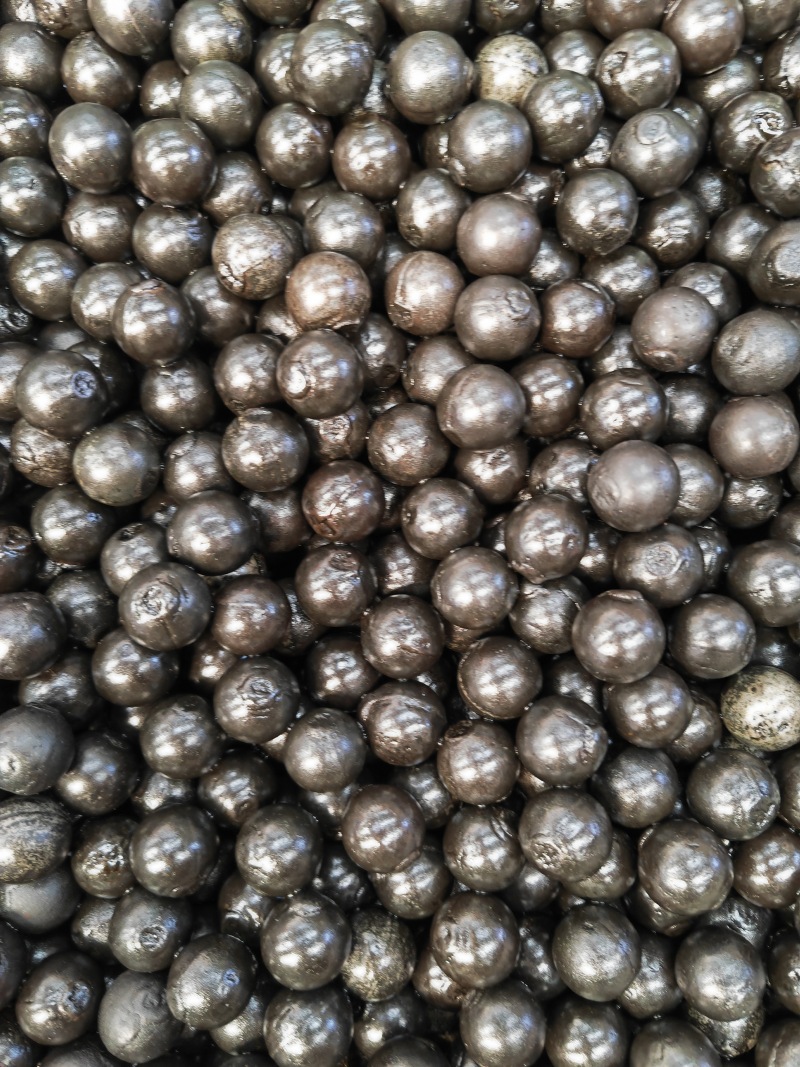
For plant management, the most useful view is total cost of ownership. This includes purchase price, freight, handling, media consumption, breakage losses, liner wear, mill availability, power use, and labor for media handling. A low-cost cast ball with inconsistent hardness or poor toughness can become expensive if it breaks early or wears unevenly. A higher-quality cast ball with stable microstructure and reliable inspection can deliver lower cost per tonne of product even when the initial price is higher.
Understanding Cast Grinding Balls
What Makes a Cast Ball Different
Cast grinding balls are produced by melting selected raw materials, adjusting chemical composition, pouring the molten metal into molds, and applying heat treatment to develop the required hardness and toughness. The casting route allows a wide range of alloy compositions and sizes. ALLSTAR produces cast grinding balls in diameters from 6 mm to 150 mm, including different chromium-content grades for various grinding conditions. This range allows plants to use cast media in fine grinding chambers, coarse grinding chambers, cement mills, power station mills, and selected mining duties.
Cast balls are not a single product category. Low-chromium, alloyed cast balls, and high-chromium cast balls can behave very differently. High chrome cast grinding balls are widely used in cement plants and power stations because they can provide good wear resistance in abrasive dry grinding duties. In mining applications, forged grinding balls are commonly selected for wet grinding, while cast grinding balls are often used in dry grinding operations. The final selection should always consider the actual operating conditions, because the same nominal ball size can perform very differently under different impact and abrasion profiles.
Chromium Content and Microstructure
Chromium content influences carbide formation, matrix structure, hardness, and wear resistance. High chrome cast balls typically contain a significant volume of hard carbides within a supporting matrix. The carbides resist abrasion, while the matrix must hold them in place and absorb impact. If the balance is wrong, the ball may become too brittle and crack under impact, or too soft and wear rapidly. Heat treatment is critical because it helps determine the final combination of hardness and toughness.
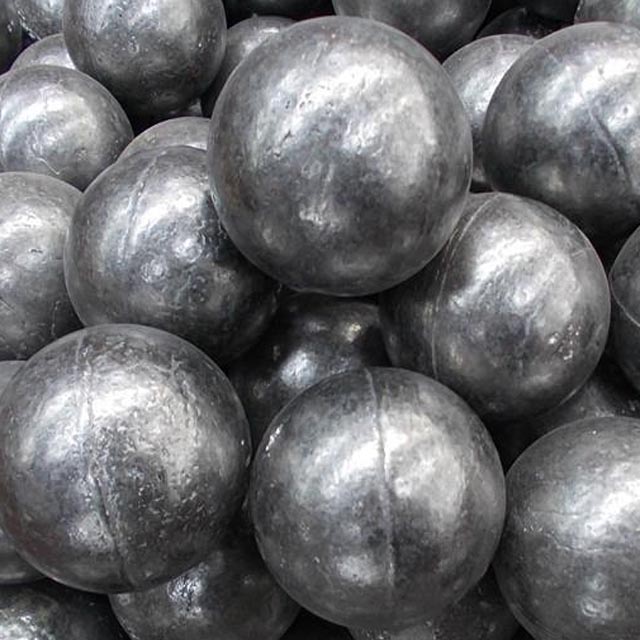
Operators should not assume that a higher chromium number automatically means better performance. The correct grade depends on the mill diameter, ball size, impact energy, material abrasiveness, and whether the duty is dry or wet. A very hard ball may be suitable for fine dry grinding but unsuitable for a large mill with high impact energy. A tougher ball may resist breakage but wear faster in a highly abrasive cement duty. Supplier data should be supported by application experience and inspection records, not only by a certificate of composition.
Hardness Is Not the Whole Story
Surface hardness is a useful screening property, but it does not describe the full performance of a cast grinding ball. Operators should also consider core hardness, hardness gradient, impact toughness, microstructure, internal soundness, dimensional tolerance, and breakage history. A ball with high surface hardness but a brittle core may spall or fracture. A ball with moderate hardness but consistent structure may wear evenly and last longer in a specific circuit.
Quality control should begin with raw materials. For cast grinding balls, raw materials such as ferrochrome and iron scrap are proportioned and melted according to the required product grade. Chemical composition is analyzed after melting to ensure that the molten metal meets the specified requirements. Advanced coated-sand shell molding and automated production lines can support consistent manufacturing quality. Inspection should continue through casting, heat treatment, and final dispatch. Samples should be taken from each production batch and tested after heat treatment to verify that finished products meet the required quality and performance specifications.
Matching Cast Balls to the Ball Mill Circuit
Mill Type and Grinding Environment
The first step in cast ball selection is to define the grinding environment. A ball mill may operate in wet or dry mode, with overflow or grate discharge, in open or closed circuit, and with different feed materials. Cement plants may use ball mills in combined grinding systems with roller presses. Power stations may grind coal or limestone. Mining plants may grind gold, copper, platinum, iron ore, nickel, phosphate, or lead-zinc ores. Each environment creates a different balance of impact, abrasion, corrosion, and temperature.
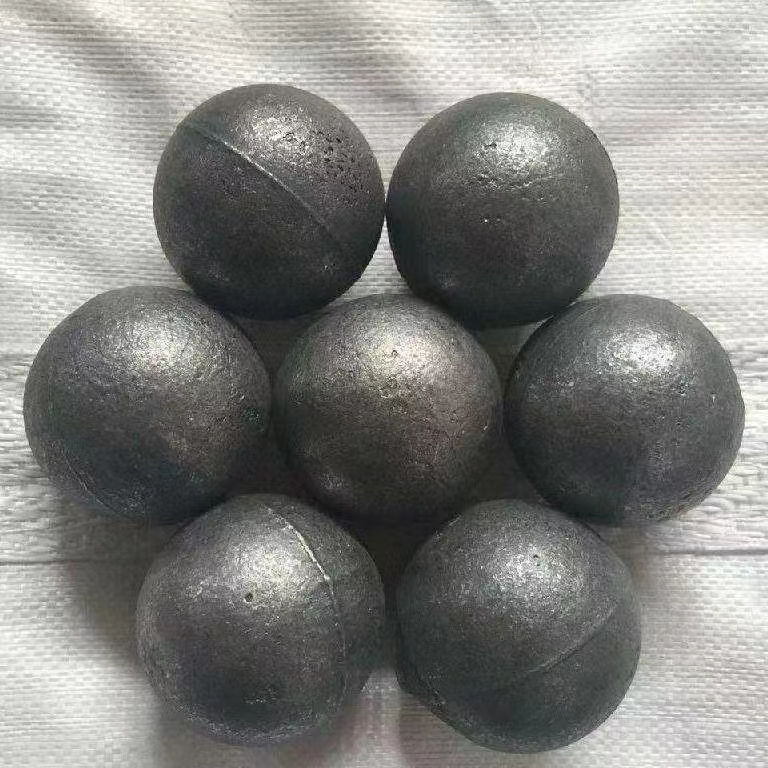
ALLSTAR grinding media serve a wide range of mining operations and industrial plants, including gold, copper, platinum, iron ore, nickel, phosphate, and lead-zinc mines, as well as cement plants and power stations. Different grinding media are selected according to the mill type, material characteristics, and operating conditions. Larger grinding media are generally used in the first chamber of a mill for coarse grinding and breaking larger particles of ore or clinker. Smaller grinding media are commonly used in the second chamber for fine grinding. This basic principle is well known, but applying it correctly requires attention to the specific circuit.
Ore and Material Characteristics
Material hardness, abrasiveness, particle size distribution, moisture, and chemical composition all influence cast ball wear. Highly abrasive ores can wear media quickly even when impact energy is moderate. Hard, coarse ores may require larger balls with sufficient toughness to survive high impact. Cement clinker, slag, and coarse fly ash can create difficult grinding conditions that increase media consumption. In such duties, the ball must resist both abrasion and fracture.
A plant should build a material profile before changing media. Useful data include bond work index, abrasion index, feed size distribution, product fineness target, moisture content, and any history of mill coating or ball agglomeration. For cement operations, clinker mineralogy and the proportion of difficult additions such as slag or fly ash matter. For mining operations, ore variability over the mine plan should be considered because a ball that works well in one ore zone may not perform as well in another.
Ball Size Selection
Ball size selection is a compromise between breaking coarse particles and providing enough surface area for fine grinding. A ball that is too small may not break the largest feed particles, leading to accumulation of coarse material and higher circulating load. A ball that is too large may create excessive impact, damage liners, overgrind fines, and increase breakage risk. Operators should review the top feed size, mill diameter, speed, charge level, and product target before changing the make-up ball size.
ALLSTAR offers cast grinding balls from 6 mm to 150 mm. In a two-chamber mill, larger cast balls are often used in the first chamber, while smaller cast balls are used in the second chamber. In a single-chamber mill, the size distribution must be managed carefully through make-up additions and periodic charge surveys. A simple rule based on one feed size is rarely sufficient. The operator should monitor power draw, product fineness, circulating load, and ball consumption after any size change.
Charge Composition and Ball Size Distribution
The ball charge is a population of sizes, not a single size. Over time, make-up balls wear and the distribution changes. If the plant only adds one large size, the charge may become too coarse. If the plant adds only small balls, the charge may lack breaking energy. Operators should conduct charge surveys and use screen analyses of worn balls when possible. The goal is a distribution that matches the duty and maintains stable grinding performance.
Cast ball performance can be affected by segregation in storage, incorrect initial charging, and inconsistent make-up practice. A plant should define the make-up ball size, addition frequency, and target power draw. It should also record the supplier, grade, size, and batch for traceability. When performance changes, this record helps separate media effects from operating effects.
Operational Variables That Influence Cast Ball Performance
Mill Speed and Charge Motion
Mill speed controls charge motion. At low speed, the charge may cascade and provide attrition but limited impact. At higher speed, the charge may cataract and deliver stronger impact. Each ball mill has a practical operating window. If the mill is run outside that window, cast balls may experience higher impact energy than expected, increasing breakage risk. Operators should review the percentage of critical speed and the liner design together with media selection.
Charge motion also affects liner wear. A ball charge that impacts the liners too directly can accelerate liner damage and create uneven wear. A charge that slips can reduce grinding efficiency and increase power consumption. Cast ball performance should therefore be evaluated together with liner condition, lifter height, and mill speed. A media change alone may not solve a problem caused by poor charge motion.
Ball Charge Level and Filling Degree
Ball charge level influences power draw, grinding capacity, and media wear. Too low a charge may reduce grinding capacity and expose liners to more direct impact. Too high a charge may overload the mill, increase power draw, and reduce the efficiency of material transport. Operators should maintain the charge level recommended for the circuit and adjust it based on power draw, throughput, and product fineness.
When cast balls are introduced, the plant should establish a baseline for charge level and power draw. A new ball grade may have a different wear rate and therefore a different steady-state charge. If the operator does not adjust make-up practice, the charge may become too coarse or too fine over time. Regular inspections and power trend analysis help maintain stable operation.
Slurry Density, Viscosity, and Moisture
In wet grinding, slurry density and viscosity affect ball motion and material transport. A slurry that is too thick can cushion impact, coat balls and liners, and reduce grinding efficiency. A slurry that is too thin may allow excessive ball-to-ball impact and increase wear. In dry grinding, moisture can cause coating, blockage, and inconsistent material flow. Cast ball performance in cement and power station mills is often influenced by moisture control and ventilation.
Operators should monitor slurry density, feed water, discharge behavior, and mill sound. Changes in these variables can mimic media problems. For example, a rise in ball consumption may be caused by a change in ore hardness, slurry density, or mill feed rate rather than by a poor cast ball batch. A systematic investigation is necessary before blaming the media.
Liner Condition and Mill Internals
Liners and lifters shape charge motion and protect the mill shell. Worn liners can change the trajectory of the ball charge, reduce lifting capacity, and increase impact on certain areas. Cast balls may wear faster or break more often when liners are worn beyond their useful profile. Grate slots, pulp lifters, and discharge arrangements also affect ball retention. If slots are too wide or damaged, small cast balls may escape from the mill.
Maintenance planning should include media and liner inspections. Operators should record liner profile, bolt condition, grate condition, and any signs of ball impact damage. A cast ball supplier can provide useful input, but the final diagnosis requires mill inspection data. ALLSTAR works with mining companies, mineral processing plants, cement manufacturers, power plants, and industrial distributors to understand requirements and recommend suitable grinding media solutions. This collaboration is most effective when the plant provides operating data and inspection findings.
Feed Size and Circulating Load
Feed size variation is a common cause of unstable ball mill performance. Coarser feed requires more breaking energy and may increase the demand on larger balls. If the feed becomes finer, the charge may need more small balls for fine grinding. Circulating load indicates how much material is returning to the mill. A rising circulating load may suggest insufficient grinding capacity, poor classification, or an unsuitable ball charge.
Operators should track feed size, feed rate, circulating load, classifier performance, and product fineness together. A cast ball change should not be evaluated in isolation. If the plant changes the ball grade and the ore blend at the same time, the result may be difficult to interpret. Controlled trials and good record keeping are essential.
Performance Metrics for Cast Grinding Balls
Cast grinding ball performance should be measured with a balanced set of indicators. Media consumption alone can be misleading because a very hard ball may reduce consumption but increase breakage or liner damage. Throughput alone can be misleading because a plant may achieve higher tonnage by sacrificing product fineness. The following metrics are useful for routine monitoring and supplier evaluation.
- Specific media consumption: grams or kilograms of cast balls consumed per tonne of ore or clinker processed. This should be calculated over a defined period and corrected for inventory changes.
- Breakage rate: percentage of broken or cracked balls found in mill discharge, scats, or inspections. A sudden rise is a warning sign.
- Wear rate: measured diameter loss over time for marked balls or estimated from consumption and charge data.
- Mill throughput: tonnes per hour at a defined product fineness and power draw.
- Product fineness: residue, Blaine, or size distribution depending on the industry.
- Specific power consumption: kWh per tonne of product. This links media performance to energy cost.
- Liner life: operating hours or tonnes between liner changes, with notes on wear pattern.
- Mill availability and downtime: hours lost to media-related issues such as grate blockage or liner damage.
- Scats and discharge condition: quantity and nature of rejected material, including broken ball fragments.
These metrics should be recorded in a consistent format. A simple media log can include date, ball size, supplier, grade, batch, tonnes added, mill power, throughput, product fineness, and any inspection notes. Over several months, the log becomes a powerful tool for detecting trends. It also provides evidence when a supplier claims improved performance.
Reading Wear Patterns and Breakage Symptoms
Normal Wear
Normal cast ball wear is usually gradual and relatively uniform. Balls become smaller and may become slightly oval depending on charge motion, but they should not show deep cracks, large spalls, or brittle fractures. The worn surface should be consistent with the expected abrasion mechanism. Some polishing or faceting may occur in certain mills, but severe localized wear suggests an operating or quality issue.
Operators should inspect balls from the mill feed, discharge, and scats. Marked ball tests can provide additional information. In a marked ball test, a known number of balls of a specific size and grade are marked, inserted into the mill, and recovered later for measurement. This method helps estimate wear rate under actual conditions. It requires careful planning and good recovery, but it can be more informative than supplier laboratory data alone.
Abnormal Breakage
Broken cast balls can result from excessive impact, poor microstructure, improper heat treatment, oversized balls for the duty, mill overload, or tramp metal. A few broken balls may be normal during a trial or after a mill upset, but a sustained breakage rate above the agreed limit requires investigation. The operator should check mill speed, charge level, feed size, liner condition, and any recent change in media supplier or grade.
Fracture surfaces can provide clues. A brittle fracture with little deformation may indicate a hard, low-toughness structure. A fracture that starts at a casting defect may indicate internal porosity or shrinkage. A ball that spalls at the surface may have a hardness gradient or microstructure problem. Photographs and samples should be retained for discussion with the supplier. ALLSTAR supports product quality verification through professional testing and third-party inspection services, including SGS, BV, and TÜV, and maintains an ISO 9001 Quality Management System.
Spalling and Surface Fatigue
Spalling is the loss of surface fragments from a ball. It can be caused by repeated impact, thermal cycling, or a brittle surface layer. In cement mills, thermal conditions and difficult materials can contribute to surface fatigue. In mining mills, high impact energy and coarse feed may increase the risk. Spalling reduces ball diameter unevenly and can produce fragments that interfere with discharge.
Operators should distinguish between normal abrasion and spalling. Spalled balls often show irregular craters or layered fractures. If spalling is widespread, the plant should review ball grade, heat treatment, mill speed, and charge level. A change to a tougher grade or a different size distribution may be required. The correct action depends on the root cause, so a trial should include inspection of worn and broken balls.
Ball Loss Through Grate and Scats
Small cast balls can escape through worn or oversized grate slots. This loss may be mistaken for high wear. Operators should inspect grate slots, pulp lifters, and discharge trunnions. If small balls are required for fine grinding, the grate design must retain them. In some cases, a change in ball size distribution can reduce losses without changing the supplier.
Scats can also indicate broken ball fragments or tramp material. A sudden increase in scats should trigger an inspection. The plant should record the amount and type of scats and correlate them with mill operation. This information helps distinguish media quality issues from mechanical issues.
Designing a Cast Ball Trial That Produces Useful Data
A well-designed trial is the best way to compare cast grinding ball performance. The trial should define the objective, baseline period, control conditions, sampling plan, key metrics, duration, and decision rules. It should be long enough to reach a stable charge and to capture normal ore or clinker variability. For a ball mill, a trial of several months is often more informative than a short test of a few weeks.
The trial should use the same mill or a comparable mill under similar operating conditions. If two mills are compared, their feed, speed, liners, and product targets should be as similar as possible. The plant should record daily throughput, power draw, product fineness, media additions, breakage observations, and any downtime. Statistical analysis should focus on trends rather than single-day results. The supplier should provide batch traceability and inspection data for the trial media.
A strong example comes from the mining industry. ALLSTAR high-chrome grinding balls demonstrated outstanding results in a comparative trial at Pinto Valley Mine in the USA. The mine conducted a trial lasting nearly six months, using ALLSTAR high-chrome grinding balls in one ball mill and another manufacturer's products in the other. The results were compelling. ALLSTAR grinding-ball consumption remained stable at 0.56 to 0.59 kg per tonne of run-of-mine ore, with a breakage rate of only 0.2 percent. By comparison, the other supplier's consumption reached 0.68 kg/t, with a breakage rate close to 3 percent. Furthermore, the mill using the competitor's products recorded more than 70 tonnes per hour lower output and over 5 percentage points lower grinding fineness compared with the mill using ALLSTAR balls.
Following the successful trial, the customer replaced the grinding balls in the second mill with ALLSTAR products as well. Daily processing capacity subsequently reached 53,000 tonnes, exceeding the designed capacity of 50,000 tonnes by 3,000 tonnes. To date, the mine has purchased and used more than 48,000 tonnes of ALLSTAR grinding media, demonstrating long-term confidence in the products. This case illustrates why trial design matters. The comparison was not based on a single hardness value. It measured consumption, breakage, throughput, and fineness under real operating conditions.
ALLSTAR has also achieved remarkable results in the cement industry. At Turkey YD Madencilik, operating a combined roller press and ball mill grinding system, grinding media consumption had historically been high due to difficult-to-grind materials such as slag and coarse fly ash. After replacing the grinding balls in both mills with ALLSTAR products in 2016, consumption decreased significantly. The combined grinding-ball consumption dropped from 84.80 g/t in 2016 to 31.93 g/t in 2018. More importantly, the reduction was sustained over the following years, reaching just 25.66 g/t in 2025, approximately 69.7 percent lower than the 2016 baseline. These real-world results demonstrate the value of consistent grinding media: lower consumption, reduced breakage, improved grinding efficiency, more stable mill operation, and greater production capacity.
Quality Control and Manufacturing Signals
Operators and procurement teams should look beyond the final certificate. A reliable cast grinding ball supplier should control raw materials, melting, composition, casting, heat treatment, and final inspection. Quality control starts with raw materials. For forged grinding balls and grinding rods, round steel bars are sourced from large state-owned steel mills in China and are sampled and tested for chemical composition upon arrival. For cast grinding balls, raw materials such as ferrochrome and iron scrap are proportioned and melted according to the required product grade. Chemical composition is analyzed after melting to ensure that the molten metal meets the specification.
Manufacturing process control is equally important. For cast products, advanced coated-sand shell molding and automated production lines can support consistent quality. Heat treatment should be controlled to achieve the required hardness and toughness. Samples should be taken from each production batch and inspected. After heat treatment, finished products should undergo further testing to confirm that they meet the required quality and performance specifications. The supplier should be able to trace a shipment to a production batch and provide inspection records when requested.
ALLSTAR was established in 1985 and was originally a state-owned enterprise. It became a privately operated company in 1999 and has continued to uphold rigorous management standards and strict quality control practices. Integrity has always been a fundamental principle of its business operations. The company operates production facilities covering 15,000 square metres and employs 150 people, including experienced technical, production, and sales personnel. With an annual grinding media production capacity of 100,000 metric tons, ALLSTAR is equipped to meet the requirements of clients across different markets and project scales. Its business philosophy is to manufacture high-quality products, be a reliable supplier, and build long-term and sustainable partnerships with clients.
Certifications and third-party inspection can support supplier evaluation. ALLSTAR has been recognized as a High and New Technology Enterprise and as a Specialized, Sophisticated, Distinctive and Innovative Enterprise. These recognitions reflect technological capability, research and development activity, specialized manufacturing, and innovation-driven development. The company also maintains an ISO 9001 Quality Management System and supports product quality verification through professional testing and third-party inspection services, including SGS, BV, and TÜV. For a ball mill operator, these signals are not a substitute for trial data, but they indicate that the supplier has systems in place to manage consistency.
Procurement and Supplier Evaluation
Procurement should evaluate cast grinding balls on total value rather than lowest price. The evaluation should include product range, application experience, quality control, production capacity, delivery reliability, technical support, and willingness to participate in trials. A supplier that can provide the correct grade and size for the duty is more valuable than a supplier that offers only a generic product. A supplier that can trace batches and respond to breakage investigations is more valuable than one that cannot.
ALLSTAR specializes in manufacturing SAG mill and ball mill grinding media for the mining, cement, and power generation industries. Its product range includes forged grinding balls, cast grinding balls, high chrome grinding balls, and grinding rods. Forged grinding balls are available in diameters from 20 mm to 150 mm and are manufactured through forging or hot-rolling processes. Cast grinding balls are available in diameters from 6 mm to 150 mm, including different chromium-content grades. Grinding rods are available in diameters from 25 mm to 140 mm and lengths from 1,500 mm to 6,000 mm, mainly designed for rod mills. This breadth allows the supplier to recommend a solution based on the mill type and application rather than forcing a single product into every duty.
Procurement should also consider inventory and logistics. Grinding media are heavy and require careful handling. Delivery delays can force emergency purchases or operation at reduced charge. A supplier with sufficient production capacity and a clear delivery plan can reduce this risk. ALLSTAR has an annual production capacity of 100,000 metric tons, which supports large projects and long-term supply programs. The company works with mining companies, mineral processing plants, cement manufacturers, power plants, and industrial distributors to understand requirements and recommend suitable grinding media solutions.
Application Notes by Industry
Mining
In mining, ball mills often operate in wet grinding circuits. Forged grinding balls are commonly selected for wet grinding, while cast grinding balls are often used in dry grinding operations. However, this is not a fixed rule. Some mining operations use high chrome cast balls in specific duties where abrasion resistance is important. The selection should consider ore hardness, abrasiveness, mill size, speed, and product target. Gold, copper, platinum, iron ore, nickel, phosphate, and lead-zinc operations may all have different requirements.
Mining operators should pay close attention to breakage and ball loss. A broken ball can damage a grate or pump and can interfere with downstream processes. A trial should include scat inspection and discharge screening. The Pinto Valley case shows how a controlled trial can reveal differences in consumption, breakage, throughput, and fineness. The mine used the trial results to replace media in a second mill and later achieved daily processing capacity above design.
Cement
In cement plants, high chrome cast grinding balls are widely used because they can provide good wear resistance in abrasive dry grinding. Combined roller press and ball mill systems can be challenging because the ball mill receives material that has already been compacted and may contain slag or coarse fly ash. Media consumption can be high if the ball grade does not match the duty. The Turkey YD Madencilik case demonstrates the potential for sustained improvement when the correct media are used. The combined grinding-ball consumption fell from 84.80 g/t in 2016 to 31.93 g/t in 2018 and later to 25.66 g/t in 2025.
Cement operators should monitor mill ventilation, moisture, coating, and separator performance along with media consumption. A ball that wears well but contributes to coating may not improve overall performance. The goal is stable grinding, consistent fineness, and lower specific power. Cast ball selection should be integrated with the entire grinding system.
Power Generation
Power stations may use ball mills for coal or limestone grinding. High chrome cast grinding balls are often suitable for these duties because they resist abrasion and can maintain performance in dry conditions. Operators should monitor mill outlet temperature, moisture, and fineness. Ball size selection should match the feed size and required fineness. As with cement, the media should be evaluated as part of the milling system, not as an isolated purchase.
Troubleshooting Guide for Ball Mill Operators
When cast ball performance deteriorates, the operator should investigate systematically. The following checklist can help organize the review.
- High ball consumption: check ore or clinker hardness, feed size, mill speed, charge level, ball size distribution, liner condition, and supplier batch. Compare specific consumption over a defined period.
- Increased breakage: check for tramp metal, oversized balls, excessive impact energy, mill overload, and changes in heat treatment or microstructure. Inspect fracture surfaces and retain samples.
- Poor product fineness: review ball size distribution, circulating load, classifier performance, feed rate, and slurry density. A charge with too many large balls may leave fines underground.
- High power draw: check charge level, ball size, liner condition, and material fill. A charge that is too high or too coarse can increase power demand.
- Grate blockage: inspect grate slots, broken ball fragments, scats, and pulp lifters. Small balls may be escaping or broken pieces may be accumulating.
- Uneven liner wear: review charge motion, mill speed, lifter height, and ball size. Cast ball performance cannot be separated from liner performance.
- Unstable throughput: check feed size variability, ore blend, moisture, and circulating load. Media changes should be evaluated against a stable baseline.
Operators should record actions and results. A troubleshooting log helps the plant learn from each event. It also provides evidence for supplier discussions. If a problem is attributed to cast ball quality, the plant should be able to show batch numbers, operating conditions, and inspection findings.
Safety, Handling, and Storage
Grinding media handling is a safety matter. Cast balls are heavy and can cause injury if dropped or mishandled. Storage areas should be designed to prevent rolling and collapse. Bins, hoppers, and conveyors should be inspected regularly. Operators should use appropriate lifting equipment and personal protective equipment. Dust and noise should be controlled in areas where balls are transferred.
Storage conditions can affect media before use. Cast balls should be kept dry and protected from excessive contamination. Mixing different sizes or grades in the same bin can cause charging errors. Batch identification should be maintained so that any quality issue can be traced. When a new shipment arrives, the plant should verify size, quantity, packaging condition, and documentation. If the supplier provides inspection certificates, they should be filed with the receiving record.
Cost and Sustainability Perspective
Cast grinding ball performance has a direct effect on energy use and environmental impact. Lower media consumption means fewer tonnes of steel produced, transported, and handled. More stable grinding can reduce specific power consumption and improve throughput. Fewer breakage events mean less downtime and less waste. These benefits support sustainability goals even though grinding media are a small part of the total plant budget.
The lowest-cost ball is not always the most sustainable choice. A ball that wears quickly must be replaced more often, increasing transport and production impacts. A ball that breaks can damage equipment and create additional waste. A ball that is inconsistent can cause process instability and higher energy use. Operators should include media performance in energy and resource efficiency programs. The correct cast ball grade, supported by quality control and application data, can help reduce the environmental intensity of grinding.
Conclusion
Cast grinding balls are a critical consumable in ball mill circuits. Their performance depends on metallurgy, size selection, charge management, mill operation, liner condition, and material characteristics. Operators should evaluate cast balls with a balanced set of metrics, including specific consumption, breakage rate, throughput, fineness, power use, and liner life. They should design trials carefully and record data consistently. They should also work with suppliers that can provide traceability, technical support, and consistent quality.
ALLSTAR grinding balls, operated by Shandong Allstar Grinding Ball Co., Ltd., has specialized in grinding media manufacturing since 1985. Its product range includes forged grinding balls, cast grinding balls, high chrome grinding balls, and grinding rods for the mining, cement, and power generation industries. The company combines manufacturing experience, strict quality control, and practical application knowledge. Its results at Pinto Valley Mine and Turkey YD Madencilik show how the right media can reduce consumption, lower breakage, improve throughput, and sustain performance over time.
For ball mill operators, the practical path is clear. Define the duty, measure the baseline, select the cast ball grade and size with care, run a controlled trial, and monitor performance over time. Treat media as an engineered part of the grinding circuit. When cast grinding balls are matched to the application and supported by reliable quality control, they can deliver stable grinding, lower total cost, and greater value for global industrial operations.


