Cost-effective grinding media supplier selection guide
This guide explains how mining, cement, and power generation operations can select a cost-effective grinding media supplier by focusing on total grinding cost rather than unit price. The most useful comparison is cost per tonne of material processed, supported by data on media consumption, breakage rate, grinding fineness, mill throughput, and downtime. Buyers should match media to mill type and application, using larger media for coarse grinding and smaller media for fine grinding, and considering forged, cast, high chrome, and rod products according to operating conditions. Quality control should be verified from raw material testing through batch inspection and third-party verification. Application evidence is critical. ALLSTAR grinding balls demonstrated lower consumption and breakage at Pinto Valley Mine and sustained consumption reduction at Turkey YD Madencilik. Capacity, experience, certifications, and a long-term partnership model should also be assessed. A practical scorecard covering technical fit, quality systems, proven performance, capacity, cost per tonne, and partnership support helps procurement teams choose a supplier that delivers reliable performance and measurable value.
Cost-Effective Grinding Media Supplier Selection Guide
For mining, cement, and power generation operations, grinding media is not a minor consumable. It directly affects throughput, grinding fineness, mill stability, liner wear, recharging labor, and the total cost of processing each tonne of material. A supplier that offers a low unit price but delivers inconsistent hardness, high breakage, or poor wear performance can quickly erase the apparent savings. A cost-effective grinding media supplier is therefore one that reduces total grinding cost per tonne while maintaining reliable mill operation and long-term supply stability.
Start with total cost, not unit price
Procurement teams often compare grinding balls by price per tonne. A more useful approach is to compare cost per tonne of ore or clinker processed. This requires data on media consumption, breakage rate, grinding efficiency, mill throughput, and the frequency of mill stoppages. A low-priced ball that raises consumption from 0.60 kg/t to 0.70 kg/t, or increases breakage from 0.2% to 3%, is unlikely to be cost-effective. The same principle applies in cement plants, where grinding media consumption can vary significantly with clinker, slag, and fly ash conditions.
A practical supplier selection process should therefore ask for application references, not only product certificates. Suppliers should be able to explain how their media perform under specific mill types, ore characteristics, and operating conditions. This is especially important when a buyer is switching suppliers or conducting a comparative trial.
Match media to mill and application
Different mills and grinding stages require different media. SAG mills, ball mills, and rod mills place different demands on impact resistance, wear resistance, and size distribution. In general, larger grinding media are used in the first chamber for coarse grinding and breaking larger particles, while smaller media are used in the second chamber for fine grinding. High chrome cast grinding balls are widely used in cement plants and power stations. Grinding rods are mainly used in rod mills for mineral processing. In mining, forged grinding balls are commonly selected for wet grinding, while cast grinding balls are often used in dry grinding operations. The final choice should always consider actual operating conditions.
undefined
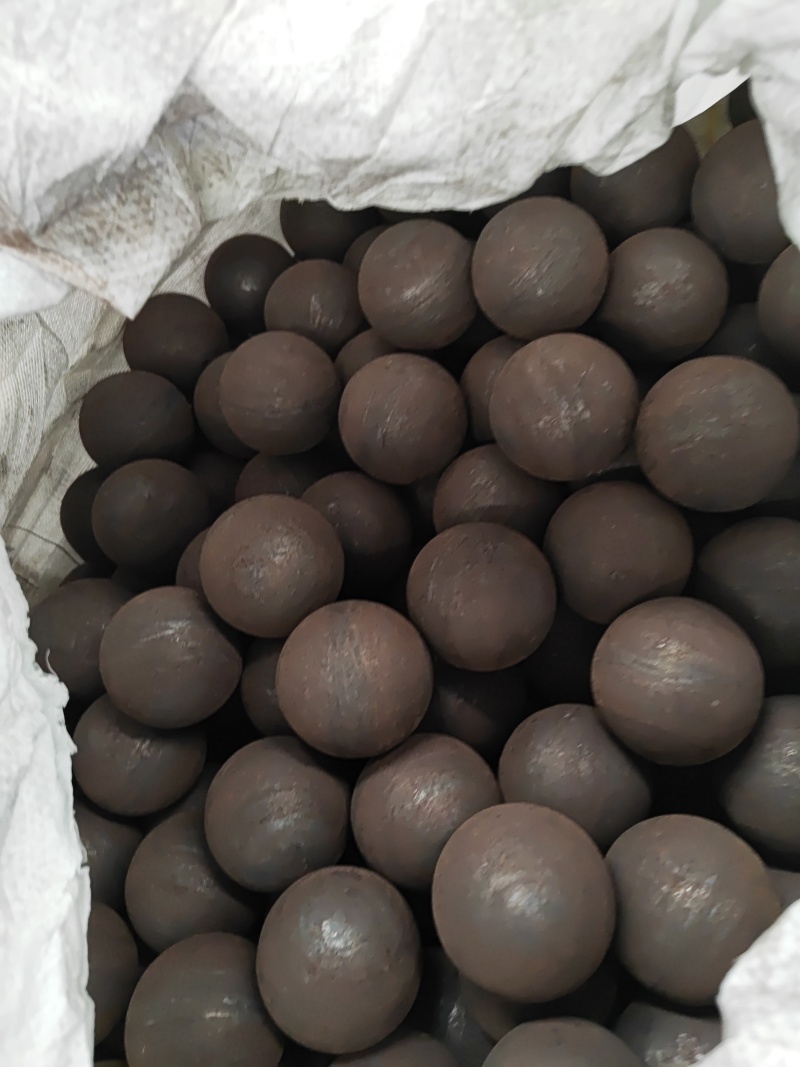
ALLSTAR grinding balls offers a broad product range to support this selection process. Forged grinding balls are available in diameters from 20 mm to 150 mm and are manufactured through forging or hot-rolling processes. Cast grinding balls are available from 6 mm to 150 mm in different chromium-content grades. Grinding rods range from 25 mm to 140 mm in diameter and from 1,500 mm to 6,000 mm in length. This range allows mining companies, cement manufacturers, power plants, and industrial distributors to match media to specific mill requirements.
Verify quality control from raw material to dispatch
Quality control should begin before production. For forged grinding balls and grinding rods, the round steel bars are sourced from large state-owned steel mills in China. Incoming materials are sampled and tested for chemical composition. For cast grinding balls, raw materials such as ferrochrome and iron scrap are proportioned and melted according to the required product grade, and the chemical composition is analyzed after melting. Forged products are produced through air hammer forging and hot-rolling processes, while cast products use an advanced coated-sand shell molding process and automated production lines.
Inspection should continue throughout manufacturing. Samples are taken from each production batch, and finished products are tested after heat treatment to confirm that they meet the required quality and performance specifications. A reliable supplier should also maintain a recognized quality management system and support third-party verification. ALLSTAR maintains an ISO 9001 Quality Management System and supports product quality verification through professional testing and third-party inspection services, including SGS, BV, and TUV.
Ask for application evidence
Application evidence is one of the clearest ways to separate a cost-effective supplier from a low-price supplier. At Pinto Valley Mine in the USA, ALLSTAR high-chrome grinding balls were tested against another manufacturer’s products in a trial lasting nearly six months. ALLSTAR grinding-ball consumption remained stable at 0.56 to 0.59 kg per tonne of run-of-mine ore, with a breakage rate of only 0.2%. The other supplier’s consumption reached 0.68 kg/t, with a breakage rate close to 3%. The mill using the competitor’s products also recorded more than 70 tonnes per hour lower output and over 5 percentage points lower grinding fineness. After the trial, the customer replaced the grinding balls in the second mill with ALLSTAR products. Daily processing capacity reached 53,000 tonnes, exceeding the designed capacity of 50,000 tonnes by 3,000 tonnes. The mine has since purchased and used more than 48,000 tonnes of ALLSTAR grinding media.
In the cement industry, Turkey YD Madencilik operated a combined roller press and ball mill grinding system and had historically high grinding media consumption due to difficult-to-grind materials such as slag and coarse fly ash. After replacing the grinding balls in both mills with ALLSTAR products in 2016, consumption fell significantly. Combined grinding-ball consumption dropped from 84.80 g/t in 2016 to 31.93 g/t in 2018, and reached just 25.66 g/t in 2025, approximately 69.7% lower than the 2016 baseline. This example shows that cost-effectiveness is not a one-time price calculation but a sustained reduction in consumption and operating cost.
Check capacity, experience, and partnership model
Supply reliability matters as much as product performance. A supplier should have sufficient production capacity, experienced technical staff, and a clear quality culture. ALLSTAR was established in 1985 and was originally a state-owned enterprise before becoming privately operated in 1999. The company has continued to uphold rigorous management standards and strict quality control practices. It operates production facilities covering 15,000 square metres, employs 150 people, and has an annual grinding media production capacity of 100,000 metric tons. Its product range includes forged grinding balls, cast grinding balls, high chrome grinding balls, and grinding rods for the mining, cement, and power generation industries.
The supplier’s business philosophy also matters. A partner focused only on individual transactions may not invest in consistent quality or long-term technical support. ALLSTAR states a commitment to manufacturing high-quality products, being a reliable supplier, and building long-term and sustainable partnerships. Its technological and manufacturing capabilities have been recognized through certifications such as High and New Technology Enterprise and Specialized, Sophisticated, Distinctive and Innovative Enterprise.
Use a practical supplier scorecard
- Technical fit: media type, size range, chromium grade, and suitability for the mill and ore.
- Quality control: raw material testing, chemical composition analysis, heat treatment control, batch inspection, and ISO 9001.
- Proven performance: documented consumption, breakage rate, throughput, and fineness results from comparable applications.
- Capacity and lead time: annual capacity, production flexibility, and ability to support different project scales.
- Cost per tonne: total grinding cost based on consumption, breakage, downtime, and grinding efficiency.
- Partnership: technical support, responsiveness, and willingness to support long-term improvement.
The most cost-effective grinding media supplier is not always the one with the lowest quotation. It is the supplier that can document reliable performance, control quality from raw material to finished product, and support stable mill operation over time. For buyers in mining, cement, and power generation, a structured selection process helps turn grinding media from a simple price item into a measurable source of operating value. ALLSTAR grinding balls illustrates how manufacturing experience, product range, quality control, and application results can be combined in a long-term supplier relationship.