
Forged grinding balls wear rate and cost per ton explained
Forged grinding balls wear rate and cost per ton are key measures of grinding media economics. Wear rate is the mass of media consumed per tonne of ore or clinker processed, usually expressed in kg/t or g/t. It depends on ore abrasiveness, ball hardness and toughness, heat treatment consistency, ball size, mill speed, charge level, pulp chemistry, and breakage rate. A low ball price does not guarantee a low grinding cost. The more useful calculation is media cost per tonne of ore, which combines ball price with consumption. For example, a higher-priced ball with 0.60 kg/t wear can cost less in service than a cheaper ball with 0.90 kg/t wear. Hidden costs include breakage, mill downtime, unstable charge, lower throughput, and reduced fineness. Shandong Allstar Grinding Ball Co., Ltd., known as ALLSTAR grinding balls, has manufactured grinding media since 1985 and offers forged grinding balls, cast grinding balls, high chrome grinding balls, and grinding rods for mining, cement, and power generation. The company operates 15,000 square metres of production facilities, employs 150 people, and has an annual capacity of 100,000 metric tons. Quality control covers raw material testing, chemical composition analysis, controlled forging or hot-rolling, batch inspection, heat treatment verification, ISO 9001 systems, and third-party inspection through SGS, BV, and TÜV. Field results support the value of consistent wear performance. At Pinto Valley Mine in the USA, ALLSTAR high chrome balls achieved 0.56–0.59 kg/t consumption and 0.2% breakage, compared with 0.68 kg/t and nearly 3% for another supplier. At Turkey YD Madencilik, combined grinding-ball consumption fell from 84.80 g/t in 2016 to 31.93 g/t in 2018 and 25.66 g/t in 2025. These cases show that lower wear rate, lower breakage, and stable mill operation can reduce cost per ton and create long-term value.
In mining, cement, and power generation, grinding media are consumables that directly influence processing cost, mill stability, and final product fineness. Among the many variables plant operators track, forged grinding balls wear rate and cost per ton are two of the most practical indicators of grinding performance. A low purchase price per tonne of balls does not automatically mean a low grinding cost. The true economic result depends on how many kilograms of media are consumed for each tonne of ore or clinker processed, how often balls break, how stable the mill charge remains, and how much useful throughput the circuit achieves.
Shandong Allstar Grinding Ball Co., Ltd., known in the market as ALLSTAR grinding balls, has manufactured grinding media since 1985. The company was originally a state-owned enterprise and became privately operated in 1999, while continuing rigorous management standards and strict quality control. ALLSTAR grinding balls specializes in SAG mill and ball mill grinding media for the mining, cement, and power generation industries, including forged grinding balls, cast grinding balls, high chrome grinding balls, and grinding rods. Its production facilities cover 15,000 square metres, employ 150 people, and support an annual grinding media capacity of 100,000 metric tons.
undefined
Why Wear Rate Matters More Than Ball Price Alone
Forged grinding balls are selected for many wet grinding duties because they offer good toughness, impact resistance, and consistent performance when the steel grade and heat treatment are properly controlled. However, two suppliers can offer forged balls at similar prices while delivering very different wear rates in the same mill. That difference changes the real cost per ton of material ground.
Wear rate is usually expressed as kilograms of grinding media consumed per tonne of ore milled, or as grams per tonne. A lower wear rate means fewer balls are added, less handling is required, less breakage occurs, and the mill charge remains more stable. A higher wear rate may be hidden by a lower initial ball price, but it often creates higher total spending over a year of operation.
What Is Forged Grinding Ball Wear Rate?
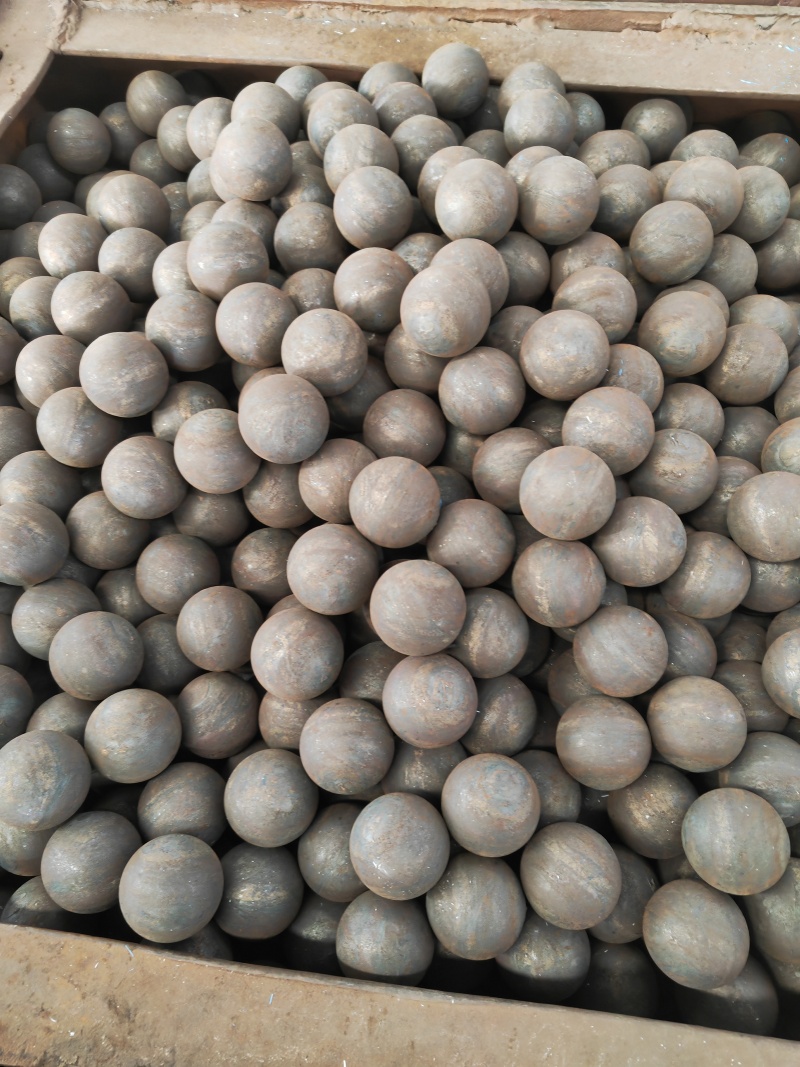
Forged grinding ball wear rate is the mass of ball material lost during grinding, expressed against the mass of material processed. In plant practice, it is often calculated from media consumption records and mill throughput data. The basic relationship is simple:
Wear rate = grinding media consumed in kilograms ÷ ore or clinker milled in tonnes
For example, if a ball mill consumes 600 kilograms of forged grinding balls while processing 1,000 tonnes of ore, the wear rate is 0.60 kg per tonne. If another supplier's balls consume 900 kilograms for the same 1,000 tonnes, the wear rate is 0.90 kg per tonne. The difference may appear small in kilograms, but at large plant scale it becomes a major cost factor.
Factors That Influence Forged Ball Wear
- Material abrasiveness: Hard, silica-rich ores and difficult clinker components tend to accelerate wear.
- Ball hardness and microstructure: Surface hardness alone is not enough. Toughness, hardness depth, and heat treatment consistency affect wear and breakage.
- Ball size and charge: Larger balls provide impact energy for coarse grinding, while smaller balls support fine grinding. Poor size distribution can increase unnecessary wear.
- Mill speed and filling: Incorrect speed or charge level can increase impact, sliding, and ball-to-ball contact.
- Pulp chemistry and slurry conditions: pH, temperature, viscosity, and corrosive components can influence surface wear.
- Breakage rate: Broken balls disrupt the charge, reduce grinding efficiency, and add handling costs.
Because these factors interact, forged grinding balls wear rate should be evaluated under actual mill conditions. A supplier that understands ore characteristics, mill type, and operating targets can recommend a more suitable media specification rather than relying only on a hardness number.
How to Calculate Cost per Ton of Grinding Media
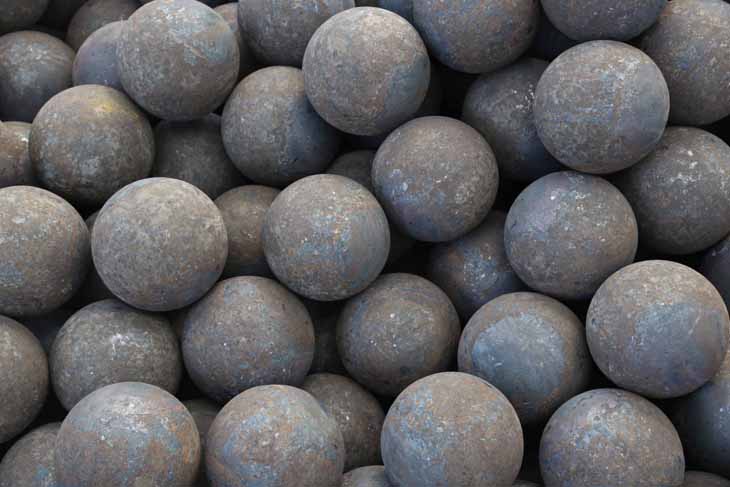
Cost per ton is a more useful purchasing metric than price per tonne of balls. It connects media price with consumption and shows how much grinding media cost is carried by each tonne of ore or clinker. A practical formula is:
Media cost per tonne of ore = ball price per tonne × ball consumption in kg per tonne ÷ 1,000
For example, if forged grinding balls cost 900 per tonne and the wear rate is 0.60 kg per tonne, the media cost is 0.54 per tonne of ore. If a lower-priced ball costs 800 per tonne but wears at 0.90 kg per tonne, the media cost is 0.72 per tonne. The cheaper ball is more expensive in service.
This calculation becomes even more important when annual throughput is large. A difference of 0.10 kg per tonne may look minor, but in a plant processing millions of tonnes per year, it represents hundreds of tonnes of additional media, plus freight, storage, handling, and mill downtime for charging.
Hidden Costs Beyond Ball Price
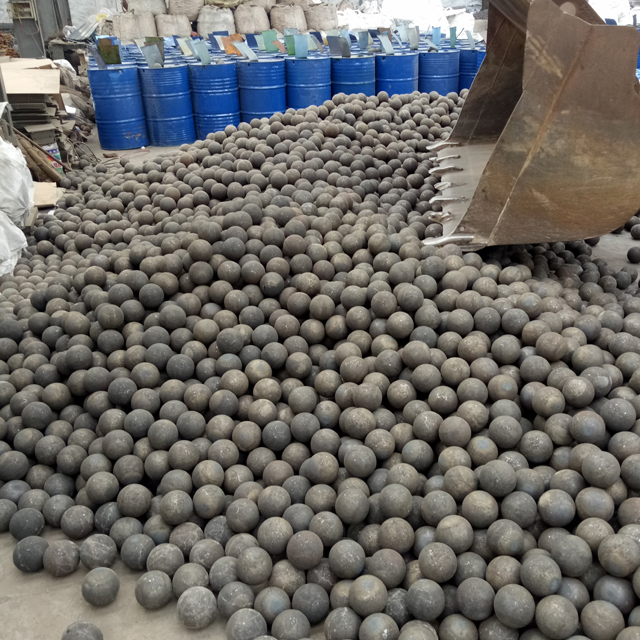
Cost per ton should also consider breakage rate, mill downtime, power consumption, rejected material, and lost throughput. Excessive ball breakage can block discharge systems, disturb the charge, and reduce grinding efficiency. Poor wear consistency can force operators to adjust ball addition rates frequently, making the circuit harder to control. In cement grinding, high media consumption can also affect fineness stability and system pressure. These indirect costs often exceed the visible difference in ball price.
Forged Grinding Balls in Different Milling Duties
ALLSTAR grinding balls offers different types and sizes of grinding media to meet various mill requirements. Forged grinding balls are available in diameters from 20 mm to 150 mm and are manufactured through forging or hot-rolling processes. Cast grinding balls are available from 6 mm to 150 mm in different chromium-content grades. Grinding rods are offered in diameters from 25 mm to 140 mm and lengths from 1,500 mm to 6,000 mm, mainly for rod mills.
Larger grinding media are generally used in the first chamber of a mill for coarse grinding and breaking larger particles of ore or clinker. Smaller media are commonly used in the second chamber for fine grinding. In mining applications, forged grinding balls are often selected for wet grinding, while cast grinding balls are frequently used in dry grinding operations. High chrome cast grinding balls are widely used in cement plants and power stations, and grinding rods are mainly used in rod mills for mineral processing. Final selection should always consider the actual operating conditions.
Quality Control and Wear Rate Consistency
Wear rate is not only a metallurgical property. It is also a manufacturing consistency issue. ALLSTAR grinding balls begins quality control with raw materials. Round steel bars for forged grinding balls and grinding rods are sourced from large state-owned steel mills in China. Incoming materials are sampled and tested for chemical composition before production. For cast products, raw materials such as ferrochrome and iron scrap are proportioned and melted according to the required grade, and chemical composition is analyzed after melting.
For forged products, ALLSTAR operates both air hammer forged and hot-rolling production processes. For cast products, advanced coated-sand shell molding and automated production lines support consistent manufacturing quality. Samples are taken from each production batch for inspection. After heat treatment, finished products undergo further testing to confirm that they meet required quality and performance specifications. The company maintains an ISO 9001 Quality Management System and supports product quality verification through professional testing and third-party inspection services, including SGS, BV, and TÜV. Its commitment to technological advancement has also been recognized through certifications such as High and New Technology Enterprise and Specialized, Sophisticated, Distinctive and Innovative Enterprise.
Field Evidence: Wear Rate and Cost per Ton in Practice
ALLSTAR grinding balls has demonstrated the practical value of lower wear and stable performance in real operations. At Pinto Valley Mine in the USA, a comparative trial lasting nearly six months used ALLSTAR high chrome grinding balls in one ball mill and another manufacturer's products in the other. ALLSTAR ball consumption remained stable at 0.56–0.59 kg per tonne of run-of-mine ore, with a breakage rate of only 0.2%. The other supplier's consumption reached 0.68 kg per tonne, with a breakage rate close to 3%. The mill using the competitor's products also recorded more than 70 tonnes per hour lower output and over 5 percentage points lower grinding fineness compared with the mill using ALLSTAR balls.
After the trial, the customer replaced the grinding balls in the second mill with ALLSTAR products. Daily processing capacity reached 53,000 tonnes, exceeding the designed capacity of 50,000 tonnes by 3,000 tonnes. The mine has since purchased and used more than 48,000 tonnes of ALLSTAR grinding media, reflecting long-term confidence in product performance.
In the cement industry, Turkey YD Madencilik operated a combined roller press and ball mill grinding system where media consumption had historically been high because of difficult-to-grind materials such as slag and coarse fly ash. After replacing the grinding balls in both mills with ALLSTAR products in 2016, consumption decreased significantly. Combined grinding-ball consumption dropped from 84.80 g/t in 2016 to 31.93 g/t in 2018. The reduction was sustained, reaching 25.66 g/t in 2025, approximately 69.7% lower than the 2016 baseline.
How to Lower Forged Grinding Ball Cost per Ton
- Match ball size to grinding duty: Use larger balls for coarse impact and smaller balls for fine grinding, with a balanced charge.
- Track wear rate by mill and ore type: Record media additions, throughput, and breakage to identify changes early.
- Evaluate total cost, not price alone: Compare media cost per tonne of ore, breakage rate, mill stability, and throughput impact.
- Use consistent quality: Batch inspection, controlled heat treatment, and verified chemical composition reduce variability.
- Review operating conditions: Mill speed, filling, pulp chemistry, and feed size can affect wear as much as ball quality.
Supplier Selection Checklist
- Proven experience in the relevant mill type and industry.
- Clear product specifications and quality documentation.
- Batch-level inspection and third-party testing support.
- Application advice based on ore, clinker, and operating conditions.
- Consistent supply capacity and long-term partnership approach.
Conclusion
Forged grinding balls wear rate and cost per ton are closely linked. The most economical choice is not always the lowest-priced ball; it is the ball that delivers stable wear, low breakage, reliable grinding performance, and predictable media consumption. ALLSTAR grinding balls combines manufacturing experience since 1985, strict quality control, a broad product range, and field-proven results in mining and cement operations. For plants seeking lower grinding media consumption and more stable mill performance, the company offers a practical, long-term grinding media partnership rather than a one-time transaction.


