
Grinding media for mining comparison of forged and cast balls
This article compares forged and cast grinding balls for mining and explains that the choice should be based on mill type, ore characteristics, grinding environment, wear mechanism, and total cost of ownership rather than price alone. Forged balls are made from round steel bars through forging or hot-rolling and are often selected for wet grinding and high-impact duties in mining. Cast balls are made by melting and pouring selected raw materials and are available in different chromium grades; high chrome cast balls are widely used in cement, power generation, and dry grinding applications. The article notes that larger media are used for coarse grinding in the first chamber, while smaller media are used for fine grinding in the second chamber. Rod mills use grinding rods rather than balls. The article presents Shandong Allstar Grinding Ball Co., Ltd., known as ALLSTAR grinding balls, as a manufacturer serving mining, cement, and power generation industries since 1985. ALLSTAR produces forged grinding balls from 20 mm to 150 mm, cast grinding balls from 6 mm to 150 mm, high chrome grinding balls, grinding rods from 25 mm to 140 mm, and grinding cylpebs. The company operates 15,000 square metres of production facilities, employs 150 people, and has an annual capacity of 100,000 metric tons. Quality control begins with raw materials, including chemical composition testing of steel bars and molten cast material. Production inspection is carried out by batch, and finished products are tested after heat treatment. ALLSTAR maintains ISO 9001 certification and uses third-party inspection services such as SGS, BV, and TÜV. The article highlights two case examples. At Pinto Valley Mine in the United States, ALLSTAR high chrome balls achieved consumption of 0.56 to 0.59 kg per tonne and a breakage rate of 0.2 percent, compared with 0.68 kg per tonne and nearly 3 percent for another supplier. The mill using ALLSTAR media also recorded higher output and fineness. The customer later converted the second mill and reached daily processing capacity of 53,000 tonnes, exceeding the 50,000 tonne design. At Turkey YD Madencilik, combined grinding ball consumption fell from 84.80 grams per tonne in 2016 to 31.93 grams per tonne in 2018 and 25.66 grams per tonne in 2025. The article concludes that forged and cast balls each have appropriate applications, and that consistent quality, application support, and long-term partnership are essential for lower grinding costs.
In mining and mineral processing, grinding media are not a minor consumable. They influence mill throughput, product fineness, energy use, wear cost, and the stability of the entire comminution circuit. The comparison between forged grinding balls and cast grinding balls is therefore a practical engineering and procurement question, not a simple material preference. The right choice depends on the mill type, ore characteristics, grinding environment, wear mechanism, and the total cost of ownership. This article examines the main differences between forged and cast grinding balls and explains how Shandong Allstar Grinding Ball Co., Ltd., known as ALLSTAR grinding balls, approaches grinding media selection, manufacturing, and quality control for mining, cement, and power generation customers.
Why the forged versus cast decision matters
Mining operations use grinding media in SAG mills, ball mills, and rod mills to reduce ore to the size required for downstream separation. Every tonne of ore processed consumes media, and every change in media performance can affect throughput, power draw, and maintenance planning. A ball that wears too quickly raises consumption and handling costs. A ball that breaks prematurely can disturb the mill charge, damage liners, and reduce availability. A ball that lacks the right balance of hardness and toughness may polish rather than cut, lowering grinding efficiency. For these reasons, mine operators compare forged and cast balls on more than price per tonne. They compare wear rate, breakage rate, impact resistance, grinding efficiency, and the consistency of supply.
undefined
Forged and cast balls are produced by different routes and therefore develop different structures and performance profiles. Forged balls are shaped from round steel bars through forging or hot-rolling processes. Cast balls are produced by melting selected raw materials, adjusting chemical composition, and pouring the molten metal into molds. Each route can deliver excellent results when the product is matched to the duty. The mistake is to treat all forged balls or all cast balls as interchangeable. Within each category, chemistry, heat treatment, dimensional control, and manufacturing discipline determine real performance.
Forged grinding balls: toughness and consistency for demanding mills
ALLSTAR forged grinding balls are available in diameters from 20 mm to 150 mm and are manufactured through forging or hot-rolling processes. The production route begins with round steel bars sourced from large state-owned steel mills in China. Incoming material is sampled and tested for chemical composition before production. This attention to raw material quality supports consistent hardenability and helps reduce the risk of unexpected breakage in service.
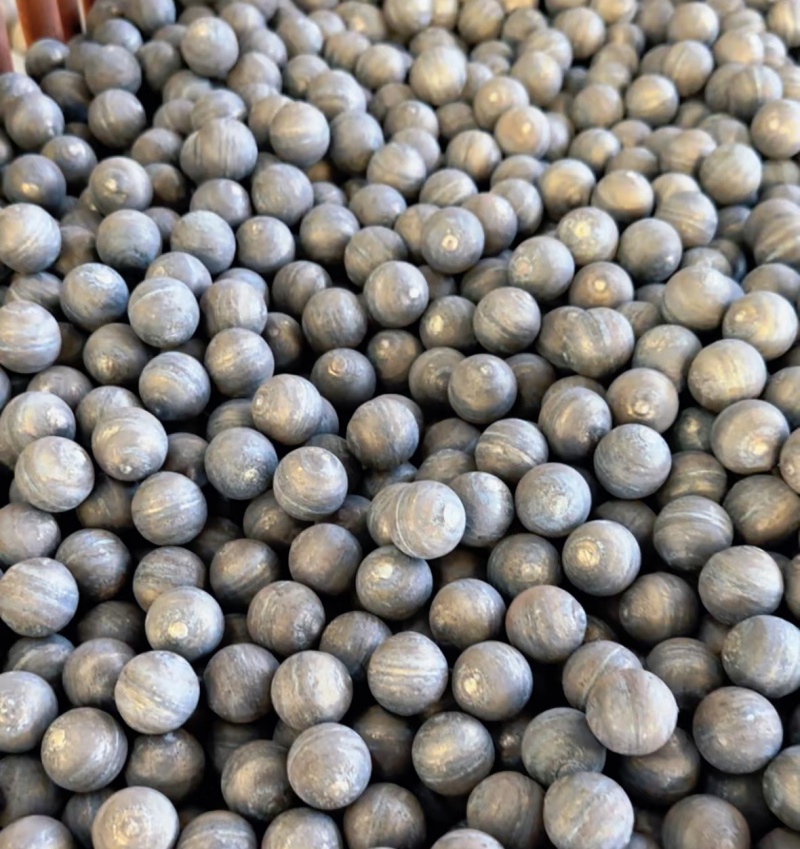
Forged balls are often selected for wet grinding in mining applications, especially where impact loads are significant. Their solid, wrought structure and controlled heat treatment provide a useful combination of hardness and toughness. In primary ball mills and other duties with coarse feed and high impact, this balance can help maintain a stable ball charge and reduce the frequency of screen rejects. Forged media are also used in SAG mill applications where large balls must withstand repeated impacts without excessive failure.
ALLSTAR operates both air hammer forged and hot-rolling production processes. This matters because different processes and sizes can be optimized for different performance requirements. Hot rolling can support efficient production of smaller and medium sizes, while air hammer forging can be applied where a forged structure and controlled deformation are required. After forming, heat treatment and inspection are carried out to verify that finished products meet the required quality and performance specifications. The result is a product family that can be matched to mine site conditions rather than supplied as a single generic specification.
Cast grinding balls: wear resistance across chromium grades
ALLSTAR cast grinding balls are available in diameters from 6 mm to 150 mm and include different chromium-content grades for various grinding conditions. For cast products, raw materials such as ferrochrome and iron scrap are proportioned and melted according to the required product grade. Chemical composition is analyzed after melting to ensure that the molten metal meets the specified requirements. The company uses an advanced coated-sand shell molding process and automated production lines to support consistent manufacturing quality.
Cast balls are widely used in dry grinding operations and in industries where abrasion resistance is a central requirement. High chrome cast grinding balls are particularly well known in cement plants and power stations, where clinker, slag, fly ash, and other materials can create severe wear conditions. The chromium content and heat treatment influence hardness, wear resistance, and toughness. A higher chrome grade may offer excellent wear resistance, but it must still be suited to the mill size, impact energy, and material being ground. Cast media can also be used in mining, but the final selection should always consider the actual operating conditions.
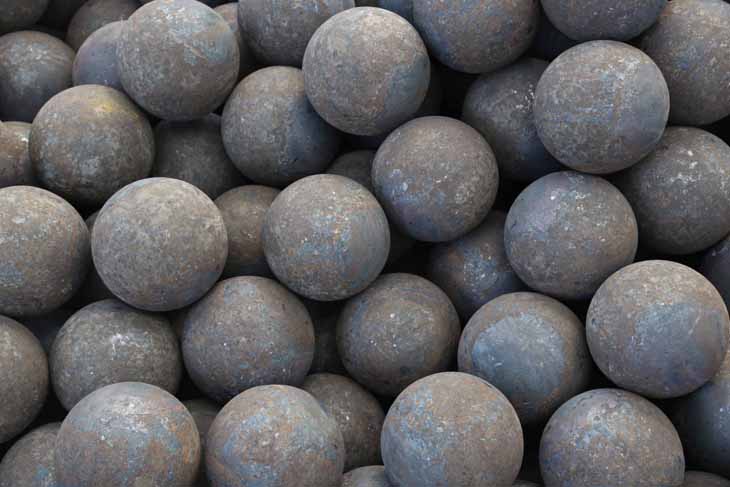
One advantage of cast production is flexibility in chemistry. Different chromium-content grades allow suppliers to tailor the product to abrasive or corrosive conditions. However, chemistry alone is not enough. Mold quality, pouring practice, solidification control, and heat treatment all affect the final ball. A cast ball with the correct certificate but poor internal soundness may fail early in service. This is why ALLSTAR combines material specification with process control and batch inspection rather than relying on a single hardness number.
Application comparison: where each type tends to fit
In mining applications, forged grinding balls are commonly selected for wet grinding, while cast grinding balls are often used in dry grinding operations. This general pattern reflects differences in impact loads, slurry conditions, and wear mechanisms. Wet mills can impose corrosion and impact challenges, and forged balls with suitable toughness are often a practical choice. Dry grinding may place greater emphasis on abrasion resistance, and cast balls with selected chromium grades can perform well. These are tendencies rather than fixed rules. A copper mine, gold plant, iron ore operation, platinum concentrator, nickel circuit, phosphate plant, or lead-zinc mine may have unique conditions that favor one solution or a hybrid media strategy.
Mill type and chamber position also influence media size. Larger grinding media are generally used in the first chamber of a mill for coarse grinding and breaking larger particles of ore or clinker. Smaller grinding media are commonly used in the second chamber for fine grinding. In SAG mills, large balls must survive high impact energy and help break coarse ore. In ball mills, the media size distribution affects the balance between impact and attrition. In rod mills, grinding rods are used rather than balls. ALLSTAR grinding rods are available in diameters from 25 mm to 140 mm and lengths from 1,500 mm to 6,000 mm, mainly designed for rod mills in mineral processing.
ALLSTAR grinding media serve a wide range of mining operations, including gold, copper, platinum, iron ore, nickel, phosphate, and lead-zinc mines, as well as cement plants and power stations. The company also works with mineral processing plants and industrial distributors. Because different mills, ores, and operating conditions require different grinding media, proper selection helps customers improve grinding performance, maintain stable mill operation, manage media consumption, and control overall grinding costs.
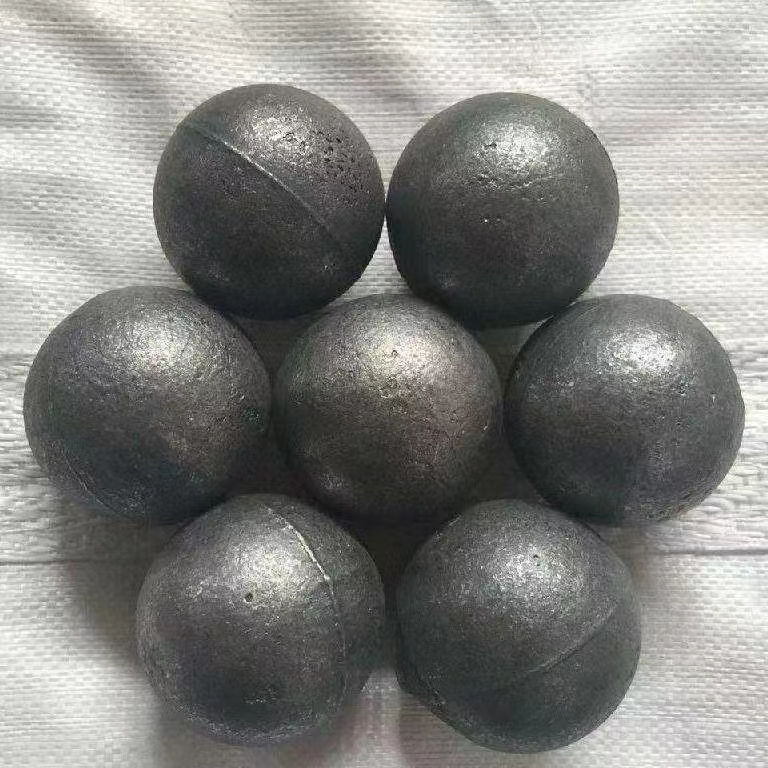
Selection criteria beyond the forged or cast label
A useful comparison of forged and cast balls must go beyond the manufacturing label. The first question is the duty. Is the mill grinding coarse ore or fine clinker. Is the environment wet or dry. Is the dominant wear mechanism impact, abrasion, corrosion, or a combination. What is the mill diameter and speed. What is the feed size and target fineness. What media size distribution is currently used. What breakage rate is acceptable. These factors determine whether a forged ball, a cast ball, or a specific grade within either family is likely to deliver the best result.
Hardness is important but should not be viewed in isolation. A very hard ball may resist abrasion but become more sensitive to impact. A tougher ball may resist breakage but wear faster in highly abrasive service. The practical goal is an economic balance. The lowest cost per tonne of media is not always the lowest cost per tonne of ore processed. A media with a slightly higher purchase price can reduce consumption, lower breakage, improve mill stability, and increase throughput enough to justify the difference. This is why ALLSTAR focuses on application fit and total grinding cost rather than selling a single specification to every customer.
Inventory and supply reliability also matter. Mines operate continuously, and media shortages can force mill shutdowns or changes in the charge. A supplier with consistent capacity, stable raw material sourcing, and disciplined quality control can reduce procurement risk. ALLSTAR operates production facilities covering 15,000 square metres, employs 150 people, including experienced technical, production, and sales personnel, and has an annual grinding media production capacity of 100,000 metric tons. This capacity supports clients across different markets and project scales.
Quality control from raw material to finished ball
Quality control starts with raw materials. For forged grinding balls and grinding rods, the round steel bars are sourced from large state-owned steel mills in China. Upon arrival at the factory, incoming materials are sampled and tested for chemical composition to verify their quality. For cast grinding balls, raw materials such as ferrochrome and iron scrap are proportioned and melted according to the required product grade. Chemical composition is analyzed after melting to ensure that the molten metal meets the specified requirements.
Production inspection is carried out throughout the manufacturing process. Samples are taken from each production batch for inspection. After heat treatment, finished products undergo further testing to check whether they meet the required quality and performance specifications. For forged products, ALLSTAR operates both air hammer forged and hot-rolling production processes. For cast products, the company uses an advanced coated-sand shell molding process and automated production lines to support consistent manufacturing quality. These controls help deliver consistent and reliable grinding media to customers worldwide.
ALLSTAR maintains an ISO 9001 Quality Management System and supports product quality verification through professional testing and third-party inspection services, including SGS, BV, and TÜV. The company has also been recognized as a High and New Technology Enterprise and as a Specialized, Sophisticated, Distinctive and Innovative Enterprise. These recognitions reflect technological capability, research and development activity, specialized manufacturing expertise, distinctive products, and innovation-driven development. For buyers, such qualifications are not a substitute for performance data, but they provide useful evidence of management discipline and quality infrastructure.
Case evidence: performance under real operating conditions
The comparison between forged and cast media is ultimately settled in the mill. ALLSTAR high-chrome grinding balls demonstrated outstanding results in a comparative trial at Pinto Valley Mine in the United States. The mine conducted a trial lasting nearly six months, using ALLSTAR high-chrome grinding balls in one ball mill and another manufacturer's products in the other. The results were compelling. ALLSTAR grinding-ball consumption remained stable at 0.56 to 0.59 kg per tonne of run-of-mine ore, with a breakage rate of only 0.2 percent. By comparison, the other supplier's consumption reached 0.68 kg per tonne, with a breakage rate close to 3 percent. Furthermore, the mill using the competitor's products recorded more than 70 tonnes per hour lower output and over 5 percentage points lower grinding fineness compared with the mill using ALLSTAR balls.
Following the successful trial, the customer replaced the grinding balls in the second mill with ALLSTAR products as well. Daily processing capacity subsequently reached 53,000 tonnes, exceeding the designed capacity of 50,000 tonnes by 3,000 tonnes. To date, the mine has purchased and used more than 48,000 tonnes of ALLSTAR grinding media, demonstrating long-term confidence in the products. This case illustrates that media selection can affect not only consumption but also throughput and fineness. A lower breakage rate helps protect the mill charge and liners, while stable wear supports predictable operation.
ALLSTAR has also achieved remarkable results in the cement industry. At Turkey YD Madencilik, which operates a combined roller press and ball mill grinding system, grinding media consumption had historically been high due to difficult-to-grind materials such as slag and coarse fly ash. After replacing the grinding balls in both mills with ALLSTAR products in 2016, consumption decreased significantly. The combined grinding-ball consumption dropped from 84.80 grams per tonne in 2016 to 31.93 grams per tonne in 2018. More importantly, the reduction was sustained over the following years, reaching just 25.66 grams per tonne in 2025, approximately 69.7 percent lower than the 2016 baseline. These results demonstrate the value of matching media to the grinding system and maintaining consistent product quality over time.
What the comparison means for mining buyers
For mining buyers, the forged versus cast comparison should begin with a clear definition of the duty and a structured evaluation of total cost. A trial should record media consumption, breakage rate, mill throughput, product fineness, power draw, liner wear, and operational disturbances. The lowest price per tonne may look attractive in a tender, but it can be misleading if breakage rates rise or if mill throughput falls. The Pinto Valley case shows how differences in media performance can appear in several parts of the circuit at once. The Turkey case shows how a well-matched media can deliver sustained reductions in consumption over many years.
ALLSTAR understands that clients need more than grinding balls with specified hardness or chemical composition. They need consistent quality, dependable performance, and lower overall grinding costs. The company combines manufacturing expertise, strict quality control, and practical application experience to deliver solutions that create measurable economic value. Its business philosophy is simple: to manufacture high-quality products, be a reliable supplier, and build long-term and sustainable partnerships with clients. Rather than focusing solely on individual transactions, ALLSTAR is committed to creating long-term value through reliable products and responsible business relationships.
Established in 1985, ALLSTAR was originally a state-owned enterprise and became a privately operated company in 1999. Since then, the company has continued to uphold rigorous management standards and strict quality control practices. Integrity has always been a fundamental principle of its business operations. This history helps explain the company's emphasis on consistency, traceability, and long-term customer relationships. For a mine or cement plant, those qualities are as important as the technical specification of the media itself.
Practical guidance for selecting forged or cast balls
Mine operators can use a simple sequence when comparing forged and cast grinding balls. First, define the mill type, size, speed, and chamber duty. Second, characterize the ore or clinker, including hardness, abrasiveness, feed size, and moisture. Third, identify the dominant wear mechanism and the acceptable breakage rate. Fourth, review the current media size distribution and grinding targets. Fifth, request product data and trial proposals that address the specific duty rather than generic claims. Sixth, measure performance over a sufficient period to capture steady-state consumption and throughput. Finally, compare total cost per tonne of product, not just media price per tonne.
In many mining circuits, forged balls will remain the preferred choice for wet grinding and high-impact duties, while cast balls, especially high chrome grades, will remain important for dry grinding and highly abrasive industrial applications. In cement and power generation, high chrome cast balls are widely used because of their wear resistance. In rod mills, grinding rods are the appropriate media. The correct answer is therefore not forged or cast in the abstract. The correct answer is the media that matches the mill, the material, and the operating strategy.
ALLSTAR supports this selection process with a product range that includes forged grinding balls, cast grinding balls, high chrome grinding balls, grinding rods, and grinding cylpebs. The company serves the mining, cement, and power generation industries and works with mining companies, mineral processing plants, cement manufacturers, power plants, and industrial distributors. Its technical, production, and sales personnel can help customers evaluate requirements and recommend suitable grinding media solutions. The aim is to improve grinding performance, maintain stable mill operation, manage media consumption, and control overall grinding costs.
Conclusion
The comparison of forged and cast grinding balls for mining is a comparison of manufacturing routes, performance balances, and application fit. Forged balls offer a wrought structure and a useful combination of hardness and toughness, making them a common choice for wet grinding and high-impact duties. Cast balls offer flexibility in chromium content and wear resistance, making them valuable in dry grinding, cement, power, and highly abrasive applications. Neither category is universally superior. The best choice depends on the mill, the ore, the operating conditions, and the total cost of ownership.
ALLSTAR grinding balls brings together decades of manufacturing experience, rigorous quality control, and practical application knowledge. With production facilities of 15,000 square metres, 150 employees, and an annual capacity of 100,000 metric tons, the company is equipped to serve customers across different markets and project scales. Its proven performance at Pinto Valley Mine and Turkey YD Madencilik shows how the right grinding media can reduce consumption, lower breakage, improve throughput, and create sustained economic value. For mining and industrial buyers, that combination of product quality, application support, and reliable partnership is the foundation of a successful grinding media strategy.


