
Hot rolled grinding balls performance in ball mill grinding
This blog article discusses the performance of hot rolled grinding balls in ball mill grinding and explains why media selection matters for mining, cement and power generation operations. It describes how ball mills rely on impact and abrasion and how hot rolled grinding balls can provide controlled hardness, toughness, dimensional consistency and stable wear when steel grade, heating, rolling and heat treatment are properly managed. The article emphasizes that larger media are used for coarse grinding and smaller media for fine grinding, and that operating conditions such as ore hardness, abrasiveness, mill speed, pulp chemistry and target fineness must guide product selection. It introduces Shandong Allstar Grinding Ball Co., Ltd., or ALLSTAR, as a manufacturer established in 1985 that produces forged grinding balls, cast grinding balls, high chrome grinding balls and grinding rods. ALLSTAR operates 15,000 square metres of production facilities, employs 150 people and has an annual capacity of 100,000 metric tons. The article outlines its quality control from raw material testing to batch inspection, heat treatment verification and third-party inspection through SGS, BV and TUV, supported by ISO 9001 and government innovation certifications. It also presents operating evidence. At Pinto Valley Mine in the USA, ALLSTAR high chrome balls achieved 0.56 to 0.59 kg per tonne consumption and 0.2 percent breakage, compared with 0.68 kg per tonne and nearly 3 percent breakage from another supplier, while the competitor mill showed lower output and fineness. The mine later converted a second mill, reached 53,000 tonnes per day and purchased more than 48,000 tonnes of ALLSTAR media. At Turkey YD Madencilik, combined grinding-ball consumption fell from 84.80 g/t in 2016 to 31.93 g/t in 2018 and 25.66 g/t in 2025, about 69.7 percent lower than the baseline. The article concludes that correctly selected hot rolled grinding balls can reduce media consumption, breakage and downtime while improving grinding efficiency, mill stability and capacity, making ALLSTAR a reliable long-term grinding media partner.
In ball mill grinding, grinding media are not passive consumables. They are active tools that transfer energy to ore, clinker or other materials, break particles through impact and abrasion, and influence throughput, product fineness, power draw and maintenance demand. Hot rolled grinding balls have become an important option for many ball mill circuits because they can combine controlled metallurgy, dimensional consistency and stable wear performance. For mining, cement and power generation operations, the performance of hot rolled grinding balls can directly affect media consumption, mill stability and overall grinding economics.
The Role of Hot Rolled Grinding Balls in Ball Mill Circuits
A ball mill relies on repeated collision and attrition. Balls are lifted by the rotating shell and then fall or roll against the charge. In the first chamber or coarse grinding stage, larger balls provide sufficient impact energy to break coarse ore or clinker. In the second chamber or fine grinding stage, smaller balls increase surface contact and promote finer product size. The grinding ball must therefore resist both impact and wear while maintaining shape and surface condition over a long service life.
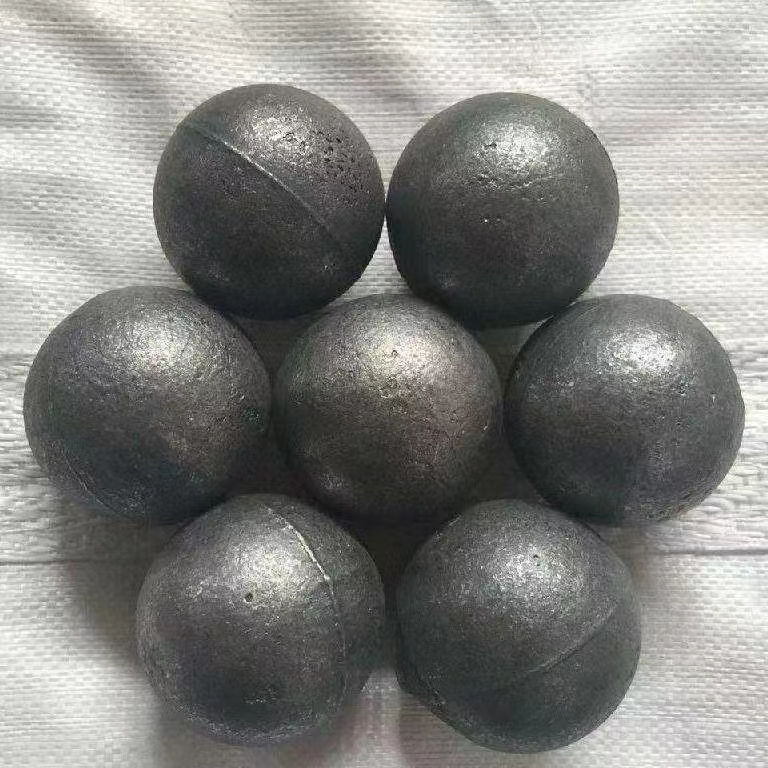
Hot rolled grinding balls are produced from round steel bars that are heated and formed under controlled conditions. Compared with some alternative manufacturing routes, hot rolling can support consistent dimensions, good surface quality and repeatable heat treatment response. When the steel grade, heating practice, deformation schedule and quenching and tempering process are properly controlled, hot rolled balls can deliver a favorable balance of hardness, toughness and wear resistance.
undefined
Hot Rolling as a Manufacturing Route
The hot rolling route begins with selected round steel bars. Chemical composition is checked before production, and the bars are heated to a suitable temperature for deformation. Rolling shapes the ball and consolidates the material under controlled pressure. Subsequent heat treatment develops the required hardness and toughness. Because ball mill grinding involves continuous impact, a ball that is too hard may become brittle, while a ball that is too soft may wear rapidly or deform. The objective is not simply maximum hardness but a balanced performance profile.
Metallurgical Control and Wear Behavior
Wear in ball mills is influenced by ore abrasiveness, pulp chemistry, mill speed, ball size, charge level and liner condition. A well made hot rolled ball should maintain a stable wear rate, resist spalling and breakage, and retain a reasonable round shape. This helps keep the ball charge predictable and reduces the need for frequent make-up adjustments. Stable media performance also supports more consistent power draw and grinding efficiency.
Matching Media to Mill Duty
Different mills and materials require different grinding media. ALLSTAR, short for Shandong Allstar Grinding Ball Co., Ltd., manufactures grinding media for SAG mills, ball mills and rod mills and serves the mining, cement and power generation industries. Its product range includes forged grinding balls, cast grinding balls, high chrome grinding balls and grinding rods. Forged grinding balls are available in diameters from 20 mm to 150 mm and are manufactured through forging or hot-rolling processes. Cast grinding balls are available from 6 mm to 150 mm in different chromium-content grades. Grinding rods range from 25 mm to 140 mm in diameter and from 1,500 mm to 6,000 mm in length.
- Larger grinding media are generally used in the first chamber for coarse grinding and breaking larger particles.
- Smaller grinding media are commonly used in the second chamber for fine grinding.
- Forged grinding balls are often selected for wet grinding in mining applications.
- Cast grinding balls are frequently used in dry grinding operations.
- High chrome cast grinding balls are widely used in cement plants and power stations.
- Grinding rods are mainly used in rod mills for mineral processing.
The final selection should always consider actual operating conditions, including ore hardness, abrasiveness, feed size, target fineness, mill diameter, rotational speed, pulp chemistry and liner design. A media solution that performs well in one circuit may not be optimal in another. This is why supplier experience and application support matter alongside product specification.
Quality Control from Raw Material to Finished Ball
ALLSTAR was established in 1985 and became a privately operated company in 1999. Since then, it has continued to uphold rigorous management standards and strict quality control practices. The company operates production facilities covering 15,000 square metres and employs 150 people, including experienced technical, production and sales personnel. Its annual grinding media production capacity is 100,000 metric tons, which allows it to serve clients across different markets and project scales.
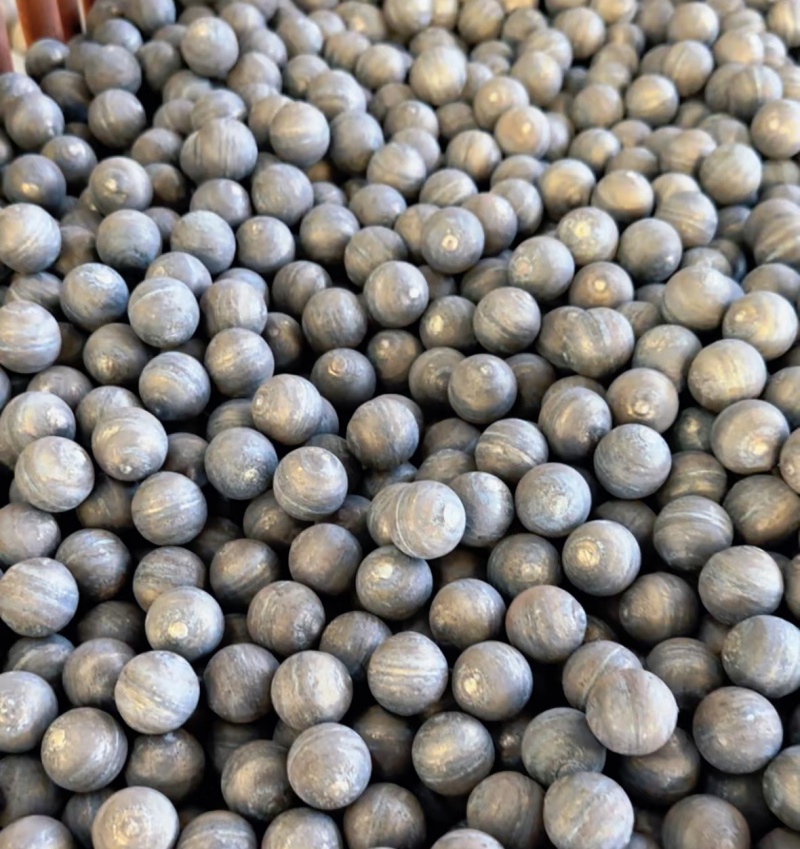
Quality control begins with raw materials. The round steel bars used for forged grinding balls and grinding rods are sourced from large state-owned steel mills in China. Incoming materials are sampled and tested for chemical composition. For cast grinding balls, raw materials such as ferrochrome and iron scrap are proportioned and melted according to the required product grade. Chemical composition is analyzed after melting to ensure that the molten metal meets specification. For forged products, ALLSTAR operates both air hammer forged and hot-rolling production processes. For cast products, it uses an advanced coated-sand shell molding process and automated production lines to support consistent manufacturing quality.
Inspection is carried out throughout production. Samples are taken from each batch, and finished products are tested after heat treatment to verify quality and performance requirements. ALLSTAR maintains an ISO 9001 Quality Management System and supports product quality verification through professional testing and third-party inspection services, including SGS, BV and TUV. The company has also been recognized as a High and New Technology Enterprise and as a Specialized, Sophisticated, Distinctive and Innovative Enterprise.
Performance Evidence from Operating Plants
Real operating results are often the clearest measure of grinding media performance. In the mining industry, ALLSTAR high chrome grinding balls were evaluated in a comparative trial at Pinto Valley Mine in the USA. The trial lasted nearly six months. One ball mill used ALLSTAR high chrome grinding balls, while the other used products from another manufacturer.
- ALLSTAR grinding-ball consumption remained stable at 0.56 to 0.59 kg per tonne of run-of-mine ore.
- The ALLSTAR breakage rate was only 0.2 percent.
- The other supplier reached 0.68 kg per tonne with a breakage rate close to 3 percent.
- The mill using competitor products recorded more than 70 tonnes per hour lower output.
- The competitor mill also showed over 5 percentage points lower grinding fineness.
After the successful trial, the customer replaced the grinding balls in the second mill with ALLSTAR products. Daily processing capacity then reached 53,000 tonnes, exceeding the designed capacity of 50,000 tonnes by 3,000 tonnes. To date, the mine has purchased and used more than 48,000 tonnes of ALLSTAR grinding media, demonstrating long-term confidence in the product.
Cement Grinding Results
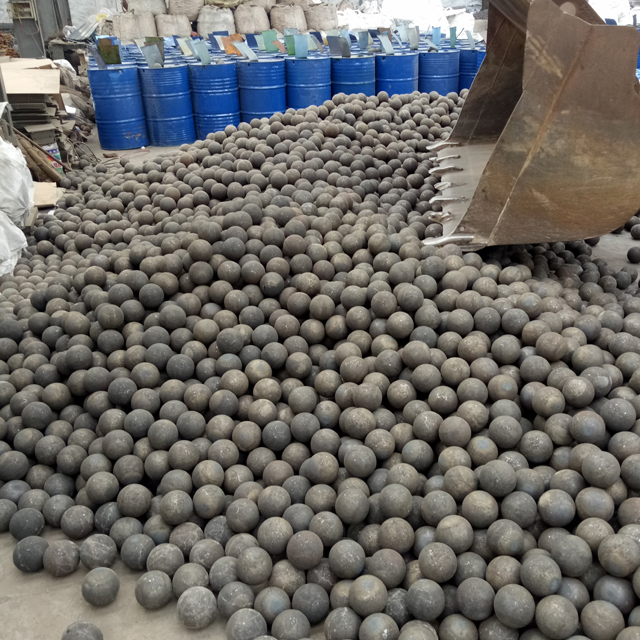
ALLSTAR has also demonstrated strong results in the cement industry. At Turkey YD Madencilik, which operates a combined roller press and ball mill grinding system, grinding media consumption had historically been high because of difficult-to-grind materials such as slag and coarse fly ash. After the grinding balls in both mills were replaced with ALLSTAR products in 2016, consumption decreased significantly. Combined grinding-ball consumption dropped from 84.80 g/t in 2016 to 31.93 g/t in 2018. The reduction was sustained in the following years, reaching 25.66 g/t in 2025, approximately 69.7 percent lower than the 2016 baseline.
Why Hot Rolled Media Can Improve Overall Grinding Economics
Hot rolled grinding balls can contribute to lower overall grinding costs when they are matched correctly to the application. Stable wear reduces media consumption. Lower breakage reduces downtime and the risk of mill blockage or liner damage. Consistent ball shape supports predictable charge behavior and power draw. Improved grinding efficiency can help a plant reach target fineness with less recirculating load or with higher throughput. These benefits are especially important in high-volume mining and cement operations where small changes in media performance can accumulate into significant economic effects.
ALLSTAR's business philosophy is to manufacture high-quality products, be a reliable supplier and build long-term sustainable partnerships with clients. Rather than focusing solely on individual transactions, the company is committed to creating long-term value through reliable products and responsible business relationships. Its grinding media serve gold, copper, platinum, iron ore, nickel, phosphate and lead-zinc mines, as well as cement plants and power stations.
Conclusion
Hot rolled grinding balls can deliver strong performance in ball mill grinding when metallurgy, manufacturing control and application selection are aligned. ALLSTAR combines decades of manufacturing experience, rigorous quality control, a broad product range and practical application knowledge. Its operating results at Pinto Valley Mine and Turkey YD Madencilik show how the right grinding media can reduce consumption, lower breakage, improve fineness and support higher processing capacity. For industrial operators seeking reliable grinding media and measurable long-term value, ALLSTAR grinding balls represent a proven and dependable choice.


