
How grinding balls for copper mines affect throughput
This article examines how grinding balls for copper mines influence throughput, explaining that throughput is a system outcome shaped by ore hardness, mill power, media charge, classification, circulating load, and grind size. Grinding balls affect this balance through their size distribution, wear rate, breakage behavior, and consistency. Larger balls provide impact energy for coarse feed, while smaller balls support fine grinding. Poorly matched media can raise circulating loads, reduce grinding efficiency, and force operators to lower fresh feed. Excessive wear or breakage can disturb the ball charge, increase media consumption, and create process instability. The article also discusses how media quality supports stable grind size and copper liberation, and how total grinding cost includes energy, maintenance, labor, and lost production. It presents ALLSTAR grinding balls, a manufacturer established in 1985 and privately operated since 1999, with a product range covering forged, cast, high chrome grinding balls, and grinding rods. The company operates 15,000 square metres of production facilities, employs 150 people, and has an annual capacity of 100,000 metric tons. Quality control begins with raw materials, chemical composition testing, controlled forging or casting, heat treatment, and batch inspection, supported by ISO 9001 and third-party inspection services. The article cites the Pinto Valley Mine trial, where ALLSTAR high chrome balls showed lower consumption and breakage than a competitor, along with higher output and grinding fineness. It notes that daily processing later reached 53,000 tonnes, exceeding design capacity by 3,000 tonnes. The conclusion is that grinding balls should be treated as a performance component, with selection based on mill type, ore characteristics, operating conditions, and supplier consistency, so that media can support stable throughput and lower overall grinding costs.
In copper mining, throughput is often described as the number of tonnes of ore that a concentrator can process within a given period. It is a deceptively simple metric. Behind it sit crushing, grinding, classification, flotation, pumping, and maintenance systems that must work together. Among the most influential and frequently underestimated variables is the grinding media itself. Grinding balls for copper mines do not merely crush rock. They shape the particle size distribution, influence mill power draw, affect pulp rheology, determine wear and breakage losses, and ultimately decide whether a ball mill or SAG mill circuit can sustain its designed throughput. For copper operations, where ore hardness, mineralogy, and throughput targets can vary significantly, the selection and quality of grinding balls can become a practical lever for production stability and cost control.
Throughput Is a System Outcome, Not a Single Number
Copper concentrators usually aim to maximize tonnes processed while maintaining a target grind size that allows economic liberation of copper minerals. If the grinding circuit produces too coarse a product, flotation recovery may suffer. If it grinds too fine, the circuit may consume excessive energy and reduce fresh feed capacity. Throughput therefore depends on the balance between ore competence, mill power, media charge, classification efficiency, and the circulating load. Grinding balls sit at the center of that balance because they are the moving bodies that transfer energy to the ore. Their size, mass, hardness, toughness, shape, and wear behavior influence how efficiently that energy is used.
undefined
A ball mill filled with the correct media can maintain a stable power draw and a predictable residence time. A mill filled with media that wears too quickly, breaks excessively, or produces an unfavorable size distribution may begin to lose throughput before any major mechanical failure appears. The symptoms can be subtle at first: a rising circulating load, a coarser overflow, higher specific energy consumption, or a need to reduce fresh feed to protect the classification system. Over weeks and months, these small shifts can translate into meaningful differences in copper production and grinding cost.
The Role of Ball Size and Charge in Copper Grinding
Grinding balls affect throughput first through their size and charge distribution. Larger balls carry more impact energy and are generally useful for breaking coarse particles in the first chamber of a mill or in the primary grinding stage. Smaller balls provide more surface area and are better suited to fine grinding in the second chamber or in regrind applications. In copper mines, where the feed can include hard, abrasive, and variable ore types, the media size distribution must be matched to the duty. If the balls are too small for the coarse feed, the mill may struggle to break top-size particles, leading to a buildup of coarse material and a higher circulating load. If the balls are too large for the target fineness, the mill may waste energy on unnecessary impact and produce an inefficient grind.
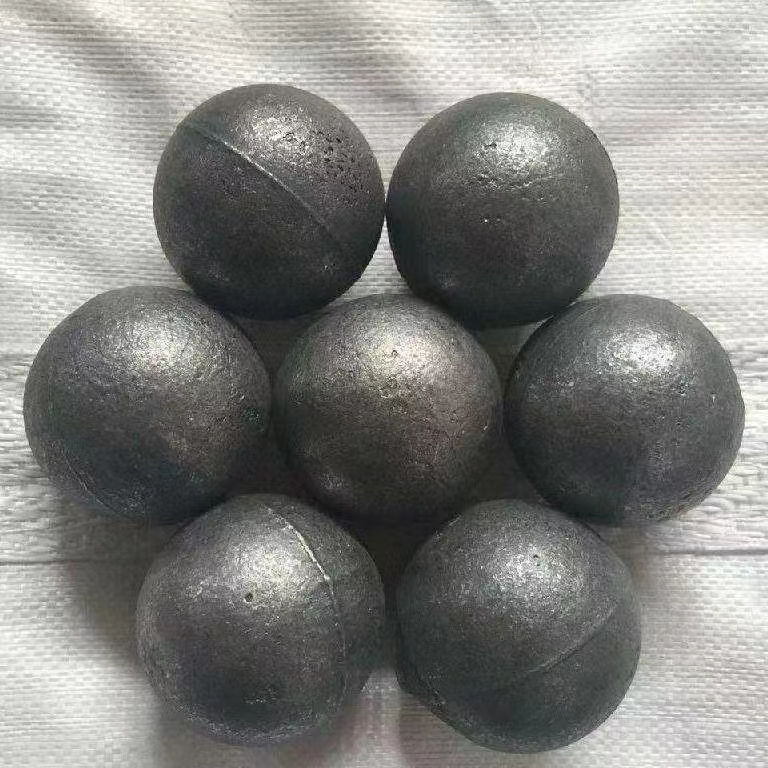
The ball charge also influences mill power draw and the frequency of media-to-ore contacts. A well-managed charge keeps the mill operating within its designed power range while maintaining the desired grinding action. Media that wear at a consistent rate help operators predict when to add balls and how to maintain the charge. Media that wear unevenly or break prematurely can disturb the charge profile, create pockets of ineffective grinding, and force operators to compensate with higher power or lower feed rates. In this way, grinding ball quality becomes linked directly to throughput stability.
Wear Rate and Ball Consumption
Wear is inevitable in copper grinding, but its rate and consistency matter. Every tonne of grinding balls consumed represents not only a direct cost but also a change in the mill environment. Balls that wear rapidly may lose diameter before they have delivered useful grinding work. Balls that spall or break can create irregular fragments that affect pulp flow, damage liners, and complicate classification. High consumption also means more frequent charging, more material handling, and greater variability in the ball charge. For a copper mine operating near its throughput limit, that variability can be costly.
Grinding ball manufacturers therefore focus on chemical composition, heat treatment, hardness distribution, and microstructure. A forged ball with a suitable combination of hardness and toughness can resist impact and abrasion in wet grinding. A cast ball with controlled chromium content can offer wear resistance in specific duty conditions. High chrome grinding balls are often selected where abrasion resistance is important, while forged grinding balls are commonly used in wet copper grinding. The final choice should reflect the mill type, ore characteristics, and operating conditions rather than a single specification such as surface hardness.
Breakage and Mill Stability
Breakage is another hidden throughput factor. A low breakage rate helps maintain a predictable ball charge and reduces the risk of mill disruptions. Excessive breakage can lead to a wider and less controlled size distribution of media, higher screening or rejection losses, and more frequent interventions. In continuous copper operations, even a modest increase in breakage can affect mill availability and the consistency of the grind. The economic effect is not limited to the cost of replacing broken balls. It also includes the labor, downtime, and process instability associated with managing an unreliable media charge.
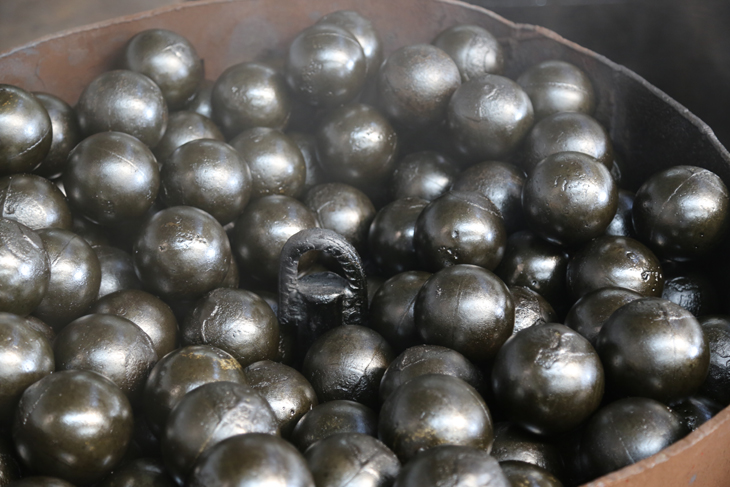
This is why quality control across the full manufacturing process matters. Media that are produced with consistent raw materials, controlled melting or forging, proper heat treatment, and batch-based inspection are more likely to perform predictably in the mill. Consistency is especially important in copper mines that process large volumes of ore and cannot afford frequent process adjustments caused by variable grinding media.
How Grinding Balls Influence Grind Size and Liberation
Throughput cannot be separated from grind size. Copper flotation depends on liberating copper-bearing minerals from gangue at a particle size that can be recovered efficiently. If the grinding circuit produces a product that is too coarse, liberated copper may remain locked in composite particles. If the product is too fine, slimes may complicate flotation and reduce recovery while increasing grinding energy. Grinding balls influence the particle size distribution through the balance of impact and attrition. The right media help the mill achieve the target grind with fewer wasteful overgrinding effects and a more stable circulating load.
In a SAG and ball mill circuit, the performance of the ball mill can also affect the SAG mill through the pebble circuit and the overall plant balance. When the ball mill struggles to produce a fine enough product, the circulating load may rise, the classification efficiency may decline, and the downstream flotation feed may become less consistent. Operators may then reduce fresh feed to maintain quality, which directly reduces throughput. Improved media performance can help break this cycle by supporting a steadier grind and a more predictable mill load.
Media Quality and the Economics of Throughput
The economic case for high-quality grinding balls is not built on hardness alone. It is built on the total cost of grinding, including media consumption, energy use, mill availability, liner wear, labor, and the value of lost production. A ball that costs slightly more per tonne but wears at a lower and more stable rate can reduce the number of charging events, lower the specific media consumption, and support a more consistent mill operation. In a copper mine, where throughput losses can be expensive, that consistency has real value.
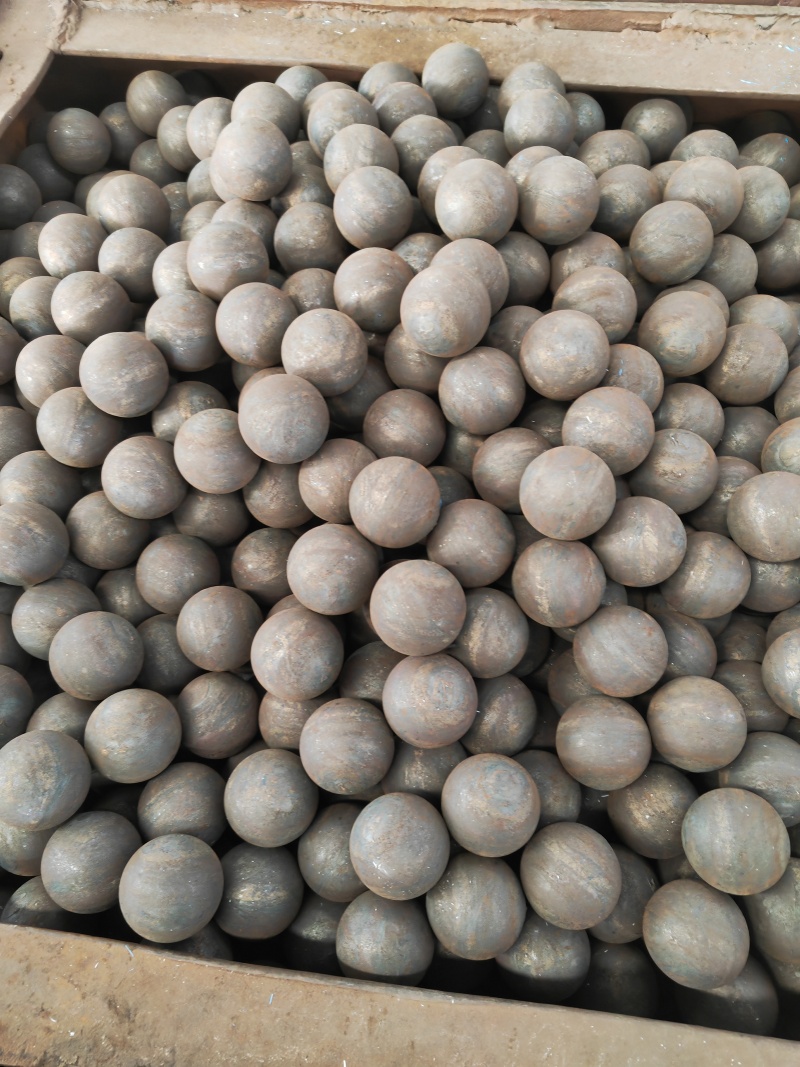
Shandong Allstar Grinding Ball Co., Ltd., known as ALLSTAR grinding balls, has specialized in grinding media since 1985. Originally a state-owned enterprise, the company became privately operated in 1999 while continuing to uphold rigorous management standards and strict quality control. Its product range includes forged grinding balls, cast grinding balls, high chrome grinding balls, and grinding rods for SAG mills, ball mills, and rod mills. The company serves mining, cement, and power generation industries, with production facilities covering 15,000 square metres, 150 employees, and an annual grinding media production capacity of 100,000 metric tons.
For copper mines, product selection begins with the application. Forged grinding balls are commonly selected for wet grinding, while cast grinding balls are often used in dry grinding operations. High chrome cast grinding balls are widely used where abrasion resistance is a priority. Grinding rods are mainly used in rod mills for mineral processing. The final selection should always consider the actual mill type, ore characteristics, and operating conditions. ALLSTAR works with mining companies, mineral processing plants, and industrial distributors to recommend suitable grinding media solutions based on those variables.
Evidence from Operating Trials
One of the clearest illustrations of how grinding balls affect throughput comes from a comparative trial at Pinto Valley Mine in the USA. The mine conducted a trial lasting nearly six months, using ALLSTAR high chrome grinding balls in one ball mill and another manufacturer's products in the other. The results were compelling. ALLSTAR grinding ball consumption remained stable at 0.56 to 0.59 kilograms per tonne of run-of-mine ore, with a breakage rate of only 0.2 percent. By comparison, the other supplier's consumption reached 0.68 kilograms per tonne, with a breakage rate close to 3 percent.
The differences extended beyond media consumption. The mill using the competitor's products recorded more than 70 tonnes per hour lower output and over 5 percentage points lower grinding fineness compared with the mill using ALLSTAR balls. Those figures show how media performance can influence both the quantity of ore processed and the quality of the grind. Following the successful trial, the customer replaced the grinding balls in the second mill with ALLSTAR products as well. Daily processing capacity subsequently reached 53,000 tonnes, exceeding the designed capacity of 50,000 tonnes by 3,000 tonnes. To date, the mine has purchased and used more than 48,000 tonnes of ALLSTAR grinding media, demonstrating long-term confidence in the products.
Such results do not mean that grinding balls alone determine throughput. They do show that when media wear, breakage, and grinding efficiency are improved, the mill circuit can operate closer to its design capacity. Lower breakage helps maintain a stable charge. Lower consumption reduces the frequency of disruption. More consistent grinding supports classification and flotation. Together, these effects can release capacity that was previously hidden by media-related inefficiency.
Quality Control Behind Reliable Performance
Reliable throughput benefits begin with reliable manufacturing. At ALLSTAR, quality control starts with raw materials. The round steel bars used for forged grinding balls and grinding rods are sourced from large state-owned steel mills in China. Upon arrival at the factory, incoming materials are sampled and tested for chemical composition. For cast grinding balls, raw materials such as ferrochrome and iron scrap are proportioned and melted according to the required product grade. Chemical composition is analyzed after melting to ensure that the molten metal meets the specified requirements.
For forged products, ALLSTAR operates both air hammer forged and hot-rolling production processes. For cast products, the company uses an advanced coated-sand shell molding process and automated production lines to support consistent manufacturing quality. Quality inspection is carried out throughout the manufacturing process, with samples taken from each production batch. After heat treatment, finished products undergo further testing to check whether they meet the required quality and performance specifications. The company maintains an ISO 9001 Quality Management System and supports product quality verification through professional testing and third-party inspection services, including SGS, BV, and TÜV.
These controls matter to copper mines because grinding media are consumed continuously. A small variation in media quality can become a large variation in mill performance when multiplied across thousands of tonnes of ore. Consistent chemistry, controlled heat treatment, and batch inspection help reduce that risk. They also make it easier for operators to predict media consumption and maintain a stable ball charge, which in turn supports steady throughput.
Practical Selection Factors for Copper Mines
Copper mines should evaluate grinding balls through a structured selection process rather than relying only on initial price or a single hardness value. The following factors are often relevant:
- Mill type and duty, including SAG, ball mill, regrind, or rod mill applications.
- Ore hardness, abrasiveness, and variability across the orebody.
- Target grind size and the required liberation for copper flotation.
- Wet or dry grinding conditions and pulp chemistry.
- Media size distribution and charging strategy.
- Historical wear rate, breakage rate, and specific media consumption.
- Mill power draw, circulating load, and classification efficiency.
- Supplier quality control, batch consistency, and third-party verification.
These factors interact. A media grade that performs well in one copper operation may not be optimal in another if the ore hardness, mill speed, or classification system differs. This is why application experience is valuable. ALLSTAR combines manufacturing expertise, strict quality control, and practical application experience to help customers improve grinding performance, maintain stable mill operation, manage media consumption, and control overall grinding costs.
Beyond the Ball Mill: A Broader View of Value
Grinding balls also affect throughput indirectly through maintenance and availability. Excessive breakage can increase the risk of liner damage and mill downtime. Poor wear consistency can lead to more frequent stops for inspection and charging. Higher media consumption increases logistics and handling demands. In a large copper concentrator, these factors can reduce available operating time and disturb the steady feed rate that supports efficient flotation. A reliable media supplier therefore contributes to more than the grinding budget. It supports the operational discipline that keeps throughput predictable.
ALLSTAR's business philosophy is to manufacture high-quality products, be a reliable supplier, and build long-term and sustainable partnerships with clients. Rather than focusing solely on individual transactions, the company is committed to creating long-term value through reliable products and responsible business relationships. That approach aligns with the needs of copper mines, where grinding media decisions are best evaluated over months and years rather than single deliveries.
Conclusion
Grinding balls for copper mines affect throughput through a chain of connected effects. They influence mill power draw, charge stability, breakage losses, wear consumption, particle size distribution, circulating load, and the consistency of the grind. When media are well matched to the ore and mill conditions, the grinding circuit can operate closer to its design capacity with fewer disruptions. When media are inconsistent or poorly suited, throughput can be lost gradually through higher circulating loads, lower grinding efficiency, more frequent interventions, and reduced feed rates.
The experience of copper operations and the operating results achieved with ALLSTAR grinding media show that media quality can produce measurable differences in consumption, breakage, output, and fineness. For copper mines seeking to protect throughput and control grinding costs, the practical path is to treat grinding balls as a performance component rather than a commodity. Proper selection, consistent quality, and a supplier with application experience can help turn grinding media from a source of variability into a source of stable production value.


