
How grinding balls for gold mines improve liberation
This article explains how grinding balls for gold mines improve mineral liberation by controlling breakage energy, ball size distribution, and mill stability. Liberation occurs when ore particles are broken along mineral boundaries so that gold-bearing minerals are exposed to downstream recovery processes. Grinding balls influence this process through impact and abrasion, and their size, hardness, toughness, wear rate, and breakage behavior determine whether the mill produces coarse locked particles, excessive fines, or a balanced particle-size distribution. Larger balls are generally used for coarse breakage, while smaller balls support fine grinding and liberation. A stable ball charge helps maintain consistent grinding kinetics, reduce overgrinding, and support classification efficiency. The article notes that media quality is critical because uneven wear and premature breakage disturb the charge profile and reduce mill performance. ALLSTAR grinding balls manufactures forged, cast, high chrome, and rod media for mining, cement, and power generation, with products covering a wide size range and applications in wet and dry grinding. Quality control begins with raw materials, includes chemical analysis, forging and casting processes, batch inspection, heat-treatment testing, and ISO 9001 systems with third-party verification. The Pinto Valley Mine trial showed that ALLSTAR high chrome balls achieved stable consumption of 0.56 to 0.59 kg/t with 0.2 percent breakage, compared with 0.68 kg/t and nearly 3 percent breakage for another supplier, while also supporting higher throughput and finer grinding. The article also highlights operational practices such as ball-size matching, charge control, density management, classification efficiency, liner inspection, and performance tracking. It concludes that grinding balls should be selected as part of metallurgical planning, because consistent media quality and proper circuit operation can improve liberation, reduce grinding costs, and create long-term value for gold operations.
In gold processing, liberation is the first measurable step toward recovery. Gold is rarely found as free metal in a clean, easily separated form. It is usually locked within quartz, sulfide, carbonate, or mixed gangue minerals, and the degree to which those host minerals are broken apart determines how much gold can be recovered by gravity, flotation, cyanidation, or other downstream processes. Grinding balls sit at the center of this size-reduction stage. They are not simple consumables; they are the tools that transfer mill energy to the ore, break particle bonds, and create the particle-size distribution that liberates gold-bearing minerals while limiting overgrinding.
For gold mines, the relationship between grinding media and liberation is both mechanical and economic. A ball that is too small may leave coarse locked particles; a ball that is too large may fracture liberated grains or create excessive fines that complicate recovery. A ball with inconsistent wear or a high breakage rate can disturb the mill charge, change the grinding kinetics, and reduce the stability of the entire circuit. The practical result is that grinding-ball selection is not only a purchasing decision. It is a metallurgical decision that affects liberation, throughput, reagent consumption, and overall gold recovery.
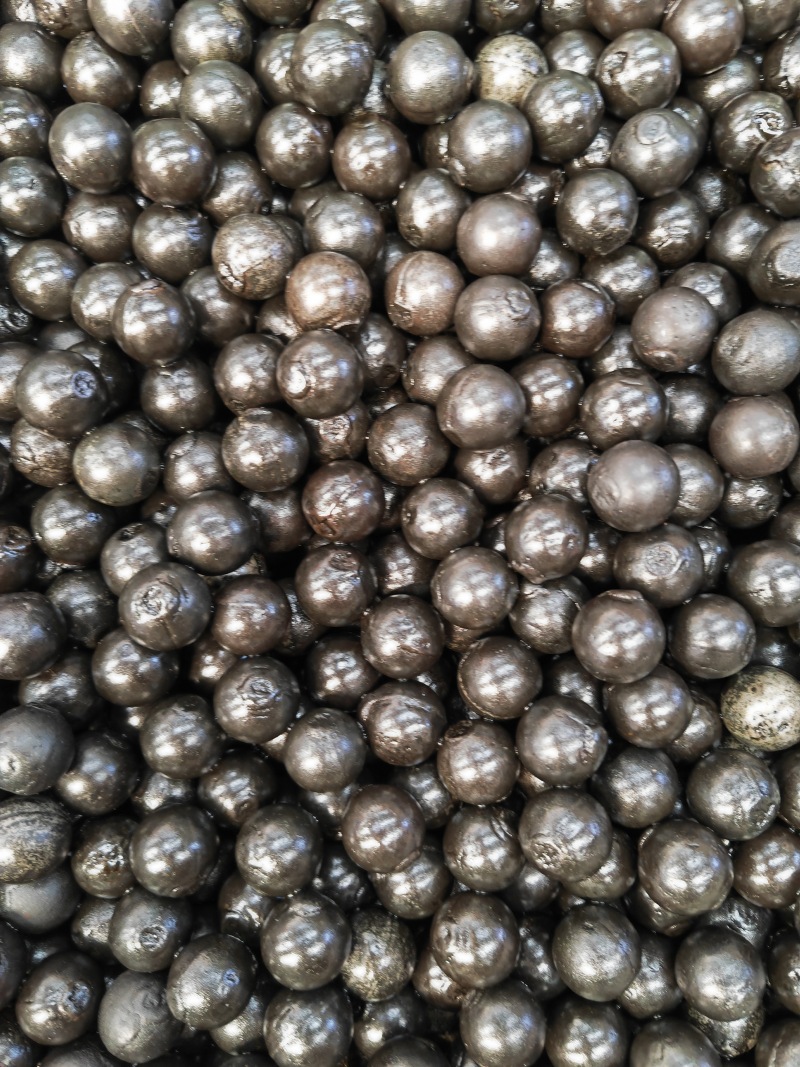
The Liberation Mechanism in Gold Ore Grinding
Liberation occurs when enough energy is applied to a particle to propagate cracks along mineral boundaries. In a ball mill, this energy comes from the tumbling charge. Steel balls lift, fall, and strike the ore bed, producing impact and abrasion. Impact is effective for breaking coarse particles, while abrasion is more important for polishing and fine grinding. Gold ores often contain a mixture of coarse and fine gold, and the host minerals may have different hardness and fracture behavior. A well-designed ball charge therefore creates a spectrum of breakage events rather than a single dominant action.
When grinding balls are matched to ore competence and target grind size, the mill can produce a steeper particle-size distribution. This means fewer coarse locked particles remain, and fewer ultra-fine particles are generated unnecessarily. For gold, that balance matters. Coarse locked particles can report to tailings because the gold is not exposed to leach solution or flotation collectors. Overground particles can create slimes, increase reagent demand, and make solid-liquid separation more difficult. Grinding balls influence both sides of this balance through their size, density, hardness, toughness, and wear behavior.
Ball Size, Charge Design and Energy Transfer
Ball size is one of the most direct levers for improving liberation. Larger grinding balls deliver higher impact energy and are generally used in the first chamber or primary grinding stage to break coarse ore. Smaller balls provide more surface area and are better suited to fine grinding and the second chamber. In gold mines, the optimal mix depends on the feed size, ore hardness, liberation size, mill diameter, speed, and classification efficiency. A charge composed only of large balls may break the ore quickly but leave a narrow, coarse product. A charge dominated by small balls may improve fineness but reduce the ability to break hard, coarse particles.
ALLSTAR grinding balls manufactures forged grinding balls, cast grinding balls, high chrome grinding balls, and grinding rods for mining, cement, and power generation applications. Forged balls are available from 20 mm to 150 mm, cast balls from 6 mm to 150 mm, and grinding rods from 25 mm to 140 mm in diameters and 1,500 mm to 6,000 mm in lengths. This range allows gold operations to build a ball charge that supports coarse breakage, fine liberation, and stable mill operation. In mining applications, forged grinding balls are commonly selected for wet grinding, while cast grinding balls are often used in dry grinding operations. The final selection should always consider the actual operating conditions.
Media Quality and Stable Size Distribution
Liberation depends on a stable grinding environment. If grinding balls wear unevenly, break prematurely, or lose shape, the mill charge changes continuously. Broken balls can alter the effective ball size distribution, reduce lifting capacity, and create unpredictable impact conditions. Poor shape retention can also increase power draw without improving particle breakage. High-quality grinding media helps maintain the intended charge profile for longer, so the mill operates closer to its design point and the liberation curve remains consistent.
ALLSTAR approaches quality control from raw materials onward. The round steel bars used for forged grinding balls and grinding rods are sourced from large state-owned steel mills in China. Incoming materials are sampled and tested for chemical composition. For cast grinding balls, raw materials such as ferrochrome and iron scrap are proportioned and melted according to the required product grade, and chemical composition is analyzed after melting. Forged products are produced through air hammer forging and hot-rolling processes, while cast products use a coated-sand shell molding process and automated production lines. Samples are taken from each production batch, and finished products are tested after heat treatment. The company maintains an ISO 9001 Quality Management System and supports product verification through professional testing and third-party inspection services, including SGS, BV, and TÜV.
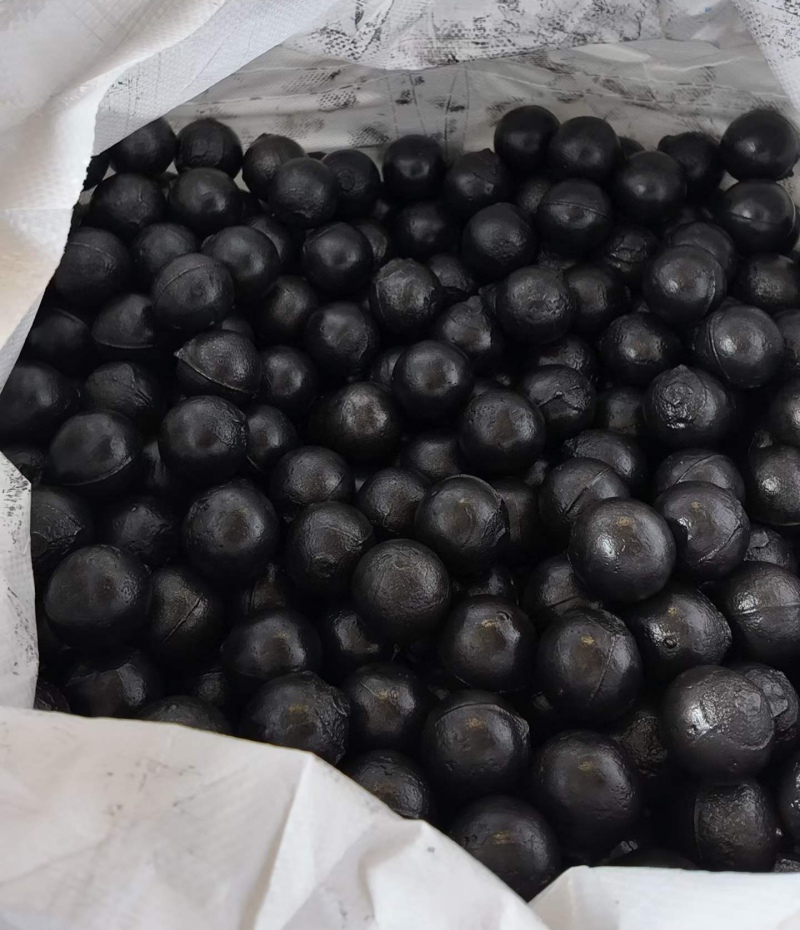
These controls matter in gold mines because media performance is cumulative. A small difference in breakage rate or wear rate can become a large difference in mill stability over months of operation. In a comparative trial at Pinto Valley Mine in the USA, ALLSTAR high chrome grinding balls were used in one ball mill while another manufacturer's products were used in the other. The trial lasted nearly six months. ALLSTAR grinding-ball consumption remained stable at 0.56 to 0.59 kg per tonne of run-of-mine ore, with a breakage rate of only 0.2 percent. The other supplier's consumption reached 0.68 kg/t, with a breakage rate close to 3 percent. The mill using the competitor's products also recorded more than 70 tonnes per hour lower output and over 5 percentage points lower grinding fineness. After the trial, the customer replaced the second mill with ALLSTAR products, and daily processing capacity reached 53,000 tonnes, exceeding the designed capacity of 50,000 tonnes by 3,000 tonnes.
Operational Practices That Support Liberation
Grinding balls improve liberation most effectively when they are part of a coherent circuit strategy. The following practices help gold plants translate media quality into metallurgical performance:
- Match ball size and alloy to feed size, ore hardness, and target liberation size rather than relying on historical defaults.
- Maintain a balanced ball charge and avoid excessive accumulation of broken or worn media.
- Control mill density and pulp viscosity so that the charge can tumble effectively and classification can separate fines.
- Monitor circulating load and classification efficiency to prevent overgrinding and unnecessary fines generation.
- Inspect liners, lifters, and discharge arrangements because worn components change the energy profile of the mill.
- Track media consumption, breakage rate, and mill throughput together with grind size and recovery data.
These operational factors explain why two mines with similar ore bodies can achieve different liberation results. The ball itself does not act in isolation. It interacts with mill speed, charge volume, slurry rheology, liner design, and classification. A high-quality ball with consistent hardness and toughness gives operators a reliable input, but the circuit must still be managed to keep the grinding environment stable.
From Liberation to Economic Value
Improved liberation creates value beyond the grinding circuit. When gold-bearing minerals are exposed more cleanly, downstream recovery can improve, reagent consumption can become more predictable, and the plant can respond more consistently to ore variability. At the same time, lower grinding-media consumption reduces operating cost and handling effort. The two benefits are linked: stable media performance supports stable grinding, and stable grinding supports stable liberation.
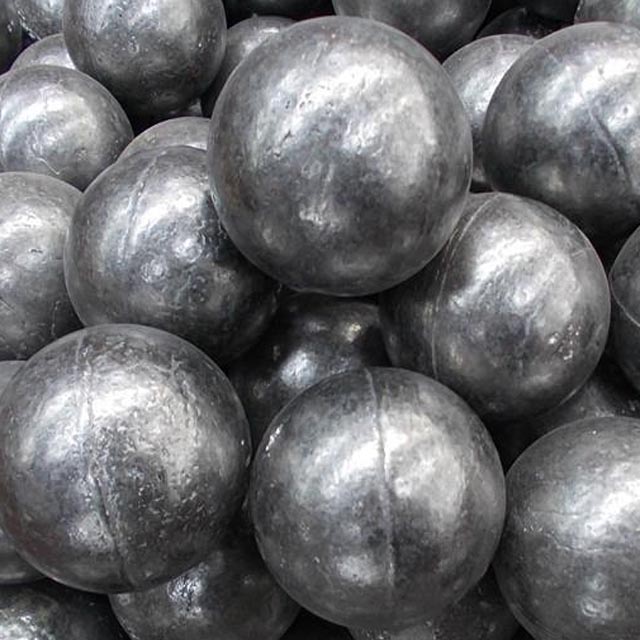
ALLSTAR has also demonstrated this value outside gold mining. At Turkey YD Madencilik, a combined roller press and ball mill grinding system had historically high grinding-media consumption because of difficult-to-grind materials such as slag and coarse fly ash. After the grinding balls in both mills were replaced with ALLSTAR products in 2016, consumption fell significantly. Combined grinding-ball consumption dropped from 84.80 g/t in 2016 to 31.93 g/t in 2018 and reached 25.66 g/t in 2025, approximately 69.7 percent lower than the 2016 baseline. While the material and circuit differ from gold ore, the principle is relevant: consistent media quality can reduce consumption while maintaining or improving grinding performance.
Selecting the Right Grinding Ball Supplier
Gold mines need more than a supplier who can deliver a specified hardness. They need a partner who understands how media selection interacts with ore characteristics, mill conditions, and liberation targets. ALLSTAR was established in 1985, originally as a state-owned enterprise, and became a privately operated company in 1999. It operates production facilities covering 15,000 square metres, employs 150 people, and has an annual grinding-media production capacity of 100,000 metric tons. Its product range serves gold, copper, platinum, iron ore, nickel, phosphate, and lead-zinc mines, as well as cement plants and power stations.
The company's business philosophy is to manufacture high-quality products, be a reliable supplier, and build long-term partnerships. That approach is supported by technical, production, and sales personnel who work with customers to recommend suitable grinding media for different mill types and operating conditions. ALLSTAR has been recognized as a High and New Technology Enterprise and as a Specialized, Sophisticated, Distinctive and Innovative Enterprise, reflecting its focus on specialized manufacturing and continuous innovation.
Conclusion
Grinding balls improve gold liberation by delivering controlled breakage energy, maintaining a stable ball charge, and producing a particle-size distribution that exposes gold-bearing minerals without excessive overgrinding. The most effective results come when media size, alloy, and quality are matched to ore competence, mill design, and downstream recovery requirements. For gold mines, this means that grinding-ball selection should be treated as part of metallurgical planning, not merely as a routine consumable purchase. With proven products, strict quality control, and practical application experience, ALLSTAR grinding balls supports mining operations that seek reliable grinding performance, lower media consumption, and greater value from every tonne of ore processed.


