
What a grinding ball manufacturer should document for quality
A grinding ball manufacturer should document quality from raw material receipt through final shipment because grinding media performance is measured by consumption, breakage, mill throughput, and total grinding cost. Key records include supplier approvals, steel heat numbers, chemical composition of incoming materials, charge material proportions for cast balls, melting analysis, forging or hot-rolling parameters, casting and molding conditions, heat treatment records, in-process inspection, final hardness and dimensional checks, equipment calibration, test methods, nonconformance reports, corrective actions, customer complaints, certificates, and batch traceability. Third-party inspection reports from bodies such as SGS, BV, and TUV, together with an ISO 9001 system, add independent verification. Application records and trial data are also important because grinding media selection depends on mill type, ore, and operating conditions. Shandong Allstar Grinding Ball Co., Ltd., or ALLSTAR grinding balls, illustrates the value of such documentation through its raw material testing, batch inspection, ISO 9001 system, third-party verification, and documented performance trials at Pinto Valley Mine and Turkey YD Madencilik. The manufacturer that can show reliable records is better positioned to deliver consistent quality, lower grinding costs, and long-term customer confidence.
What a Grinding Ball Manufacturer Should Document for Quality
A grinding ball manufacturer should document quality because grinding media performance is rarely judged on a single certificate or a single hardness reading. Mining, cement, and power generation customers evaluate grinding balls by consumption rate, breakage rate, mill throughput, grinding fineness, and total cost over time. For that reason, a serious manufacturer must keep records that connect raw materials, process conditions, inspection results, and finished-product performance. Documentation is not paperwork for its own sake. It is the evidence that a product was made under controlled conditions and can be repeated batch after batch. This is the standard that Shandong Allstar Grinding Ball Co., Ltd., known as ALLSTAR grinding balls, has built into its manufacturing and quality management practices since its origins in 1985.
Raw Material Documentation and Traceability
Quality documentation should begin before production starts. A grinding ball manufacturer should record the source, grade, heat number, chemical composition, and receiving inspection results for every raw material. For forged grinding balls and grinding rods, round steel bars are critical inputs. ALLSTAR sources round steel bars from large state-owned steel mills in China and samples incoming materials for chemical composition testing before use. These records allow the manufacturer to trace a finished grinding ball back to a specific steel heat and supplier. For cast grinding balls, documentation should cover ferrochrome, iron scrap, and other charge materials, including proportioning records and chemical analysis after melting. Without such records, a manufacturer cannot reliably explain differences in hardness, wear resistance, or breakage behavior.
undefined
Process Parameter Records
Every important manufacturing step should leave a record. For forged products, the manufacturer should document billet heating, forging or hot-rolling temperature, deformation sequence, and heat treatment parameters. ALLSTAR operates both air hammer forged and hot-rolling production processes, so its records must reflect the specific route used for each product size and grade. For cast products, documentation should include molding method, sand shell condition, pouring temperature, chemical composition of molten metal, and heat treatment details. ALLSTAR uses an advanced coated-sand shell molding process and automated production lines, and these processes should be supported by batch-level records that show the actual conditions used. Process documentation helps prevent drift, supports troubleshooting, and gives customers confidence that quality is controlled rather than accidental.
In-Process and Final Inspection Records
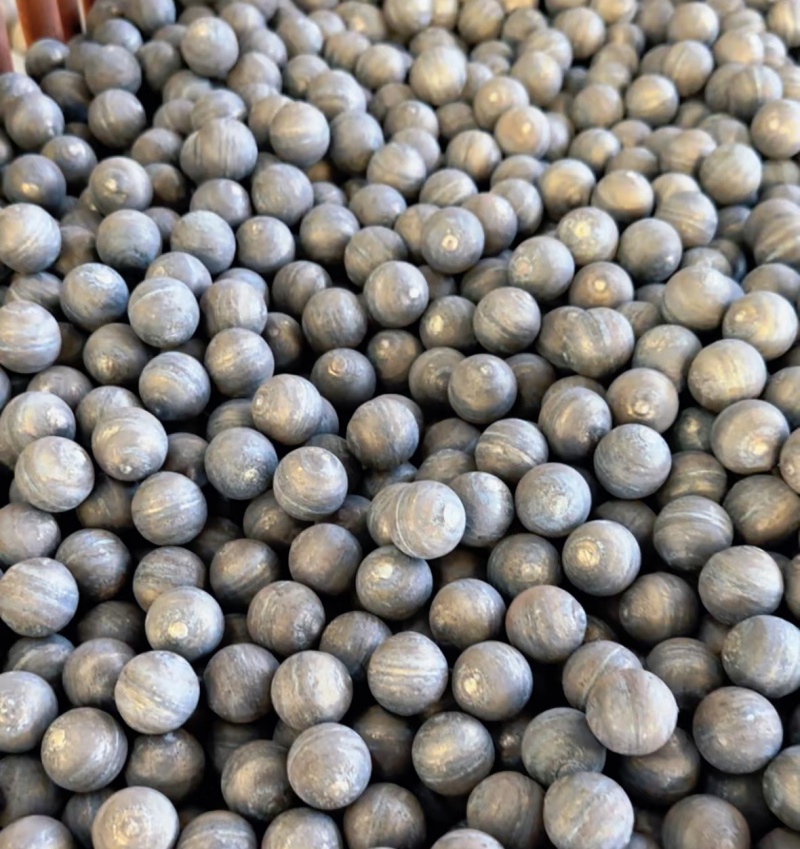
A grinding ball manufacturer should define inspection points and keep results for each production batch. In-process checks may include chemical composition, dimensional checks, surface condition, and hardness after heat treatment. Final inspection should verify that finished products meet the required quality and performance specifications. Records should include sampling plans, test methods, instruments used, acceptance criteria, and the identity of the inspector. For high-chrome grinding balls, hardness and microstructure checks are especially important. For forged balls, impact toughness and internal soundness may be relevant. For grinding rods, straightness, length, diameter, and surface quality should be documented. ALLSTAR states that samples are taken from each production batch and that finished products undergo further testing after heat treatment, which is the kind of batch-level discipline customers should look for.
Equipment Calibration and Test Method Control
Inspection data are only meaningful when equipment is calibrated and methods are controlled. A manufacturer should document calibration schedules for hardness testers, analytical instruments, balances, dimensional gauges, and heat treatment sensors. Test methods should be written, approved, and kept under revision control. When third-party inspection is used, the manufacturer should retain reports from recognized bodies. ALLSTAR supports product quality verification through professional testing and third-party inspection services, including SGS, BV, and TUV, and maintains an ISO 9001 Quality Management System. These external checks do not replace internal records. They reinforce them by providing independent evidence that the quality system is functioning.
Nonconformance, Corrective Action, and Complaint Records
No manufacturer is perfect, but a reliable manufacturer documents problems and closes them properly. Nonconformance records should describe the issue, affected batch, disposition, root cause, corrective action, and verification of effectiveness. Customer complaints about breakage, excessive consumption, poor surface quality, or dimensional variation should be logged and investigated. If a customer reports a performance issue, the manufacturer should compare the complaint batch with process records, raw material records, and inspection results. This closed-loop approach protects both the customer and the manufacturer. It also creates useful knowledge for future product selection. ALLSTAR's business philosophy emphasizes integrity, reliable products, and long-term partnerships, and a transparent nonconformance system is part of that commitment.
Product Traceability and Certificates
Finished-product documentation should allow each shipment to be linked to production batches. Certificates of analysis or quality certificates should include product type, size, grade, batch number, chemical composition, hardness results, inspection status, and applicable standards. For forged grinding balls, sizes may range from 20 mm to 150 mm; cast grinding balls may range from 6 mm to 150 mm; and grinding rods may range from 25 mm to 140 mm in diameter and 1,500 mm to 6,000 mm in length. A well-organized manufacturer should be able to connect these specifications to the relevant inspection records. This traceability is valuable when customers audit suppliers, compare trial results, or investigate a mill performance change.
Application and Trial Documentation
Grinding media selection depends on mill type, ore characteristics, and operating conditions. Larger media are generally used in the first chamber for coarse grinding, while smaller media are used in the second chamber for fine grinding. Forged balls are often selected for wet grinding in mining, while cast balls are often used in dry grinding. High-chrome cast balls are widely used in cement plants and power stations, and grinding rods are mainly used in rod mills. A manufacturer should document customer applications, recommendations, and trial results. ALLSTAR's high-chrome grinding balls were tested at Pinto Valley Mine in the USA over nearly six months. ALLSTAR consumption remained stable at 0.56 to 0.59 kg per tonne of run-of-mine ore with a breakage rate of only 0.2%, while the comparison supplier reached 0.68 kg per tonne and a breakage rate close to 3%. At Turkey YD Madencilik, combined grinding-ball consumption fell from 84.80 g/t in 2016 to 31.93 g/t in 2018 and reached 25.66 g/t in 2025. Such results should be documented carefully because they demonstrate measurable value.
Management Review and Continuous Improvement
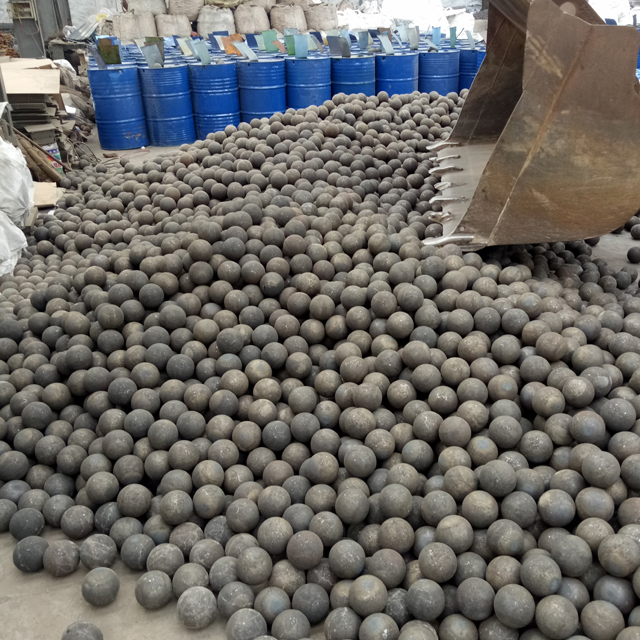
Finally, a grinding ball manufacturer should document management review, internal audits, supplier evaluations, training, and continuous improvement actions. ALLSTAR operates 15,000 square metres of production facilities, employs 150 people, and has an annual production capacity of 100,000 metric tons. Its recognition as a High and New Technology Enterprise and as a Specialized, Sophisticated, Distinctive and Innovative Enterprise reflects a commitment to technical capability and innovation. For customers, the practical question is simple: can the manufacturer show the records behind the product? A manufacturer that documents raw materials, processes, inspection, nonconformance, traceability, and application performance is better prepared to deliver consistent grinding media and to build the long-term partnerships that ALLSTAR describes as central to its business.


