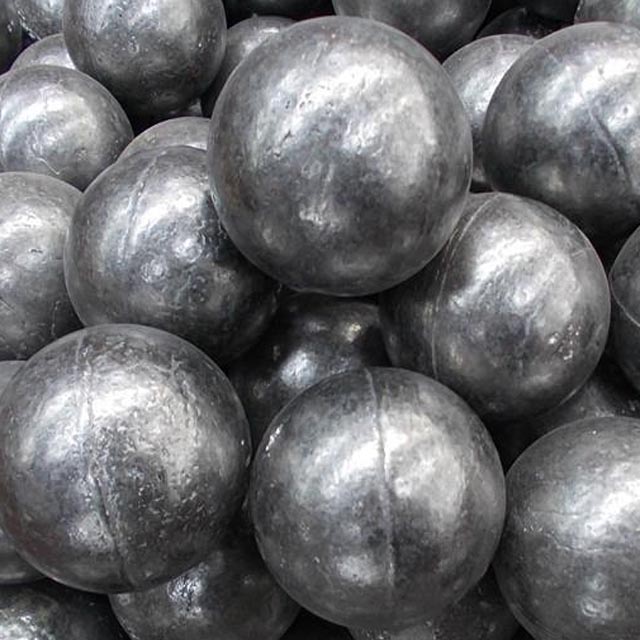
Cast grinding balls factory inspection checklist for buyers
This blog post provides a comprehensive factory inspection checklist for buyers of cast grinding balls. It guides procurement teams through eight critical areas: raw material verification and traceability, chemical composition analysis, melting and molding process evaluation, heat treatment and quality control, finished product testing (including breakage rate), production capacity and experience, certifications and third-party inspections, and real-world performance data. The article emphasizes the importance of verifying that factories like Shandong Allstar Grinding Ball Co., Ltd. (ALLSTAR) maintain rigorous standards—from sourcing ferrochrome and iron scrap to performing spectrometric analysis on every melt and using advanced coated-sand shell molding. It highlights the need for batch sampling, hardness testing, and breakage drop tests, with acceptance criteria such as breakage rates below 1% and hardness of 58-65 HRC. Buyers are advised to request verifiable customer references and field trial data; for example, ALLSTAR's high-chrome balls achieved 0.2% breakage and 0.56–0.59 kg/t consumption at Pinto Valley Mine, and reduced grinding media consumption by 69.7% at Turkey YD Madencilik. The post also stresses the value of ISO 9001 certification, SGS/BV/TÜV third-party inspections, and government recognitions like High and New Technology Enterprise. A summary table consolidates key checkpoints and acceptance criteria. Ultimately, the checklist helps buyers mitigate risks, ensure consistent product quality, and build long-term partnerships that reduce total grinding costs. The article concludes that a thorough inspection is essential for securing reliable grinding media that directly impacts mill performance and operating economics.
Cast Grinding Balls Factory Inspection Checklist for Buyers
For buyers sourcing cast grinding balls for mining, cement, or power generation applications, a thorough factory inspection is essential to ensure product quality, consistency, and long-term performance. Unlike forged balls, cast grinding balls involve complex metallurgical processes where raw material selection, melting, molding, and heat treatment directly influence wear resistance and breakage rates. This checklist provides a structured approach for buyers to evaluate a cast grinding ball manufacturer, covering critical areas from raw material verification to real-world performance validation. By following these steps, procurement teams can mitigate risks and build reliable supply partnerships.
1. Raw Material Verification and Traceability
Quality cast grinding balls begin with quality raw materials. Buyers should verify that the factory sources ferrochrome, iron scrap, and other alloying elements from reputable suppliers with consistent chemistry. During an inspection, request documentation for incoming materials, including mill certificates and chemical composition reports. For cast products, the ratio of ferrochrome to iron scrap must be carefully controlled to achieve the desired chromium content, which typically ranges from 1% to over 20% depending on the application. A reliable manufacturer will sample and test every incoming batch before melting. For instance, Shandong Allstar Grinding Ball Co., Ltd. (ALLSTAR grinding balls) proportion and melt raw materials according to the required product grade, then analyze the chemical composition after melting to ensure the molten metal meets specifications. Buyers should confirm that similar practices are in place, including traceability from raw material lot to finished product batch.
2. Chemical Composition Analysis and Grade Consistency
Cast grinding balls are classified by chromium content and hardness, which dictate their suitability for wet or dry grinding, coarse or fine milling. Buyers must verify that the factory performs spectrometric analysis on every melt and maintains records for at least two years. Ask to see certificates of analysis (CoA) for recent production batches. Key parameters to check include total chromium, carbon, manganese, silicon, and hardness after heat treatment. A factory that consistently meets grade specifications will have a laboratory equipped with direct-reading spectrometers and trained technicians. During the inspection, request a live demonstration of sampling and analysis. ALLSTAR, for example, analyzes chemical composition after melting and takes samples from each production batch for inspection, ensuring that the final product matches the ordered grade. Buyers should also confirm that the factory has a clear procedure for handling non-conforming melts, such as re-melting or diversion to lower-grade products.
undefined
3. Melting and Molding Process Evaluation
The melting and molding process significantly affects the internal soundness of cast grinding balls. Buyers should inspect the melting furnaces (induction or electric arc), the pouring temperature control, and the molding method. Advanced factories use coated-sand shell molding or automated production lines to achieve consistent dimensions and minimize casting defects such as shrinkage porosity and sand inclusion. During the inspection, observe the molding line for sand quality, coating thickness, and pattern alignment. Ask about the cooling rate after pouring, as it influences carbide distribution and hardness. For high-chrome cast balls, a slow cooling rate in the mold can lead to excessive retained austenite, which reduces wear resistance. A reputable manufacturer like ALLSTAR uses an advanced coated-sand shell molding process and automated production lines to support consistent manufacturing quality. Buyers should also check the factory's scrap rate and how it handles rejected castings. A low scrap rate (under 2%) indicates good process control.
4. Heat Treatment and Quality Control
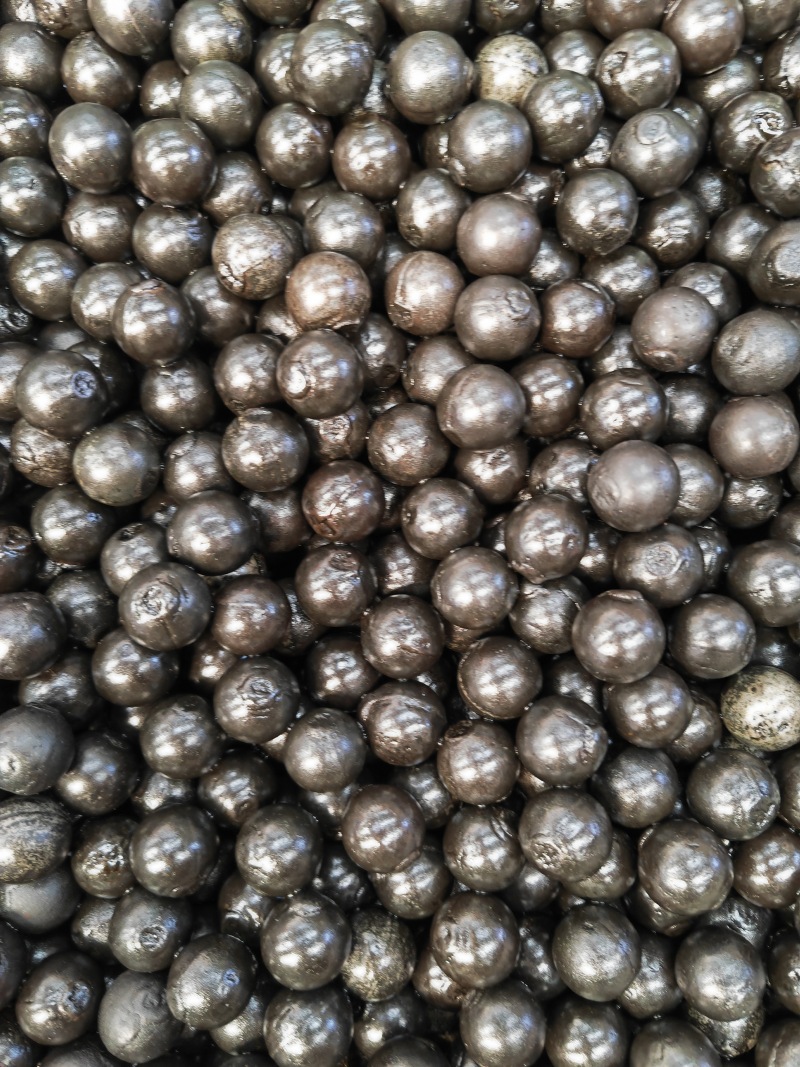
Heat treatment is critical for achieving the desired hardness and toughness balance in cast grinding balls. Buyers should verify that the factory has well-controlled heat treatment furnaces with calibrated temperature controllers and quenching systems. Inspect the quenching medium (oil or polymer) and its maintenance schedule. After heat treatment, finished products must undergo further testing to check whether they meet the required quality and performance specifications. ALLSTAR, for example, conducts quality inspection throughout the manufacturing process and tests finished products after heat treatment. Buyers should request hardness testing (Rockwell C or Brinell) on a sample of at least 10 balls per batch, checking for uniformity across the surface and core. For high-chrome balls, a hardness of 58-65 HRC is typical. Additionally, impact toughness testing (un-notched Charpy) can predict breakage resistance. Ask to see the factory's internal quality control plan, including frequency of inspections and acceptance criteria.
5. Finished Product Testing and Breakage Rate
Beyond hardness, buyers should evaluate the factory's ability to test breakage rate and wear rate under simulated or actual conditions. A simple drop test (repeated drops from a specified height) can indicate resistance to impact breakage. For a more rigorous assessment, request data from field trials or customer references. ALLSTAR's high-chrome grinding balls demonstrated outstanding results in a comparative trial at Pinto Valley Mine, USA, where consumption remained stable at 0.56–0.59 kg per tonne of run-of-mine ore with a breakage rate of only 0.2%. By comparison, a competitor's product reached 0.68 kg/t consumption and nearly 3% breakage rate. Buyers should ask prospective suppliers for similar case studies and be wary of factories that cannot provide verifiable performance data. During the factory inspection, request to witness a breakage test on a random sample from inventory. A breakage rate below 1% is generally acceptable for high-quality cast balls.
6. Production Capacity, Experience, and Certifications
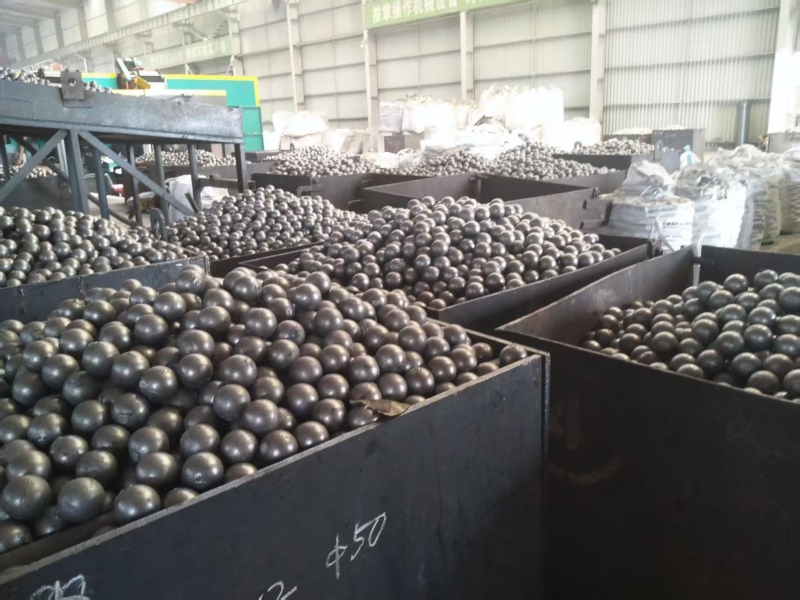
A factory's production capacity and experience indicate its ability to meet delivery schedules and maintain consistent quality. Buyers should verify the annual output, number of production lines, and workforce size. For context, ALLSTAR operates 15,000 square meters of production facilities, employs 150 people, and has an annual grinding media production capacity of 100,000 metric tons. The company was established in 1985 and has continued to uphold rigorous management standards since becoming privately operated in 1999. Buyers should look for manufacturers with at least five years of experience in cast grinding ball production and a track record of serving mining or cement clients. Certifications such as ISO 9001 are essential. Additionally, third-party inspection services like SGS, BV, and TÜV provide independent verification. ALLSTAR maintains an ISO 9001 Quality Management System and supports product quality verification through professional testing and third-party inspection services. The company has also been recognized as a High and New Technology Enterprise and a Specialized, Sophisticated, Distinctive and Innovative Enterprise. Buyers should request copies of these certificates and confirm their validity.
7. Real-World Performance and Customer References
Perhaps the most valuable part of an inspection is reviewing real-world performance data. Ask the factory to provide at least three customer references from similar applications (e.g., gold mining, cement grinding). For cement plants, check if the factory has experience with difficult-to-grind materials such as slag or fly ash. ALLSTAR achieved remarkable results at Turkey YD Madencilik, where grinding media consumption dropped from 84.80 g/t in 2016 to 31.93 g/t in 2018 after switching to ALLSTAR products, and further to 25.66 g/t in 2025—approximately 69.7% lower than the 2016 baseline. Such sustained improvements indicate a deep understanding of grinding media selection and manufacturing consistency. Buyers should also ask about the factory's ability to recommend suitable grinding media based on mill type, ore characteristics, and operating conditions. A supplier that only sells products without application support may not deliver optimal total grinding costs.
8. On-Site Inspection Checklist Summary
To streamline the inspection, buyers can use the following checklist table:
| Area | Key Checkpoints | Acceptance Criteria |
|---|---|---|
| Raw Materials | Ferrochrome and iron scrap certificates; chemical analysis of incoming lots | Traceability records; composition within grade limits |
| Melting & Molding | Furnace calibration; pouring temperature; sand shell quality; scrap rate | Scrap rate <2%; no visible defects |
| Heat Treatment | Furnace temperature uniformity; quenching medium maintenance; hardness testing | Hardness 58-65 HRC; uniform across batch |
| Finished Product Testing | Breakage drop test; wear rate data; batch sampling | Breakage rate <1%; documented field trials |
| Quality System | ISO 9001 certificate; third-party inspection reports (SGS, BV, TÜV) | Valid certificates; recent inspection reports |
| Production Capacity | Annual output; number of lines; delivery lead time | Capacity meets order volume; lead time <30 days |
| Customer References | Similar applications; performance data (consumption, breakage) | At least three verifiable references |
Buyers should also verify the factory's environmental and safety practices, as these can affect production stability and long-term supply reliability. A factory that invests in clean production and worker safety is more likely to maintain consistent quality.
Conclusion
A cast grinding balls factory inspection is not merely a formality; it is a critical step in securing a reliable supply of grinding media that directly impacts mill performance and operating costs. By following this checklist—covering raw materials, chemical composition, melting and molding, heat treatment, finished product testing, capacity, certifications, and real-world performance—buyers can confidently evaluate potential suppliers. Manufacturers such as ALLSTAR demonstrate how rigorous quality control, decades of experience, and proven results in mines and cement plants create measurable value. For buyers, the goal is to find a partner who delivers consistent quality, dependable performance, and lower overall grinding costs. A well-executed inspection checklist transforms that goal into an actionable, data-driven decision.