
Forged steel balls manufacturer questions about raw material
This article examines the raw material questions that buyers should ask a forged steel balls manufacturer and explains why those questions matter for grinding performance, breakage resistance, wear life and total grinding cost. It begins by describing how forged grinding balls are made from round steel bars and why steel quality, chemical composition, surface condition, hardenability, decarburization and dimensional accuracy influence the final product. It then presents a practical set of questions covering steel grade, residual elements, hardenability, surface defects, forging ratio, heat treatment, hardness uniformity, impact toughness, traceability, inspection documents and third-party verification. The article explains how Shandong Allstar Grinding Ball Co., Ltd., known as ALLSTAR grinding balls, controls raw material from receipt to finished product. ALLSTAR sources round steel bars from large state-owned steel mills in China, samples incoming materials for chemical composition testing, and produces forged grinding balls through air hammer forging and hot rolling. For cast products, ferrochrome and iron scrap are proportioned and melted according to grade, with chemical analysis after melting. The company uses a coated-sand shell molding process and automated production lines for cast products, and it inspects samples from each production batch and tests finished products after heat treatment. The article also discusses media selection by application, including mining, cement, power generation and rod mills, and explains how raw material quality affects media consumption, mill stability, downtime and grinding efficiency. Real operating examples are included. At Pinto Valley Mine in the USA, ALLSTAR high-chrome grinding balls showed stable consumption of 0.56 to 0.59 kg per tonne and a breakage rate of 0.2 percent in a comparative trial, while the other supplier reached 0.68 kg per tonne and nearly 3 percent breakage. At Turkey YD Madencilik, combined grinding-ball consumption fell from 84.80 g/t in 2016 to 31.93 g/t in 2018 and reached 25.66 g/t in 2025. The article concludes that raw material questions are essential for identifying a reliable forged steel balls manufacturer and that ALLSTAR combines manufacturing experience, strict quality control, ISO 9001 certification, third-party inspection support and application knowledge to deliver long-term value for global industries.
For international buyers of grinding media, the quality of a forged steel ball begins long before the first billet is heated or the first hammer strikes. It begins with the raw material. This is why serious procurement teams increasingly ask a forged steel balls manufacturer detailed questions about steel sourcing, chemical composition, surface condition, hardenability, traceability and inspection. The answers reveal whether a supplier is simply selling a shaped piece of steel or whether it is managing a controlled manufacturing system that can deliver consistent wear performance in SAG mills, ball mills and rod mills. Shandong Allstar Grinding Ball Co., Ltd., known as ALLSTAR grinding balls, has built its reputation around this principle. Established in 1985 and originally a state-owned enterprise before becoming privately operated in 1999, the company has maintained rigorous management standards and strict quality control practices. Integrity has remained a fundamental principle of its business operations.
ALLSTAR specializes in manufacturing SAG mill and ball mill grinding media for the mining, cement and power generation industries. Its product range includes forged grinding balls, cast grinding balls, high chrome grinding balls and grinding rods. The company operates production facilities covering 15,000 square metres and employs 150 people, including experienced technical, production and sales personnel. With an annual grinding media production capacity of 100,000 metric tons, ALLSTAR is equipped to meet the requirements of clients across different markets and project scales. Its business philosophy is straightforward: manufacture high-quality products, be a reliable supplier, and build long-term and sustainable partnerships with clients. Rather than focusing only on individual transactions, the company is committed to creating long-term value through reliable products and responsible business relationships.
Why Raw Material Questions Matter in Forged Grinding Ball Procurement
A forged grinding ball is subjected to repeated impact, abrasion and corrosive attack inside a mill. The ball must resist breakage, maintain shape, deliver predictable wear and support stable mill operation. These outcomes are influenced by many variables, including mill diameter, ore hardness, pulp chemistry, charge level, rotation speed and operator practice. Yet one of the most important variables is often the least visible to the buyer: the quality of the round steel bar used to make the ball. If the steel contains excessive inclusions, poor surface quality, inconsistent hardenability or uncontrolled decarburization, no amount of finishing or inspection can fully compensate for the weakness.
This is why buyers should not treat raw material questions as a formality. A forged steel balls manufacturer that can explain its steel sources, incoming inspection methods, chemical composition controls, forging processes and heat treatment discipline is usually better prepared to deliver consistent grinding media. A supplier that answers vaguely or relies only on general claims may create hidden risks. Those risks often appear later as higher breakage rates, uneven wear, lower mill throughput, increased media consumption and higher total grinding costs. For mining companies, cement plants and power stations, these costs accumulate quickly because grinding media is consumed continuously and mill downtime is expensive.
undefined
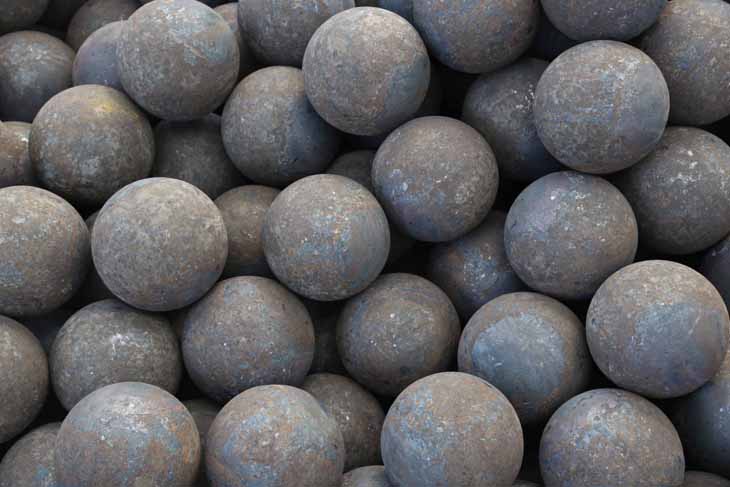
The forged ball is only as reliable as the steel bar behind it
In forged grinding ball production, the starting material is typically round steel bar. The bar is cut to length, heated, forged or hot rolled into a ball shape, heat treated and inspected. Each stage depends on the previous stage. If the bar has internal cracks, seams, laps, severe scale or an unsuitable microstructure, the risk of cracking or premature failure increases. If the steel grade is not matched to the ball size and application, hardness and toughness may not be balanced correctly. If the heat treatment is not adjusted to the steel chemistry, the ball may be too hard and brittle or too soft and wear quickly. Raw material control is therefore not a purchasing detail. It is a performance foundation.
What Raw Material Does a Forged Steel Ball Manufacturer Use?
ALLSTAR uses round steel bars for forged grinding balls and grinding rods. These bars are sourced from large state-owned steel mills in China. The choice of established steel mills is deliberate. Large mills generally provide more consistent steelmaking practice, tighter control of chemical composition and better documentation than small or informal sources. For forged grinding balls, consistency in steel quality helps the manufacturer maintain stable forging behavior and predictable heat treatment response. For grinding rods, straightness, surface condition and internal soundness are especially important because rods must remain aligned and resist bending in rod mills.
The company offers forged grinding balls in diameters from 20 mm to 150 mm, manufactured through forging or hot-rolling processes. Cast grinding balls are available in diameters from 6 mm to 150 mm, including different chromium-content grades for various grinding conditions. Grinding rods are available in diameters from 25 mm to 140 mm and lengths from 1,500 mm to 6,000 mm, mainly designed for rod mills. These ranges allow ALLSTAR to serve mining operations such as gold, copper, platinum, iron ore, nickel, phosphate and lead-zinc mines, as well as cement plants and power stations. The final product selection depends on mill type, material characteristics and operating conditions.
Incoming steel bars are sampled and tested
Upon arrival at the ALLSTAR factory, incoming materials are sampled and tested for chemical composition to verify their quality. This step is essential because a steel certificate alone is not enough. The manufacturer should confirm that the delivered bars match the required grade and that elements such as carbon, manganese, silicon, chromium, sulfur and phosphorus are within the specified range. Depending on the product and customer requirement, other elements may also be considered. For forged grinding balls, the balance between hardness and toughness depends heavily on chemistry. For grinding rods, chemistry and surface quality both influence straightness and wear life.
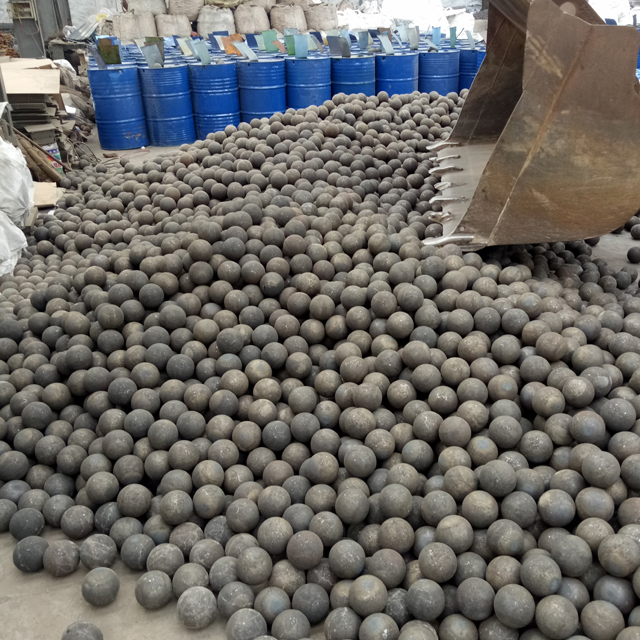
Raw material questions should therefore cover not only the steel grade name but also the actual control limits. Buyers can ask how the manufacturer verifies chemistry, how often samples are taken, whether results are retained by batch, and whether third-party inspection can be arranged. These questions help separate a manufacturer with a real quality system from a supplier that simply resells finished products.
Key Raw Material Questions Buyers Should Ask a Forged Steel Balls Manufacturer
- Question 1: What steel grade is used, and what are the chemical composition limits? A credible manufacturer should be able to explain the steel grade family, the target chemistry and the acceptable range for key elements. The answer should be linked to ball size, application and heat treatment rather than offered as a single grade for every situation.
- Question 2: Are residual and trace elements controlled? Elements such as sulfur and phosphorus can affect toughness and cracking resistance. Other residuals may influence hardenability or inclusion content. Buyers should ask how these are limited and how incoming steel is verified.
- Question 3: How is hardenability controlled? Hardenability determines how deeply the ball responds to quenching and how uniform the final hardness will be. A forged ball with poor hardenability may have a soft core or inconsistent hardness from surface to center.
- Question 4: What surface quality requirements apply to the steel bar? Cracks, seams, laps, deep scale and other surface defects can carry through forging and heat treatment. The manufacturer should inspect incoming bars and reject material that does not meet requirements.
- Question 5: How is decarburization controlled? Decarburization is the loss of carbon from the surface layer of steel during heating. If not controlled, it can reduce surface hardness and wear resistance. Buyers should ask how heating atmospheres, temperatures and times are managed.
- Question 6: What dimensional tolerances are required for the bar? Diameter tolerance, length tolerance, straightness and ovality affect cutting accuracy, heating uniformity and forging consistency. These details matter especially for larger ball sizes and grinding rods.
- Question 7: What is the forging ratio and process route? Forging can improve internal soundness and refine microstructure. Buyers should ask whether the product is air-hammer forged, hot rolled or produced by another route, and how process parameters are controlled.
- Question 8: How is heat treatment matched to the raw material? The same steel grade can behave differently under different austenitizing, quenching and tempering conditions. A manufacturer should demonstrate that heat treatment is designed for the chemistry and product size.
- Question 9: What hardness, impact toughness and microstructure are targeted? Hardness alone is not enough. A balance of hardness, toughness and microstructure is needed to resist breakage and wear in service.
- Question 10: How is traceability maintained from steel bar to finished ball? Batch identification, production records, inspection results and heat treatment records should allow the manufacturer to trace finished products back to raw material batches.
- Question 11: What inspection documents are available? Mill certificates, chemical analysis reports, hardness results, microstructure reports and batch inspection records are useful. Third-party inspection by SGS, BV or TÜV can add further confidence.
- Question 12: How does raw material choice affect total grinding cost? A lower-priced ball made from inconsistent steel may cost more in the long run through higher consumption, more breakage and reduced mill availability.
Steel grade and chemical composition
The steel grade should be selected for the intended grinding duty. Different ball sizes and mill conditions place different demands on the material. A large ball used in the first chamber of a mill for coarse grinding must withstand high impact energy. A smaller ball used for fine grinding may face more abrasive wear and less severe impact. A grinding rod must resist bending and maintain straightness. The manufacturer should be able to explain why a particular grade is suitable, how carbon and manganese affect hardness and toughness, and how alloying elements influence hardenability. The answer should not be a generic statement that all products use high-quality steel. It should show a practical link between raw material and application.
Trace elements and residual elements
Trace elements are often overlooked in purchasing discussions, but they can influence performance. Sulfur and phosphorus are commonly controlled because excessive levels can reduce toughness. Other residuals may affect inclusion content or response to heat treatment. A manufacturer that sources from large state-owned steel mills is generally better positioned to obtain consistent residual levels, but verification is still necessary. ALLSTAR samples incoming materials and tests chemical composition to confirm quality. This practice supports consistency and helps prevent unsuitable steel from entering production.
Hardenability and microstructure
Hardenability is the ability of steel to harden through its section during quenching. For forged grinding balls, uniform hardness from surface to core is important for wear resistance and structural integrity. If the core remains too soft, the ball may deform or wear unevenly. If the surface becomes too hard without sufficient toughness, the ball may crack under impact. The manufacturer should control steel chemistry, heating and quenching so that the final microstructure supports the required balance of hardness and toughness. Buyers can ask for hardness distribution data, microstructure inspection and heat treatment records.
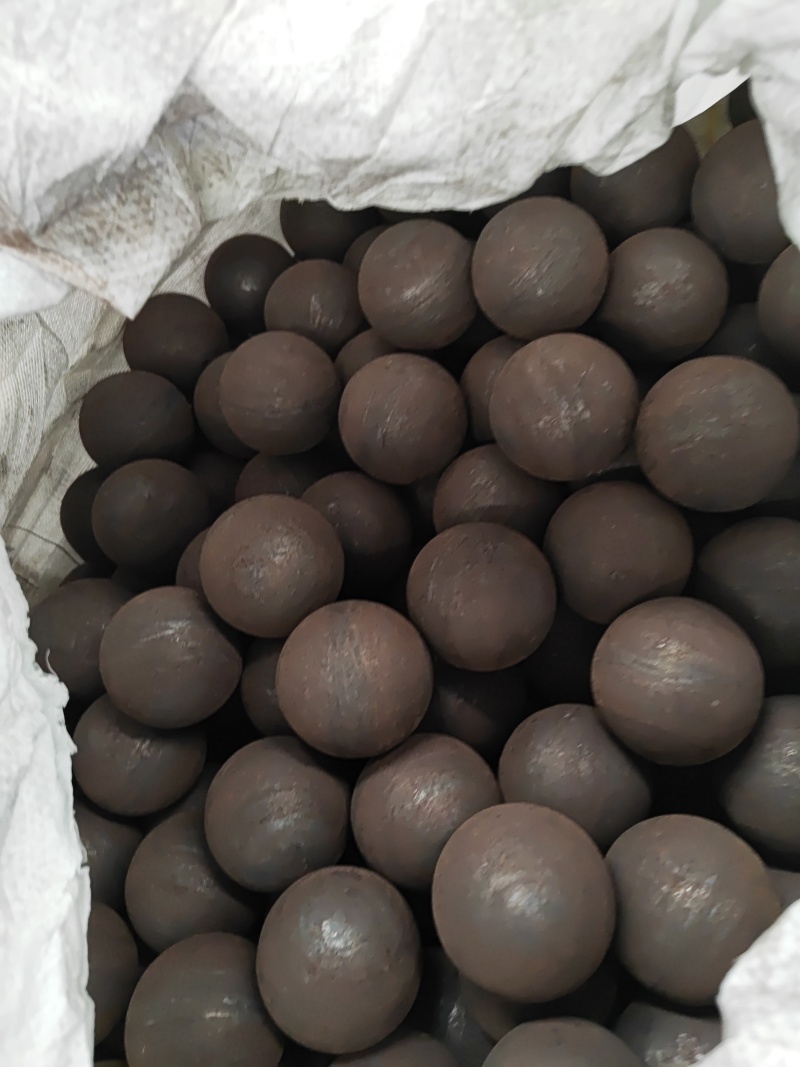
Surface quality and decarburization
Surface quality is a visible and measurable raw material characteristic. Bars with seams, cracks or laps can develop into defects during forging. Decarburization can soften the surface layer and reduce wear resistance. A serious forged steel balls manufacturer should have incoming inspection criteria for surface condition and should control heating to minimize decarburization. Buyers can ask how bars are inspected, what defects are rejected, and how furnace atmosphere and heating time are controlled. These questions are especially relevant for large forged balls used in high-impact SAG mill and ball mill applications.
Dimensional accuracy and straightness
Dimensional accuracy affects the entire manufacturing flow. Bars that are out of round, bent or outside diameter tolerance may cut poorly, heat unevenly or forge inconsistently. For grinding rods, straightness is particularly important because a bent rod can affect rod mill operation. Buyers should ask about diameter tolerance, length tolerance, straightness limits and surface finish requirements. These details may seem minor compared with chemistry, but they influence productivity and final product consistency.
Forging ratio and process control
Forging ratio describes the amount of deformation applied to the steel during forging. Adequate deformation can help improve internal soundness and refine microstructure. The process route also matters. ALLSTAR operates both air hammer forged and hot-rolling production processes for forged products. Each route has its own controls for heating temperature, deformation, finishing temperature and cooling. Buyers should ask how the manufacturer prevents overheating, overburning and uncontrolled cooling, because these issues can damage the steel and lead to cracking or poor performance.
Heat treatment and hardness uniformity
Heat treatment transforms the forged ball into a finished grinding medium with the desired hardness and toughness. The process typically involves austenitizing, quenching and tempering, with parameters adjusted for steel grade and ball size. Hardness uniformity is a key quality indicator. Buyers should ask how hardness is sampled, whether surface and core hardness are checked, and how the manufacturer responds if results fall outside the target range. Forged products at ALLSTAR undergo further testing after heat treatment to check whether they meet the required quality and performance specifications.
Impact toughness and breakage rate
Breakage is one of the most visible failure modes in grinding media. A broken ball can damage liners, disrupt mill operation and increase costs. Impact toughness helps a ball absorb energy without cracking. Buyers should ask how the manufacturer evaluates toughness, whether it uses drop tests or other impact tests, and what breakage rates have been observed in actual service. Raw material quality, forging practice and heat treatment all contribute to breakage resistance. A supplier that can connect raw material control to field performance is more credible than one that offers only laboratory hardness values.
Traceability and inspection documentation
Traceability allows a manufacturer to identify the raw material batch, production batch, heat treatment batch and inspection results associated with finished products. This is valuable for quality investigations and customer audits. Buyers should ask how batches are identified, how records are stored, and whether inspection reports can be provided. ALLSTAR carries out quality inspection throughout the manufacturing process. Samples are taken from each production batch for inspection, and finished products are tested after heat treatment. This system supports consistent and reliable grinding media for customers worldwide.
Third-party inspection and certification
Third-party inspection can provide additional assurance, especially for international buyers who cannot visit the factory frequently. ALLSTAR maintains an ISO 9001 Quality Management System and supports product quality verification through professional testing and third-party inspection services, including SGS, BV and TÜV. Buyers can ask whether third-party inspection is available for chemical composition, hardness, microstructure, dimensional checks and other agreed tests. Such verification is not a substitute for a strong internal quality system, but it can strengthen confidence in raw material and finished product control.
How ALLSTAR Controls Raw Material from Receipt to Finished Ball
Raw material control at ALLSTAR is integrated into the manufacturing process rather than treated as an isolated purchasing activity. The company sources round steel bars from large state-owned steel mills in China and samples incoming materials for chemical composition testing. This approach helps verify that delivered steel meets the required quality before production begins. For cast grinding balls, raw materials such as ferrochrome and iron scrap are proportioned and melted according to the required product grade. Chemical composition is analyzed after melting to ensure that the molten metal meets the specified requirements. For forged products, the company operates both air hammer forged and hot-rolling production processes. For cast products, it uses an advanced coated-sand shell molding process and automated production lines to support consistent manufacturing quality.
Incoming inspection and chemical analysis
Incoming inspection is the first quality gate. For forged grinding balls and grinding rods, the chemical composition of steel bars is verified through sampling and testing. This step helps confirm that the steel grade matches the specification and that key elements are within the required range. The manufacturer can then adjust heating, forging and heat treatment parameters with greater confidence. If a batch does not meet requirements, it should be rejected or isolated before it reaches production. This discipline protects the final product and reduces the risk of hidden defects.
Identification, storage and batch control
Raw material identification and storage are simple but important controls. Steel bars of different grades or sizes should be clearly identified and stored in a way that prevents mixing. Production records should link finished balls to raw material batches. This traceability supports quality control and makes it possible to investigate any issue that arises later. Buyers can ask how the manufacturer prevents material mix-ups and how long records are retained. Such questions are practical and revealing because they show whether quality management is embedded in daily operations.
Heating, forging and hot rolling
Heating and deformation are critical stages for forged grinding balls. The steel must be heated uniformly to the correct temperature range, forged or rolled with controlled deformation, and finished at a suitable temperature. Overheating can coarsen the microstructure and reduce toughness. Overburning can cause irreparable damage. Incomplete deformation may leave internal weaknesses. ALLSTAR uses air hammer forging and hot rolling for forged products, with process controls designed to support consistent shape, density and internal quality. The choice of process route can be matched to product size and customer requirements.
Heat treatment and finished product testing
After forging or hot rolling, grinding balls are heat treated to achieve the required hardness and toughness. The heat treatment process must be matched to the steel chemistry and ball size. After heat treatment, finished products undergo further testing to check whether they meet the required quality and performance specifications. Hardness testing, microstructure inspection and other checks help confirm product quality. Samples are taken from each production batch for inspection. This batch-based approach supports consistency and allows the manufacturer to identify variations before shipment.
Cast product raw material control for comparison
Although this article focuses on forged steel balls, cast grinding balls follow a different raw material route. Ferrochrome, iron scrap and other raw materials are proportioned and melted according to the required product grade. Chemical composition is analyzed after melting to ensure the molten metal meets the specification. The use of an advanced coated-sand shell molding process and automated production lines supports consistent casting quality. High chrome cast grinding balls are widely used in cement plants and power stations, while forged grinding balls are commonly selected for wet grinding in mining applications. Cast grinding balls are often used in dry grinding operations. The final selection should always consider actual operating conditions.
Raw Material Selection by Application and Mill Condition
Different mills, ores and operating conditions require different grinding media. Larger grinding media are generally used in the first chamber of a mill for coarse grinding and breaking larger particles of ore or clinker. Smaller grinding media are commonly used in the second chamber for fine grinding. In mining applications, forged grinding balls are commonly selected for wet grinding, while cast grinding balls are often used in dry grinding operations. High chrome cast grinding balls are widely used in cement plants and power stations. Grinding rods are mainly used in rod mills for mineral processing. Proper grinding media selection helps customers improve grinding performance, maintain stable mill operation, manage media consumption and control overall grinding costs.
- Mining: Forged grinding balls are often chosen for wet grinding in gold, copper, platinum, iron ore, nickel, phosphate and lead-zinc operations. Raw material consistency supports stable wear and breakage resistance under high impact.
- Cement: High chrome cast grinding balls are widely used in cement plants. Forged media may also be used depending on mill type and grinding circuit. Raw material and heat treatment must suit clinker and additive grinding conditions.
- Power generation: High chrome cast grinding balls are commonly used in power stations. Consistent chemistry and casting quality help maintain performance in coal and other grinding systems.
- Rod mills: Grinding rods from 25 mm to 140 mm diameter and 1,500 mm to 6,000 mm length are mainly designed for rod mills. Steel quality, straightness and surface condition are critical.
Mining applications
Mining is one of the most demanding environments for grinding media. Ore hardness, pulp chemistry, mill diameter and operating practices vary widely. A forged ball that performs well in one mine may not be optimal in another. This is why ALLSTAR works with mining companies and mineral processing plants to understand their requirements and recommend suitable grinding media solutions. Raw material questions should be discussed together with application details. The goal is not simply to buy a ball with a certain hardness. The goal is to achieve stable mill operation, lower media consumption and predictable grinding performance.
Cement and power generation applications
In cement plants and power stations, grinding media must handle clinker, slag, fly ash, coal and other materials. Abrasion and wear mechanisms may differ from those in mining. High chrome cast grinding balls are widely used in these industries, but forged grinding balls may also be appropriate depending on the mill and circuit. ALLSTAR serves cement manufacturers and power plants with a range of grinding media. The company can recommend products based on mill type, material characteristics and operating conditions. Raw material control remains important because it affects wear life, breakage resistance and overall grinding efficiency.
Grinding rods and rod mills
Grinding rods are mainly used in rod mills for mineral processing. Rod mills rely on line contact between rods to grind material. A bent or broken rod can disrupt the charge and reduce efficiency. Therefore, raw material quality, straightness and surface condition are especially important. ALLSTAR produces grinding rods in diameters from 25 mm to 140 mm and lengths from 1,500 mm to 6,000 mm. Buyers of grinding rods should ask about steel source, chemical composition, straightness tolerance, surface inspection and heat treatment. These questions help ensure that the rods perform reliably in demanding rod mill applications.
Why Raw Material Questions Lead to Total Grinding Cost
Raw material quality has a direct effect on total grinding cost. A ball made from unsuitable steel may wear faster, break more often or cause unstable mill operation. These problems can increase media consumption, labor costs, downtime and energy use. A lower purchase price per ton may therefore be misleading if the media does not perform reliably. ALLSTAR understands that clients need more than grinding balls with specified hardness or chemical composition. They need consistent quality, dependable performance and lower overall grinding costs. The company combines manufacturing expertise, strict quality control and practical application experience to deliver solutions that create measurable economic value.
- Lower media consumption: Consistent raw material and heat treatment help reduce unnecessary wear and breakage.
- Stable mill operation: Uniform ball quality supports predictable charge behavior and grinding performance.
- Reduced downtime: Fewer broken balls and fewer surprises help maintain production continuity.
- Better grinding efficiency: Proper media selection and reliable quality can support throughput and fineness targets.
- Long-term partnership value: A supplier that controls raw material and manufacturing quality is better positioned to deliver consistent results over time.
Evidence from Real Operating Conditions
The value of raw material control and manufacturing discipline is best demonstrated in actual operating conditions. ALLSTAR has accumulated field experience in both mining and cement applications. These cases show how grinding media performance can affect consumption, breakage, throughput and grinding fineness.
Pinto Valley Mine, USA
In the mining industry, ALLSTAR high-chrome grinding balls demonstrated outstanding results in a comparative trial at Pinto Valley Mine, USA. The mine conducted a trial lasting nearly six months, using ALLSTAR high-chrome grinding balls in one ball mill and another manufacturer's products in the other. The results were compelling. ALLSTAR grinding-ball consumption remained stable at 0.56 to 0.59 kg per tonne of run-of-mine ore, with a breakage rate of only 0.2 percent. By comparison, the other supplier's consumption reached 0.68 kg per tonne, with a breakage rate close to 3 percent. Furthermore, the mill using the competitor's products recorded more than 70 tonnes per hour lower output and over 5 percentage points lower grinding fineness compared with the mill using ALLSTAR balls.
Following the successful trial, the customer replaced the grinding balls in the second mill with ALLSTAR products as well. Daily processing capacity subsequently reached 53,000 tonnes, exceeding the designed capacity of 50,000 tonnes by 3,000 tonnes. To date, the mine has purchased and used more than 48,000 tonnes of ALLSTAR grinding media, demonstrating long-term confidence in the products. This case illustrates why raw material and manufacturing questions matter. The difference between average media and well-controlled media can appear in consumption, breakage, throughput and fineness.
Turkey YD Madencilik
ALLSTAR has also achieved remarkable results in the cement industry. At Turkey YD Madencilik, operating a combined roller press and ball mill grinding system, grinding media consumption had historically been high due to difficult-to-grind materials such as slag and coarse fly ash. After replacing the grinding balls in both mills with ALLSTAR products in 2016, consumption decreased significantly. The combined grinding-ball consumption dropped from 84.80 g/t in 2016 to 31.93 g/t in 2018. More importantly, the reduction was sustained over the following years, reaching just 25.66 g/t in 2025, approximately 69.7 percent lower than the 2016 baseline.
These real-world results demonstrate the value of ALLSTAR grinding media: lower grinding media consumption, reduced breakage, improved grinding efficiency, more stable mill operation and greater production capacity. They also show that raw material questions are not abstract. The quality of steel, the control of chemistry, the forging process and the heat treatment all contribute to the final result. A buyer who asks the right questions is better able to identify a manufacturer that can deliver long-term performance rather than short-term price advantages.
Quality Management and Certifications
ALLSTAR's commitment to technological advancement, specialized manufacturing and continuous innovation has been recognized through government certifications and industry qualifications. The company has been recognized as a High and New Technology Enterprise for its technological capabilities, research and development activities and innovation achievements. It has also been recognized as a Specialized, Sophisticated, Distinctive and Innovative Enterprise for its specialized expertise, advanced manufacturing capabilities, distinctive products and innovation-driven development. In addition, ALLSTAR maintains an ISO 9001 Quality Management System and supports product quality verification through professional testing and third-party inspection services, including SGS, BV and TÜV.
These qualifications are not a substitute for detailed raw material control, but they provide useful context for buyers. They indicate that the company has established management systems, technical capabilities and quality processes. For international buyers, such credentials can be part of a broader supplier evaluation. The most important questions, however, remain practical. Where does the steel come from? How is it tested? How is chemistry controlled? How is heat treatment matched to the material? How is traceability maintained? How does the manufacturer respond when a batch does not meet specification? These questions go to the heart of quality assurance.
Practical Checklist for Buyers of Forged Grinding Balls
Buyers who want to evaluate a forged steel balls manufacturer can use a structured checklist. The checklist should cover raw material, manufacturing, inspection, application support and commercial reliability. A supplier that can answer these questions clearly and consistently is more likely to be a dependable long-term partner.
- Raw material source: Ask which steel mills supply the round bars and whether the steel is produced to a defined grade and specification.
- Chemical composition: Request the control limits for carbon, manganese, silicon, chromium, sulfur, phosphorus and other relevant elements.
- Incoming inspection: Confirm that bars are sampled and tested on arrival and that records are kept by batch.
- Surface and dimensional quality: Ask about crack, seam, lap, decarburization, diameter tolerance, straightness and length tolerance requirements.
- Forging and hot rolling: Understand the production route, heating control, deformation control and finishing temperature control.
- Heat treatment: Ask how austenitizing, quenching and tempering are controlled for different steel grades and ball sizes.
- Testing: Request hardness, microstructure, impact toughness and other relevant test results. Confirm batch sampling frequency.
- Traceability: Ask how finished balls can be traced back to raw material and production batches.
- Third-party inspection: Confirm whether SGS, BV, TÜV or other inspection services can be arranged.
- Field performance: Ask for references or case data on consumption, breakage rate, throughput and grinding fineness in similar applications.
- Application support: Confirm whether the manufacturer can recommend media by mill type, ore characteristics and operating conditions.
- Long-term reliability: Evaluate production capacity, quality management, communication and willingness to support continuous improvement.
Conclusion
Forged steel balls manufacturer questions about raw material are not technical formalities. They are practical questions that help buyers understand risk, performance and total cost. The steel bar behind a forged grinding ball influences hardness, toughness, wear resistance, breakage rate and mill stability. A manufacturer that sources steel from qualified mills, tests incoming material, controls forging and heat treatment, maintains traceability and supports third-party inspection is better equipped to deliver consistent grinding media. Shandong Allstar Grinding Ball Co., Ltd. has specialized in grinding media manufacturing since 1985 and serves the mining, cement and power generation industries worldwide. With 15,000 square metres of production facilities, 150 employees and an annual production capacity of 100,000 metric tons, ALLSTAR combines manufacturing experience, quality control and application knowledge to support customers across different markets and project scales.
For buyers, the best approach is to ask specific questions and expect specific answers. Ask about steel grades, chemistry, hardenability, surface quality, decarburization, forging ratio, heat treatment, hardness uniformity, impact toughness, traceability and inspection reports. Ask how the manufacturer links raw material control to field performance. Ask for case evidence. A supplier that can answer these questions with clarity and evidence is more likely to deliver reliable grinding media, stable mill operation and lower overall grinding costs. ALLSTAR positions itself as a trusted long-term grinding media partner by focusing on proven performance, reliable quality and greater value for global industries.
ALLSTAR grinding balls: Proven performance, reliable quality and greater value for global industries.


