
Forged Steel Balls: Ultimate Durability Guide 2026
Views: 659 Update Date:Mar 25 , 2026
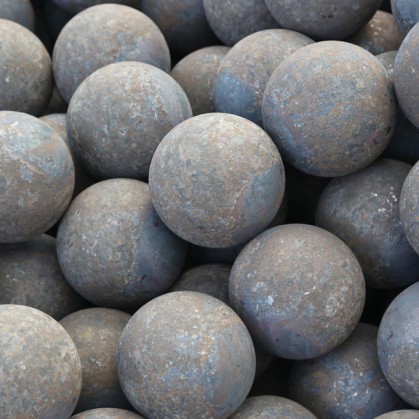 Forged steel ball stands as critical workhorses in heavy industries where grinding efficiency directly impacts profitability. Customers frequently ask about their durability under extreme conditions, exact size availability, cost-saving advantages over alternatives, and how to select the right grade for specific applications. This comprehensive guide addresses these key concerns head-on, drawing from established manufacturing expertise to provide actionable insights for procurement decisions.
Core Properties Buyers Demand
Forged steel balls excel due to their dense microstructure formed under high-pressure forging, making them far superior for high-impact grinding compared to cast alternatives.- Hardness range: 58-65 HRC surface, 55-62 HRC core for balanced wear and toughness.
- Impact toughness: 10-20 J, preventing cracking in SAG mills or overflow applications.
- Density: 7.5-7.8 g/cm³ ensures maximum grinding energy transfer.
- Chemical composition: C 0.6-1.0%, Mn 0.7-1.3%, Si 0.15-0.35%, Cr 0.9-1.2%, P/S ≤0.05% for optimal strength.
- Tensile strength: 1000-1200 MPa withstands repeated collisions.
Standard Size Range and Availability
One of the top questions from buyers revolves around precise sizing—do forged steel ball come in the exact diameters needed for their mills? Standard production covers a practical spectrum tailored to common mill designs.- 20-30mm: Fine grinding in secondary ball mills.
- 40-60mm: Versatile for cement clinker and mineral processing.
- 70-90mm: Primary choice for ore crushing in mining SAG mills.
- 100-125mm: Heavy-duty for large-scale gold/copper operations.
- 130-150mm: Specialized for ultra-coarse primary grinding.
Actual diameter tolerance: ±1-2% depending on size, with roundness deviation under 0.5% post-grinding.
Manufacturing Process Explained
Buyers often wonder, "How are forged steel balls made to achieve such reliability?" The process starts with premium billet selection and follows a rigorous sequence that eliminates internal defects.1. Billet cutting from high-carbon alloy steel bars to precise weights.
2. Induction heating to 1100-1200°C for malleability without oxidation.
3. High-pressure forging via dies or rotary machines to form spherical shape, aligning grain structure.
4. Air quenching for surface hardening, followed by tempering at 200-300°C for core toughness.
5. Precision grinding/polishing to final dimensions and surface finish (Ra 0.8-1.6μm).
6. Ultrasonic testing for internal flaws, plus drop-test simulation (12,000x 15m height equivalent).
This method yields 40-50% higher density than casting, directly translating to longer service life.
Key Advantages Over Other Grinding Media
Procuring managers repeatedly ask: "Why choose forged over cast iron, hot rolled, or ceramic balls?" Forged variants dominate due to proven performance metrics in real-world mills.- Superior fracture resistance: Dense forging eliminates voids, reducing breakage by 70% vs. cast balls.
- Consistent wear rates: Uniform hardness maintains grinding efficiency over 6-12 months.
- Energy savings: Higher density boosts impact force, cutting power consumption 15-20%.
- Lower total cost: Despite higher upfront price, lifecycle savings reach 25-30% through reduced replacements.
Forged Steel Balls vs. Hot Rolled Steel Balls: Detailed Comparison Table
A common procurement dilemma is forged vs. hot rolled—here's a side-by-side analysis based on industry-standard specs to guide your choice.| Parameter | Forged Steel Balls (Your Data) | Hot Rolled Steel Balls (Your Data) |
|---|---|---|
| Size Range | dia. 20mm - dia. 150mm | dia. 20mm - dia. 80mm |
| Production Process | Forging (high compression, grain alignment) | Hot rolled direct from steel bars |
| Heat Treatment | Post-forging cooling + precision grinding | In-line heat treatment + uniform quenching |
| Structural Result | Dense, tough product (voids eliminated) | Even hardness throughout |
| Strength | High structural integrity | Good uniformity |
| Packaging Type A | Steel Drums: N.W. 850-900kg, G.W. 867-917kg | Steel Drums: N.W. 850-900kg, G.W. 867-917kg |
| Packaging Type B | Bulk Bags: N.W. 1000kg, G.W. 1002kg | Bulk Bags: N.W. 1000kg, G.W. 1002kg |
| Best Applications | Demanding programs (mining, cement, power) | General industrial grinding |
Packaging Options for Safe Global Shipping
Logistics queries dominate buyer FAQs: "How are forged steel balls packed to prevent damage in transit?" Standard configurations prioritize protection and efficiency.- Type A Steel Drums: N.W. 850-900kg/drum, G.W. 867-917kg; steel-lined for rust prevention [conversation context].
- Type B Bulk Bags: N.W. 1000kg/bag, G.W. 1002kg; flexible for container loading.
- Smaller 930-1000kg flexible containers for 20-60mm sizes.
All packaging includes moisture-absorbing agents and anti-rust coatings, ensuring integrity during 30-45 day sea voyages.
Industry Applications and Performance Data
"Where exactly do forged steel ball perform best?" is a universal question. Their versatility shines across high-abrasion sectors, with tailored grades for each.- Mining (gold, copper, iron): Crush ores in ball/SAG mills; 98% uptime in harsh wet environments.
- Cement plants: Grind clinker/raw materials; extend lining life by 30%.
- Power generation: Pulverize coal; reduce spillage 40% vs. alternatives.
- Chemical processing: Mix/grind powders; corrosion-resistant Cr alloys available.
- Steel mills: Regrind slag; high Mn grades for abrasion.
Quality Control Standards Buyers Should Verify
Reliability questions like "How do I ensure consistent quality?" are critical. Top manufacturers implement multi-stage inspections aligned with ISO 9001 and API standards.- Hardness testing: Rockwell scale across 10% sample batches.
- Dimension checks: Micrometer/caliper for ±1% tolerance.
- Ultrasonic flaw detection: 100% scan for cracks/voids.
- Drop test: Simulate mill impacts (12m height, 10,000 cycles).
- Chemical analysis: Spectrometer verification per heat.
Case Study: 28% Cost Reduction in Gold Mine SAG Mill
A major gold producer in Australia faced escalating media costs and mill downtime. Switching to high-Cr forged steel ball (100-125mm, 62 HRC) yielded dramatic results.- Previous (cast balls): 35g/ton wear rate, 4% breakage, $2.8/ton processed.
- After forged: 22g/ton wear, <0.8% breakage, $2.0/ton—28% savings.
- Annual impact: $1.2M saved on 500K tons throughput; mill throughput up 12%.
- Testimonial: "Forged balls transformed our operation—less downtime, consistent grind, ROI in 4 months." – Operations Manager.
Client Testimonial: Cement Plant Efficiency Boost
"After years of inconsistent media performance, forged steel ball delivered uniform hardness and zero early failures. Our clinker grinding efficiency improved 15%, with media lasting 9 months vs. 5 previously. Exceptional value." – Plant Engineer, Southeast Asia Cement Facility.FAQ: Top Questions from Forged Steel Ball Buyers
Buyers consistently seek clear, practical answers without needing to navigate external sources. This revised FAQ distills essential knowledge directly, focusing on procurement decision-making for forged steel ball across mining, cement, and power applications.Q: What hardness should I specify for wet grinding?
A: Target 60-65 HRC surface hardness with minimum 12 J impact toughness. This balance resists abrasion in slurries while preventing spalling under repeated impacts.Q: How many balls per ton of ore?
A: Use 0.8-1.2 kg of forged steel ball per ton of ore in ball mills. Adjust upward for harder ores (e.g., 1.0-1.5 kg/ton for gold/copper); fill mills to 40-45% volume for optimal cascade.Q: Lead time for a 20-ton order?
A: Expect 25-35 days total—15-20 days production plus 10-15 days shipping prep. Rush orders (10 days) available with 20% premium for stock sizes 40-100mm.Q: Can forged balls handle corrosive slurries?
A: Yes, specify Cr 1.0-2.0% alloys for pH 4-9 environments. These resist acidic ores (sulfide minerals) and alkaline cement slurries, extending life 25% vs. standard C-Mn grades.Q: Bulk density calculation?
A: Loaded bulk density averages 4.5-4.8 t/m³. Formula: (Total ball weight ÷ Mill volume) × Packing factor (0.62 for random pack). Size mix (e.g., 80% 75mm + 20% 40mm) optimizes to 4.7 t/m³.Q: Wear rate benchmarks by industry?
A: Mining: 15-25 g/ton; Cement: 20-30 g/ton; Power: 18-28 g/ton. High-Cr (62+ HRC) grades achieve low end; track via monthly makeup additions.Q: Minimum order quantity (MOQ)?
A: 15-20 tons for custom alloys/sizes; 10 tons for stock 50-100mm. Smaller trial orders (5 tons) possible for qualified buyers.Q: Storage life before rust?
A: 12-18 months in sealed drums/bags with desiccants. Inspect for surface pitting; reapply anti-rust oil if stored >6 months.Q: Breakage rate guarantee?
A: Industry-leading <1% (drop-tested 12,000 cycles from 15m). Replacements provided for verified early failures within first 30,000 tons ground.Q: ROI timeline vs. cast iron balls?
A: 4-6 months payback via 25-30% lower wear costs and 10-15% throughput gains. Example: 100 t/month mill saves $18K/year net.Cost Analysis and ROI Calculation
Procurement teams always ask: "What's the true cost per hour of grinding?" Factor in lifecycle for accurate ROI.
- Upfront: $800-1200/ton (varies by size/Cr content).
- Lifespan: 80,000-120,000 tons ground (vs. 50,000 for cast).
- ROI formula: (Wear savings + throughput gain) / Initial cost = 18-24 month payback.
Example: 100-ton/month mill saves $15K/year net.
Storage and Handling Best Practices
Improper handling spikes buyer complaints—prevent issues with these protocols.- Store in dry, covered areas; use pallets to avoid ground moisture.
- Avoid mixing sizes in inventory to prevent contamination.
- Rotate stock FIFO; inspect for surface pitting pre-loading.
- Max stacking: 4 drums high, secured with straps.
Future Trends in Forged Steel Ball Technology
Innovations address evolving buyer demands for sustainability and efficiency.- Nano-alloy additions for 20% wear reduction.
- AI-optimized heat treatments for custom hardness profiles.
- Recyclable packaging reducing carbon footprint 15%.
- Extended sizes to 160mm for next-gen mega-mills.
High-Credibility References Sources for Further Reading
Validate your decisions with these trusted references:SME Mining Engineering Handbook – Society for Mining, Metallurgy & Exploration: https://www.smenet.org/
Grinding Mill Circuit Design – University of Utah Materials Science: https://www.mines.utah.edu/
Industrial Grinding Media Standards – NIST Manufacturing Extension: https://www.nist.gov/mep


