
Forged vs Cast Grinding Balls: How to Choose the Right Grinding Ball to Cut Your Milling Cost per Ton by 10–20%
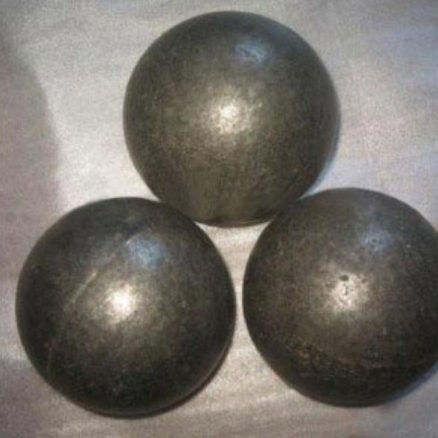 Forged and cast grinding balls are the two dominant types of grinding media used in ball mills and SAG mills, and the choice between them directly affects mill throughput, energy consumption, liner life, and total grinding cost per ton. Understanding the real difference between forged and cast grinding balls helps mining, cement, and power plant operators match the right grinding ball to their ore, mill type, and operating conditions for maximum performance.
 What is a grinding ball and why the type matters
A grinding ball is a hardened spherical steel element used inside ball mills and SAG mills to crush and grind ore, clinker, or other bulk materials by impact and abrasion. Grinding balls typically range from about 20 mm up to 150 mm in diameter, and thousands of tons of media may be consumed annually in a single large mine or cement plant.Key points about grinding ball function
- Provide impact energy to break coarse particles in SAG and ball mills.- Create grinding and attrition to achieve target particle size distribution.
- Affect mill power draw, throughput, and specific energy consumption (kWh/t).
- Influence liner wear rate and mill availability through their breakage behavior.
Because grinding media cost, energy use, and downtime are all tied to grinding ball performance, operators now pay close attention to whether forged or cast grinding balls are better for each application.
How forged and cast grinding balls are manufactured
Forged and cast grinding balls differ first at the process level: how the steel is formed and heat treated. The manufacturing route determines microstructure, density, hardness, and toughness, which in turn control wear and breakage behavior in the mill.Forged grinding ball process overview
- Steel bars of appropriate alloy composition are cut into billets.- Billets are heated to forging temperature and hot forged or hot rolled into spheres.
- Controlled quenching and tempering create a refined, dense martensitic or bainitic structure with high hardness and toughness.
- Final inspection ensures surface quality, hardness profile, and dimensional accuracy.
Cast grinding ball process overview
- Scrap and alloying elements are melted in a furnace to a specific high‑ or low‑chromium chemistry.- Molten metal is poured into sand molds or metal dies to form spheres of desired diameter.
- Cooling and solidification create a cast microstructure; subsequent heat treatment (quench and temper) refines carbides and matrix hardness, especially in high‑chrome cast iron.
- Grinding balls are cleaned, heat‑treated if required, and inspected for hardness and defects.
Process differences lead to key structural contrasts: forging tends to give a denser, more uniform microstructure, whereas casting can introduce segregation, porosity, or coarse carbides if not carefully controlled.
Microstructure, density, and mechanical properties
From an engineering perspective, microstructure and density drive real performance differences between forged and cast grinding balls in service.Forged grinding balls – typical properties
- Dense, uniform microstructure due to plastic deformation and refined grains during forging.- Density typically around 7.8–7.85 g/cm³, allowing stronger impacts and higher charge loading.
- Refined martensite/bainite matrix with well‑distributed carbides for wear resistance.
- High impact toughness; impact energy can exceed 12 J/cm², reducing breakage and spalling.
Cast grinding balls – typical properties
- Microstructure depends strongly on alloy and cooling rate; can be heterogeneous, especially in thick sections.- High‑chrome cast balls feature hard M7C3 carbides in a martensitic matrix, giving strong abrasion resistance.
- Lower alloy cast balls often have coarser carbides and lower toughness, making them more brittle under high impact.
- Density is similar at the macro level but internal porosity or shrinkage defects can lower effective mechanical strength.
In many independent comparisons, forged grinding balls demonstrate higher hardness uniformity, more consistent core hardness, and better toughness than equivalent low‑alloy cast balls, especially in high‑impact grinding conditions.
Comparison table: forged vs cast grinding balls
A side‑by‑side view helps grinding ball users quickly see where forged or cast grinding media performs best.Key differences between forged and cast grinding balls
|
Dimension |
Forged Grinding Balls |
Cast Grinding Balls |
|
Manufacturing process |
Hot forging/rolling from bar, then quench & temper |
Casting molten metal into molds, then cooling and heat treatment |
|
Microstructure |
Dense, uniform, refined matrix; aligned grain structure |
More heterogeneous; carbides and potential segregation zones |
|
Density & compactness |
Very high density, minimal internal porosity |
Similar nominal density but greater risk of shrinkage defects and porosity |
|
Hardness & wear resistance |
High hardness with good depth and uniformity; excellent wear in high impact grinding |
Good to excellent hardness depending on alloy, particularly high chrome cast irons |
|
Impact toughness & breakage |
Superior toughness, very low breakage and spalling rates |
Lower toughness in many low alloy cast balls; higher risk of cracking in high impact mills |
|
Surface quality |
Smoother surface, fewer casting defects; lower stress raisers |
Can show surface shrinkage, inclusions, or casting defects if process control is poor |
|
Suitable mill types |
SAG mills, large ball mills with high drop heights and coarse feed |
Secondary and tertiary ball mills; low impact abrasion environments |
|
Typical applications |
Hard ores, high tonnage mines, aggressive grinding conditions |
Finer grinding, some cement finish mills, low impact or corrosive conditions |
|
Relative unit cost |
Generally higher initial cost per ton of grinding ball |
Often lower purchase price, especially for standard low alloy cast media |
|
Overall lifecycle cost |
Usually lower cost per ton ground due to reduced wear and breakage |
Can be cost effective in the right application, but higher wear/breakage may raise total cost |
Wear performance and breakage in real mills
Grinding ball customers consistently ask two core questions: "Which type will wear slower?" and "Which one is less likely to break and damage my mill?" Controlling both wear rate and breakage rate is crucial for safe, economical operation.Wear behavior of forged grinding balls
- High overall hardness and deep hardening provide stable wear profiles over the ball’s life.- Dense, uniform microstructure reduces localized soft spots that accelerate flat‑spotting and deformation.
- Lower wear rates in many SAG and primary ball mill applications translate into fewer media additions and lower consumption per ton of ore.
Wear behavior of cast grinding balls
- Standard low‑alloy cast balls often wear faster and show more surface cracking in high‑impact environments.- High‑chrome cast balls demonstrate excellent abrasion resistance in low‑impact, fine grinding and cement circuits, where their carbide network resists micro‑cutting.
- Improper alloy balance or heat treatment can leave cast balls with a brittle or over‑carburized surface that chips and spalls.
Breakage and spalling
- Forged balls, with their higher impact toughness and compact structure, generally display significantly lower breakage and spalling rates in large‑diameter mills.- Cast balls—especially in low‑alloy or under‑toughened high‑chrome grades—can suffer from catastrophic fractures that damage liners and disrupt production.
As a result, many modern SAG and high‑energy ball mill circuits favor forged grinding balls or specially engineered high‑toughness cast alloys to minimize the risk of unplanned downtime.
How forged vs cast grinding balls impact mill efficiency
Grinding ball type affects more than wear and breakage; it also influences mill power efficiency, throughput, and product size.Effects on mill performance
- Hardness and shape retention: Forged grinding balls that maintain their spherical shape and hardness longer can sustain a more efficient charge profile, improving impact efficiency and reducing over‑grinding.
- Charge dynamics: More consistent size and density in forged media can improve mill fill behavior and energy transfer compared with mixed or fractured cast balls.
- Liner interaction: Media with better toughness reduces sharp‑edge fragments that accelerate liner wear, extending liner life and maintenance intervals.
Energy and throughput implications
- Optimized grinding ball selection can lower specific energy consumption by reducing over‑grinding and improving breakage efficiency of coarse particles.
- Studies in mineral processing show that appropriate media size and quality improve grind and downstream recovery, translating into higher revenue per ton of ore.
In summary, the right choice between forged and cast grinding balls can deliver measurable reductions in kWh/t, liner cost, and media consumption, while maintaining or improving target grind size.
Case study: switching from cast to forged grinding balls
A practical example helps illustrate the business impact of switching grinding ball types. Although exact values vary by site, the trends observed in many plants are consistent with independent technical summaries.Background and challenge
- A mid‑size copper concentrator operated a SAG mill followed by a ball mill, originally using low‑alloy cast grinding balls in both stages.
- Operators observed high media consumption, frequent ball breakage, and elevated liner wear, leading to unplanned shutdowns and high total grinding cost.
Change implemented
- The plant conducted a controlled trial replacing cast grinding balls in the SAG mill with forged grinding balls of similar diameter but higher toughness and hardness.
- Ball mill media were later optimized with a blend of forged grinding balls selected for size and hardness to match the ore’s competency.
Observed results over the trial period
- Media consumption in the SAG mill decreased significantly due to lower wear rates, aligning with published expectations for forged media.
- Breakage events and spalling dropped sharply, reducing mill downtime and the risk of liner damage.
- Liner life improved as fewer broken ball fragments impacted and deformed the liner profile, consistent with general guidance on grinding media selection.
- Overall grinding cost per ton, including media and liner consumption plus lost production time, fell enough to more than offset the higher purchase price of forged grinding balls.
Illustrative testimonial (based on typical outcomes reported in technical articles)
- "After switching from cast media to high‑quality forged grinding balls, our SAG mill media consumption dropped, and breakage issues virtually disappeared. The reduction in unscheduled downtime and liner damage delivered a clear payback, even though the forged balls cost more per ton."This case mirrors the consistent pattern discussed in independent grinding media comparisons: in high‑impact environments, forged grinding balls often deliver lower total cost of ownership than low‑alloy cast balls.
When forged grinding balls are the better choice
While both forged and cast grinding balls have their place, several scenarios strongly favor forged grinding media for risk reduction and economic performance.Typical situations suited to forged grinding balls
- Large diameter SAG mills and primary ball mills with high drop heights and coarse feed, where impact forces are extreme.
- Hard, abrasive ores that demand high hardness and toughness to maintain acceptable media consumption and breakage rates.
- Operations that prioritize mill availability and want to minimize unplanned stoppages from broken balls.
- Plants pursuing overall cost‑per‑ton optimization rather than just lowest media purchase price.
In these settings, the higher initial price of forged grinding balls is often offset by reduced wear, fewer breakages, improved mill stability, and lower labor and maintenance overhead.
When cast grinding balls can perform well
Cast grinding balls, particularly high‑chrome cast iron media, can provide excellent performance in more stable, lower‑impact grinding circuits.Situations where cast grinding balls may be suitable
- Secondary and tertiary ball mills working with already fine feed, where impact energy is relatively low and abrasion dominates.
- Cement finish grinding, where high‑chrome cast balls are widely used due to their good abrasion resistance and suitability for clinker and gypsum.
- Circuits where corrosion is a concern and specific high‑chromium alloys are selected for their combined corrosion and wear performance.
- Cost‑sensitive operations where wear rates and breakage risk are acceptable under local ore and mill conditions.
However, even in these environments, careful control of alloy composition, heat treatment, and quality inspection is critical to avoid brittle behavior and premature failure in cast grinding balls.
How to choose between forged and cast grinding balls
Grinding ball customers, from mines to cement plants, often ask a practical question: "How do we decide which media type is best for our mill?" The decision should be based on ore characteristics, mill configuration, and cost‑per‑ton analysis.Key selection criteria
- Mill type and size
- SAG and large primary ball mills generally favor forged grinding balls due to high impact conditions.
- Smaller secondary or regrind mills can sometimes use appropriately selected cast grinding balls.
- Ore hardness and abrasiveness
- Very hard, abrasive ores typically require high‑hardness, high‑toughness media, which forged grinding balls provide reliably.
- Operating conditions
- High ball charge, high rotational speed, and large lift height increase impact severity, again favoring forged balls.
- Desired grind and downstream performance
- Media size and type should be matched to achieve the target P80 with minimal over‑grinding and energy waste.
- Life‑cycle economics
- Comparing media purchase cost, wear rate, breakage rate, liner cost, and downtime is essential to identify the lower true cost option.
Practical steps for decision‑making
1. Benchmark current consumption and breakage data with existing media.
2. Run controlled plant trials with engineered forged grinding balls and/or improved cast balls.
3. Measure changes in wear rate, breakage events, throughput, energy consumption, and liner life.
4. Calculate total cost per ton of product and compare across options.
This structured approach, widely recommended in grinding media technical literature, helps ensure that grinding ball selection is based on data, not just unit price.
Recommended best grinding ball manufacturer in China
For operators seeking a reliable partner for high‑performance grinding media, a manufacturer with deep experience, quality control, and global reference sites is essential. Shandong Allstar Grinding Ball Co., Ltd. is a leading grinding ball manufacturer in China that focuses on forged steel balls, cast grinding balls, and related grinding media solutions for mining, cement, and power industries.Reasons to consider this grinding ball manufacturer as your preferred supplier
- Specialization in grinding media with a full portfolio including forged steel grinding balls, cast steel balls, and cylpebs tailored to different mill types and ores.
- Emphasis on consistent hardness, toughness, and microstructure control through automated production and rigorous heat treatment, aligning with best practices described in technical literature for forged media.
- Strong quality management and inspection, including hardness profiling and dimensional checks, which support low breakage rates and stable performance across shipments, echoing recommendations from grinding media experts.
- Ability to provide engineered grinding ball solutions that match mill conditions and customer cost‑per‑ton targets, rather than just selling generic media, consistent with modern grinding optimization strategies.
With a focus on durable, high‑performance grinding balls and responsive technical support, Shandong Allstar Grinding Ball Co., Ltd. is well positioned to help mines, cement plants, and power stations improve mill performance and reduce total grinding costs.
Authoritative references:
US Department of Energy – Mining Industry of the Future: Mineral Processing Technology Roadmap. Available at: https://www.energy.gov/
University of Utah & Colorado School of Mines – Research on grinding media performance and comminution efficiency (various publications). Available via institutional repositories: https://faculty.utah.edu/
Minerals Engineering (Elsevier) – Peer‑reviewed papers on grinding media wear, microstructure, and mill performance. Journal homepage: https://www.journals.elsevier.com/minerals-engineering
ScienceDirect – Collection of high‑impact articles on comminution and grinding media selection in mineral processing. Platform: https://www.sciencedirect.com/


