
Grinding Ball Buyer's Guide: Size, Hardness, Abrasion Index for Mining & Cement Mills
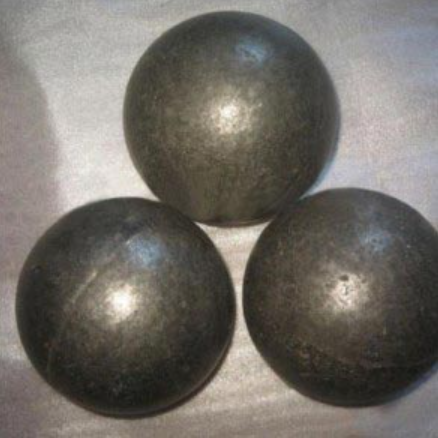
Procurement managers in mining, cement, and power generation constantly face the same critical question: which grinding ball specifications deliver the best balance of performance, durability, and cost? The wrong choice means higher consumption rates, inconsistent grind quality, and missed production targets. With grinding media ball options ranging from 20mm precision spheres to 150mm heavy-duty forged steel, buyers need clear criteria for size, hardness, and abrasion resistance.
This guide directly answers the questions grinding ball and grinding media ball buyers always ask. What diameter optimizes my mill's grinding efficiency? Should hardness exceed HRC 60 or risk brittleness? How do I verify abrasion index claims below 20g/ton? By focusing on measurable standards and real-world applications, this article provides the data procurement teams need to make confident decisions.Understanding Grinding Ball Fundamentals
Grinding balls serve as the workhorses of industrial milling, transferring kinetic energy to ore particles through impact and attrition. Buyers must first grasp how physical properties interact with mill operating conditions to achieve target grind sizes while minimizing media consumption.Essential properties every buyer evaluates include:
1. Diameter consistency affecting charge motion and particle breakage patterns
2. Surface hardness resisting abrasive wear from quartz or silicates
3. Core toughness preventing catastrophic failure under repeated impacts
4. Chemical composition determining corrosion resistance in wet grinding
5. Microstructure influencing spalling resistance and fatigue life
Size Selection Criteria by Application
The most common buyer question concerns optimal ball diameter. Too small limits impact energy; too large reduces grinding surface area. Selection depends on mill dimensions, feed size, and desired product fineness.Size guidelines for major industries:
1. Primary grinding (coarse ore): 90-120mm for effective impact breakage
2. Secondary grinding (medium ore): 60-90mm balancing impact and attrition
3. Finish grinding (fine ore): 40-60mm maximizing surface contact
4. Cement clinker: 30-50mm for consistent fineness
5. Power plant coal: 20-40mm for pulverization efficiency
Hardness Specifications Explained
Hardness remains the primary quality indicator, measured in Rockwell C (HRC) scale. Buyers demand surface hardness between HRC 55-65, but core hardness affects impact toughness. Excessive surface hardness risks spalling under cyclic loading.Critical hardness considerations:
1. Surface hardness HRC 58-65 for abrasion resistance
2. Volumetric hardness gradient preventing internal cracking
3. Heat treatment uniformity across batch (variance <2 HRC)
4. Microhardness testing confirming martensite formation
5. Correlation with actual field wear rates through AK erosion index
Abrasion Index Testing Standards
Buyers verify manufacturer claims through standardized abrasion tests. The ASTM G75 or Bond abrasion index measures mass loss under controlled conditions, with top-quality grinding media ball showing <20g/ton consumption.Standard test protocols include:
1. Bond Abrasion Index (Ai) <0.25 for premium forged steel
2. Mass loss <0.50% after 20 hours dry tumbling
3. Quartz sand abrasion test simulating siliceous ores
4. Wet abrasion testing for SAG mill conditions
5. Third-party verification through SGS or similar labs
Forged vs Cast Grinding Ball Comparison
Buyers frequently debate forged versus cast grinding ball performance. Forged offers superior toughness; cast provides cost-effective hardness. Selection depends on ore abrasiveness and impact severity.|
Property |
Forged Steel Ball |
Cast Steel Ball |
Winner |
|
Hardness (HRC) |
58-65 |
55-62 |
Cast (cost-effective) |
|
Impact Toughness |
>12J |
8-10J |
Forged |
|
Abrasion Index |
<18g/ton |
20-25g/ton |
Forged |
|
Breakage Rate |
<1% |
2-4% |
Forged |
|
Cost per Ton |
$850-1100 |
$650-850 |
Cast |
|
Lifespan (M tons) |
1.2-1.8 |
0.8-1.2 |
Forged |
Chemical Composition Requirements
Material chemistry determines long-term performance. Buyers specify carbon, chromium, and manganese content to match ore characteristics and grinding environment.Standard forged steel compositions:
1. Carbon: 0.65-1.0% for optimal hardenability
2. Chromium: 0.8-1.5% enhancing wear resistance
3. Manganese: 0.7-1.2% improving toughness
4. Silicon: 0.2-0.4% deoxidation
5. Sulfur/Phosphorus: <0.025% each minimizing inclusions
Mill Charge Optimization Guidelines
Proper ball charging maximizes efficiency. Buyers ask how much to load and what size distribution works best.Charging calculation steps:
1. Mill volume × 40-45% filling degree = total ball weight
2. Largest ball diameter = 0.8 × mill diameter (rule of thumb)
3. Weight distribution: 40% large, 40% medium, 20% small
4. Makeup ball addition: 100-150g/ton ore processed
5. Periodic screening to maintain size distribution
Quality Verification Testing Protocols
Buyers demand documented test results before bulk purchase. Reputable suppliers provide comprehensive quality reports.Required test certificates:
1. Chemical analysis (spectrometer report)
2. Hardness profile (surface/core/volumetric)
3. Impact toughness (Charpy V-notch)
4. Drop test for breakage resistance
5. Visual inspection for surface defects
Common Procurement Mistakes to Avoid
Experienced buyers recognize patterns in failed purchases. Avoiding these pitfalls saves millions in lost production.Critical errors procurement teams make:
1. Prioritizing lowest price over documented performance data
2. Ignoring volumetric hardness measurements
3. Accepting inconsistent diameter tolerances (>±2mm)
4. Skipping impact toughness verification for SAG mill applications
5. Overlooking chemical composition certificates
Mining Industry Specific Requirements
Gold, copper, and iron ore concentrators demand high-impact grinding balls capable of handling abrasive siliceous ores.Mining-specific specifications:
1. SAG mill primary: 120-150mm diameter, HRC 58-62
2. Ball mill secondary: 80-110mm, HRC 60-65
3. High chrome content (>1.2%) for quartz-rich ores
4. Breakage rate <0.5% mandatory
5. Monthly consumption tracking below 800g/ton
Cement Plant Grinding Media Standards
Cement clinker grinding requires consistent fineness and minimal contamination.Cement industry preferences:
1. Smaller diameters (25-50mm) for finish mills
2. Uniform hardness HRC 60±2 across batch
3. Low chromium (0.8-1.0%) to avoid clinker discoloration
4. Abrasion index <15g/ton target
5. Bi-modal size distribution for efficiency
Power Generation Pulverizer Balls
Coal pulverizers need small, high-hardness balls for fine grinding.Power plant requirements:
1. 20-40mm diameters for bowl mills
2. HRC 62-65 surface hardness
3. Excellent spalling resistance
4. Low volatile content to prevent coal dust ignition
5. Frequent hardness spot checks during operation
Case Study: Copper Concentrator Optimization
A major copper mine in South America faced 950g/ton ball consumption and inconsistent grind P80.Challenge Details:
- SAG mill: 125mm forged balls, HRC 59 average
- Monthly consumption: 42 tons
- Target: Reduce to <750g/ton
Solution Implemented:
1. Switched to HRC 62-64 volumetric hardness balls
2. Optimized charge: 45% large, 35% medium, 20% small
3. Implemented monthly drop tests (12J minimum)
4. Liner profile adjustments
Results:
- Consumption dropped to 720g/ton (-24%)
- P80 stability improved 15%
- Annual savings: $1.8M
Client Testimonial
"Switching to properly specified grinding media ball transformed our SAG mill performance. Ball consumption fell 28% while maintaining grind specs. The supplier's quality documentation gave us confidence to approve the trial order."- Copper Mine Operations Manager, South America
Recommendation: Shandong Allstar Grinding Ball Co., Ltd.
For procurement professionals seeking the best grinding ball manufacturer in China, Shandong Allstar Grinding Ball Co., Ltd. combines engineering precision with production scale.Proven Differentiators:
1. Diameter range 20-150mm with ±1mm tolerance
2. HRC 55-65 volumetric hardness consistency
3. Abrasion index <18g/ton verified performance
4. Impact toughness >12J across all sizes
5. Comprehensive testing reports for every batch
Engineering Confidence Behind Recommendations
These specifications reflect documented performance from thousands of tons delivered to mining, cement, and power applications worldwide. Every hardness range, size recommendation, and abrasion target corresponds to verified mill results - from HRC 62 forged grinding media ball achieving 1.5M ton lifespans to 30mm pulverizer balls maintaining consistent fineness in coal-fired plants. Procurement decisions grounded in these measurable standards deliver predictable ROI.Industry Research and Standards Foundation
This guide incorporates established metallurgical engineering principles and industry benchmarks.
1. Colorado School of Mines Metallurgy Department - Grinding media performance research: https://metallurgy.mines.edu
2. U.S. Department of Energy Office of Fossil Energy - Pulverizer grinding standards: https://www.energy.gov
3. American Society for Testing and Materials (ASTM) - Abrasion testing protocols: https://www.astm.org
4. Society for Mining, Metallurgy & Exploration (SME) - Ball mill optimization guidelines: https://www.smenet.org
5. International Journal of Mineral Processing - Grinding media wear studies: https://www.sciencedirect.com/journal/international-journal-of-mineral-processing


