
Grinding balls for copper mines quality requirements
This blog examines the quality requirements for grinding balls used in copper mines. Copper grinding circuits operate under continuous impact, abrasion, wet conditions, and variable ore hardness, so grinding media must deliver more than a single hardness value. The article explains that copper mines require controlled chemical composition, balanced hardness and toughness, low breakage, stable wear rates, dimensional accuracy, sound surface quality, proper microstructure, and batch consistency. It also discusses how mill type, ore characteristics, and grinding stage influence media selection. Larger forged balls are often used for coarse grinding, while smaller media supports fine grinding. Forged balls are commonly selected for wet grinding in mining, while cast and high chrome balls may suit specific conditions. The article introduces Shandong Allstar Grinding Ball Co., Ltd., known as ALLSTAR grinding balls, which has manufactured grinding media since 1985. The company produces forged grinding balls from 20 mm to 150 mm, cast grinding balls from 6 mm to 150 mm, high chrome grinding balls, and grinding rods. Its facilities cover 15,000 square metres, employ 150 people, and have an annual capacity of 100,000 metric tons. Quality control begins with raw materials from large state-owned steel mills, followed by chemical analysis, controlled melting, forging or hot rolling, coated-sand shell molding for cast products, heat treatment, and batch inspection. ALLSTAR maintains ISO 9001 and supports third-party inspection through SGS, BV, and TÜV. The article highlights the Pinto Valley Mine trial, where ALLSTAR high chrome balls achieved consumption of 0.56 to 0.59 kg per tonne and a 0.2 percent breakage rate, compared with 0.68 kg per tonne and nearly 3 percent breakage for another supplier. The mill using ALLSTAR media also showed higher output and better grinding fineness. After the trial, daily processing reached 53,000 tonnes, exceeding design capacity. The conclusion emphasizes that copper mines should evaluate grinding balls by total grinding cost, breakage, consumption, throughput, and fineness, and that ALLSTAR offers a reliable long-term grinding media partnership.
Grinding Balls for Copper Mines: Quality Requirements
Copper mining is one of the most demanding environments for grinding media. The ore body can vary from relatively soft oxide material to hard, abrasive sulfide ore, and the grinding circuit often operates continuously under wet conditions, heavy impact, and high throughput. For copper mines, grinding balls are not simply consumable steel pieces. They are part of the production system. Their quality affects throughput, grinding fineness, energy use, media consumption, mill availability, and ultimately the cost per tonne of concentrate produced. This is why quality requirements for grinding balls used in copper mines go far beyond a single hardness number.
Shandong Allstar Grinding Ball Co., Ltd., known as ALLSTAR grinding balls, has manufactured grinding media since 1985. The company was originally a state-owned enterprise and became privately operated in 1999, while maintaining rigorous management standards and strict quality control practices. ALLSTAR specializes in SAG mill and ball mill grinding media for the mining, cement, and power generation industries, including forged grinding balls, cast grinding balls, high chrome grinding balls, and grinding rods. Its production facilities cover 15,000 square metres, employ 150 people, and support an annual grinding media production capacity of 100,000 metric tons. This scale allows the company to serve different markets and project sizes while maintaining a practical focus on product quality and long-term customer value.
Why Copper Mines Have Specific Grinding Media Requirements
Copper mines usually operate large SAG and ball mill circuits. The primary grinding stage must break coarse run-of-mine ore, while subsequent ball mill stages must achieve the liberation size needed for flotation or leaching. Grinding balls in these circuits face repeated impact, abrasion, slurry corrosion, and variable ore hardness. A ball that is too soft may wear quickly and lose its shape, reducing grinding efficiency. A ball that is too hard but brittle may crack or break, causing downtime, screen blockage, and unnecessary media loss. The correct product must balance hardness, toughness, wear resistance, and structural consistency.
Copper ore characteristics also influence quality requirements. Sulfide ores may produce acidic slurry conditions, while other circuits may operate at different pH levels and solid concentrations. Ore hardness, grindability, top size, mill speed, ball charge, and discharge arrangement all affect ball performance. For this reason, copper mines generally evaluate grinding balls by performance indicators such as consumption per tonne of ore, breakage rate, mill throughput, grinding fineness, and stability over long operating periods. A supplier that understands these relationships can help a mine select the most suitable media rather than simply offering a generic product.
undefined
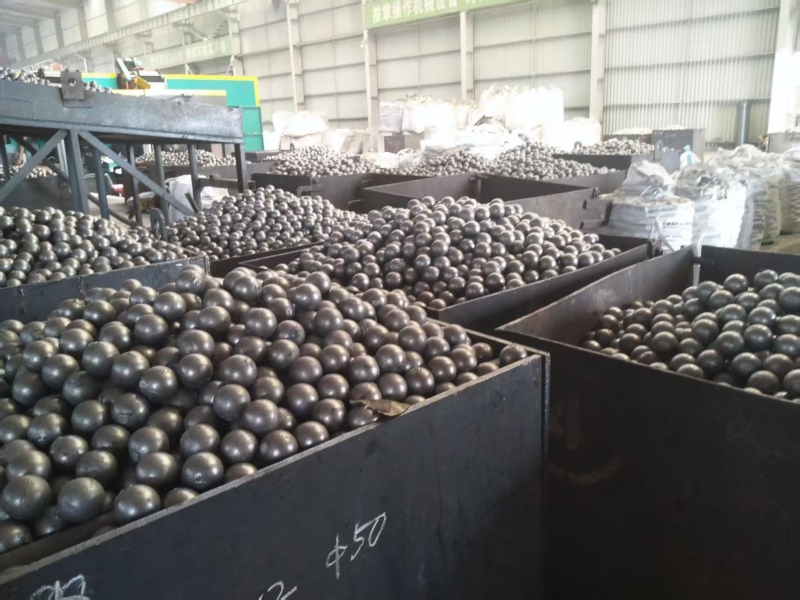
Key Quality Requirements for Grinding Balls in Copper Mines
1. Controlled Chemical Composition
Quality begins with chemistry. For forged grinding balls, the round steel bars must have suitable carbon, manganese, silicon, chromium, and other alloying elements to achieve the required hardenability and toughness after heat treatment. Harmful impurities must be controlled because they can increase the risk of cracking, reduce fatigue life, or create inconsistent wear behavior. For cast grinding balls, raw materials such as ferrochrome and iron scrap must be carefully proportioned and melted according to the required product grade. Chemical composition is analyzed after melting to confirm that the molten metal meets specification before casting. Consistent chemistry is essential because it provides the foundation for predictable heat treatment and reliable performance.
2. Balanced Hardness and Toughness
Hardness alone is not enough for copper mine grinding balls. High surface hardness can improve wear resistance, but if the core is too brittle or the hardness gradient is poorly controlled, the ball may break under repeated impact. Copper mines typically require a balance between surface hardness and core toughness. The heat treatment process must produce a suitable microstructure, avoid excessive retained austenite, and maintain adequate tempering so that the ball can withstand impact without premature failure. A reliable grinding ball should wear gradually and retain a stable shape rather than chip, spall, or fracture.
3. Low Breakage Rate
Breakage is one of the most visible quality problems in a copper grinding circuit. Broken balls can damage liners, interfere with discharge, block screens, and increase media consumption. They can also disturb the ball charge and reduce grinding efficiency. Copper mines often set strict breakage targets because even a small percentage of broken balls can create significant operational cost at high throughput. Quality control should therefore include impact testing, drop testing, and batch inspection to verify that finished balls meet the required toughness and structural integrity. The target is not simply to pass a laboratory test, but to maintain low breakage under continuous industrial impact.
4. Stable Wear Rate and Low Consumption
Media consumption is a major cost in copper processing. A high-quality grinding ball should provide a stable and predictable wear rate so that the mine can plan ball charging, control inventory, and estimate cost per tonne. Consumption is usually expressed in kilograms per tonne of ore processed. Lower consumption is valuable, but it must be achieved without sacrificing grinding performance. A ball that wears slowly but loses its grinding efficiency may not deliver the expected economic benefit. Copper mines require media that combines low wear with effective grinding action throughout its service life.
5. Dimensional Accuracy and Surface Quality
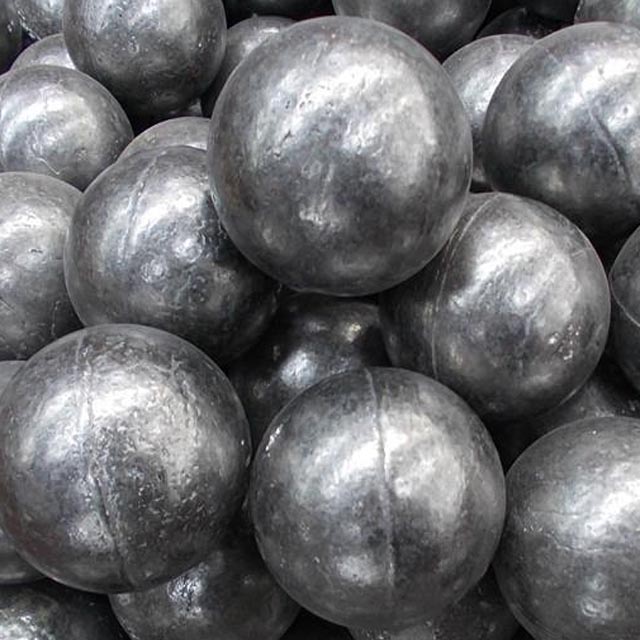
Grinding balls should have consistent diameter, good roundness, and acceptable surface quality. Dimensional accuracy helps maintain a stable ball charge and predictable grinding behavior. Surface defects such as cracks, laps, seams, shrinkage, porosity, and excessive flash can become initiation points for breakage or abnormal wear. For forged balls, proper forging or hot-rolling practice helps close internal defects and produce a sound structure. For cast balls, advanced molding processes and controlled cooling are important for surface quality and internal soundness. Copper mines benefit from media that is uniform from batch to batch because consistency supports stable mill operation.
6. Microstructure and Heat Treatment Control
The microstructure of a grinding ball determines how it responds to impact and abrasion. Heat treatment must be carefully controlled to achieve the desired combination of hardness, toughness, and wear resistance. For forged products, austenitizing temperature, quenching, and tempering must be matched to the steel grade and ball size. For high chrome cast balls, carbide distribution and matrix structure are important for wear resistance. Poor heat treatment can lead to cracking, soft spots, uneven hardness, or premature failure. Copper mines therefore need suppliers with proven process control and the ability to inspect finished products after heat treatment.
7. Batch Consistency and Traceability
Copper operations often consume thousands of tonnes of grinding media each year. Consistency across batches is critical because frequent changes in ball quality can make it difficult to stabilize the grinding circuit. A reliable supplier should sample and test incoming raw materials, monitor chemical composition during production, inspect samples from each production batch, and test finished products after heat treatment. Traceability from raw material to finished ball supports problem solving and quality assurance. Certification such as ISO 9001 and third-party inspection through SGS, BV, or TÜV can provide additional confidence for international mining customers.
Selecting the Right Grinding Ball for Copper Operations
Different copper mines and different mill positions require different grinding media. In SAG mills, large forged balls are often used to handle coarse ore and high impact conditions. In ball mills, forged grinding balls are commonly selected for wet grinding, while cast grinding balls may be used in certain dry grinding operations or specific wear conditions. High chrome cast grinding balls are widely used where high wear resistance is required, although the final choice should always consider the actual operating conditions. Larger media is generally used in the first chamber of a mill for coarse grinding, while smaller media is used in the second chamber for fine grinding.
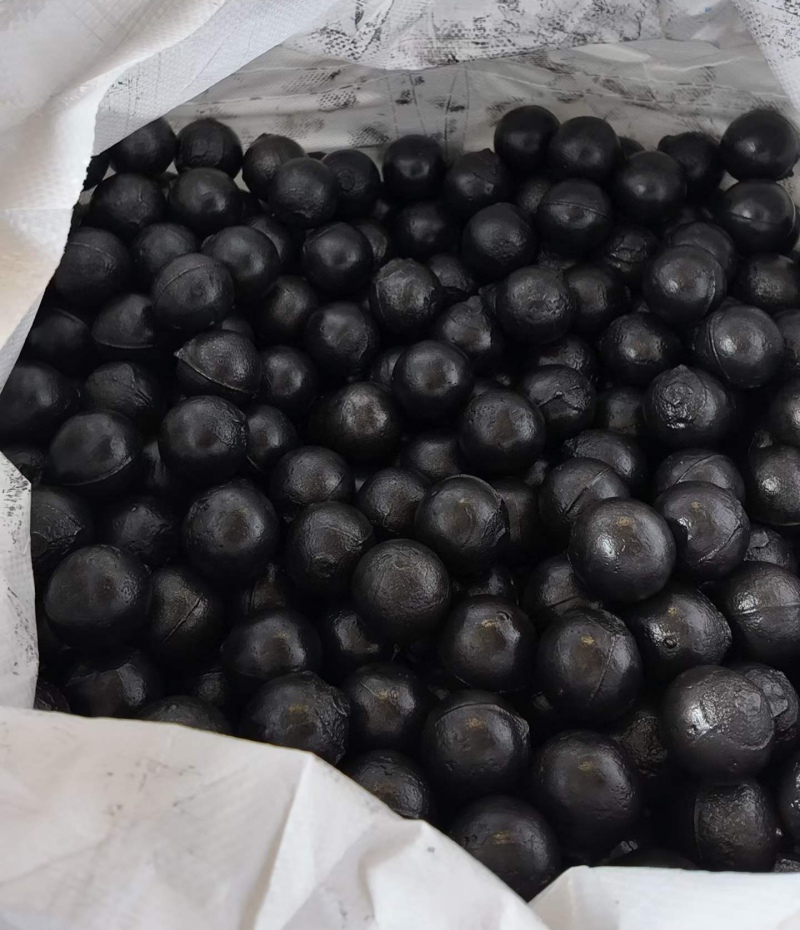
ALLSTAR offers forged grinding balls from 20 mm to 150 mm in diameter, cast grinding balls from 6 mm to 150 mm, and grinding rods from 25 mm to 140 mm in diameter with lengths from 1,500 mm to 6,000 mm. The company serves mining operations involving copper, gold, platinum, iron ore, nickel, phosphate, and lead-zinc, as well as cement plants and power stations. For copper mines, the selection process should consider ore hardness, feed size, mill type, target grind size, slurry chemistry, ball charge, and historical consumption. A suitable grinding media solution is one that improves grinding performance, maintains stable mill operation, manages media consumption, and controls overall grinding cost.
Manufacturing and Quality Control at ALLSTAR
ALLSTAR follows a practical quality philosophy that starts with raw materials and continues through final inspection. The round steel bars used for forged grinding balls and grinding rods are sourced from large state-owned steel mills in China. Upon arrival at the factory, incoming materials are sampled and tested for chemical composition to verify their quality. For cast grinding balls, raw materials such as ferrochrome and iron scrap are proportioned and melted according to the required product grade, and chemical composition is analyzed after melting. For forged products, ALLSTAR operates both air hammer forged and hot-rolling production processes. For cast products, the company uses an advanced coated-sand shell molding process and automated production lines to support consistent manufacturing quality.
Quality inspection is carried out throughout the manufacturing process. Samples are taken from each production batch for inspection. After heat treatment, finished products undergo further testing to check whether they meet the required quality and performance specifications. This batch-based approach helps the company deliver consistent and reliable grinding media to customers worldwide. ALLSTAR maintains an ISO 9001 Quality Management System and supports product quality verification through professional testing and third-party inspection services, including SGS, BV, and TÜV. The company has also been recognized as a High and New Technology Enterprise and as a Specialized, Sophisticated, Distinctive and Innovative Enterprise, reflecting its focus on technological capability, specialized manufacturing, and continuous innovation.
Proven Performance in Copper Mining
Quality requirements become meaningful when they are tested under real operating conditions. In the mining industry, ALLSTAR high chrome grinding balls demonstrated outstanding results in a comparative trial at Pinto Valley Mine in the USA. The mine conducted a trial lasting nearly six months, using ALLSTAR high chrome grinding balls in one ball mill and another manufacturer's products in the other. The results were compelling. ALLSTAR grinding ball consumption remained stable at 0.56 to 0.59 kg per tonne of run-of-mine ore, with a breakage rate of only 0.2 percent. By comparison, the other supplier's consumption reached 0.68 kg per tonne, with a breakage rate close to 3 percent.
Further performance differences were observed in mill output and grinding fineness. The mill using the competitor's products recorded more than 70 tonnes per hour lower output and over 5 percentage points lower grinding fineness compared with the mill using ALLSTAR balls. Following the successful trial, the customer replaced the grinding balls in the second mill with ALLSTAR products as well. Daily processing capacity subsequently reached 53,000 tonnes, exceeding the designed capacity of 50,000 tonnes by 3,000 tonnes. To date, the mine has purchased and used more than 48,000 tonnes of ALLSTAR grinding media, demonstrating long-term confidence in the products. For copper mines, this case illustrates why quality requirements should be evaluated through consumption, breakage, throughput, and fineness rather than through a single specification.
Economic Value Beyond the Purchase Price
Copper mines purchase grinding balls to support production, not simply to fill a mill. The lowest purchase price may not represent the lowest cost per tonne. A ball with slightly higher initial cost but lower consumption, lower breakage, and better grinding efficiency can deliver significant savings over a year of continuous operation. Stable media quality also reduces the risk of mill downtime, liner damage, and process fluctuation. ALLSTAR approaches grinding media as a long-term partnership. The company's business philosophy is to manufacture high-quality products, be a reliable supplier, and build long-term and sustainable partnerships with clients. Rather than focusing solely on individual transactions, ALLSTAR is committed to creating long-term value through reliable products and responsible business relationships.
For copper mining customers, the most useful quality requirements are therefore practical and measurable. They include controlled chemistry, balanced hardness and toughness, low breakage, stable wear, accurate dimensions, sound surface quality, consistent heat treatment, batch traceability, and proven performance in industrial mills. These requirements should be matched to the specific ore and circuit. A supplier with manufacturing experience, quality systems, and application knowledge can help a copper mine select the most suitable grinding media and maintain stable grinding performance over time.
Conclusion
Grinding balls for copper mines must meet demanding quality requirements because they operate under continuous impact, abrasion, and wet grinding conditions. The ideal product is not simply hard or inexpensive. It is a carefully manufactured grinding medium with the right chemistry, microstructure, hardness, toughness, dimensional accuracy, and batch consistency. It should deliver low breakage, stable consumption, reliable grinding efficiency, and predictable cost per tonne. ALLSTAR grinding balls, through decades of manufacturing experience, strict raw material control, modern production processes, batch inspection, and proven performance at mines such as Pinto Valley, represents a reliable choice for copper mining operations seeking quality and long-term value. With a product range covering forged grinding balls, cast grinding balls, high chrome grinding balls, and grinding rods, Shandong Allstar Grinding Ball Co., Ltd. supports copper mines and other industrial customers with grinding media solutions designed for real operating conditions.


