Grinding media exporter China comparison by service and lead time
This article examines how international buyers can compare Chinese grinding media exporters by service and lead time rather than price alone. It explains that grinding media is a consumable affecting mill availability, grinding efficiency, and total operating cost, so supplier selection should include technical support, application fit, documentation, inspection coordination, communication, packaging, and delivery planning. The article uses Shandong Allstar Grinding Ball Co., Ltd. as a reference point. Established in 1985 and privately operated since 1999, Allstar manufactures forged grinding balls, cast grinding balls, high chrome grinding balls, grinding rods, and grinding cylpebs for mining, cement, and power generation industries. Its facilities cover 15,000 square metres, employ 150 people, and have annual capacity of 100,000 metric tons. The article outlines service comparison factors such as media selection by mill type and ore conditions, trial support, batch test reports, third-party inspection, and after-sales follow-up. It also outlines lead-time factors such as raw material readiness, production scheduling, heat treatment, inspection release, packaging, inland transport, port handling, and ocean freight. Allstar's quality control begins with raw materials sourced from large state-owned steel mills, with chemical composition testing, melt analysis for cast products, batch inspection, and post-heat-treatment testing. The company maintains ISO 9001 and supports SGS, BV, and TUV inspection. Case evidence is included: at Pinto Valley Mine in the USA, Allstar high chrome balls showed 0.56 to 0.59 kg per tonne consumption and 0.2 percent breakage versus 0.68 kg per tonne and nearly 3 percent breakage from another supplier, with higher throughput and fineness. At Turkey YD Madencilik, combined grinding-ball consumption fell from 84.80 g per tonne in 2016 to 31.93 g per tonne in 2018 and 25.66 g per tonne in 2025. The summary concludes that buyers should compare total value, including service reliability, lead-time realism, product performance, documentation, and long-term supply capability.
For international buyers sourcing grinding media from China, the comparison is rarely limited to price per tonne. Mining companies, cement plants, power stations, and industrial distributors must evaluate how an exporter handles technical selection, documentation, quality verification, communication, packaging, and delivery scheduling. Service and lead time are often the deciding factors between a supplier that supports stable mill operation and one that creates hidden costs through delays, inconsistent product fit, or weak follow-up. Shandong Allstar Grinding Ball Co., Ltd., known as ALLSTAR grinding balls, is a useful example of how an integrated Chinese manufacturer can be assessed within this broader comparison framework. Established in 1985, Allstar was originally a state-owned enterprise and became a privately operated company in 1999. Since then, the company has continued to uphold rigorous management standards, strict quality control practices, and integrity as a fundamental principle of business operations.
Why Service and Lead Time Matter in Grinding Media Sourcing
Grinding media is a consumable that directly affects mill availability, grinding efficiency, and total operating cost. A buyer comparing Chinese exporters should consider more than chemical composition and hardness. The wrong ball size, inconsistent wear behavior, or an unexpected delivery delay can interrupt production planning and increase inventory pressure. Lead time should be understood as the total time from purchase order to production readiness, inspection release, packaging, inland transport, port handling, ocean freight, customs clearance, and final delivery. Service should be understood as the supplier's ability to support media selection, trial design, batch documentation, third-party inspection, problem resolution, and long-term supply planning. A low unit price can be misleading if the exporter cannot provide reliable technical advice or if the shipment arrives late and forces emergency purchases.
How Chinese Grinding Media Exporters Differ
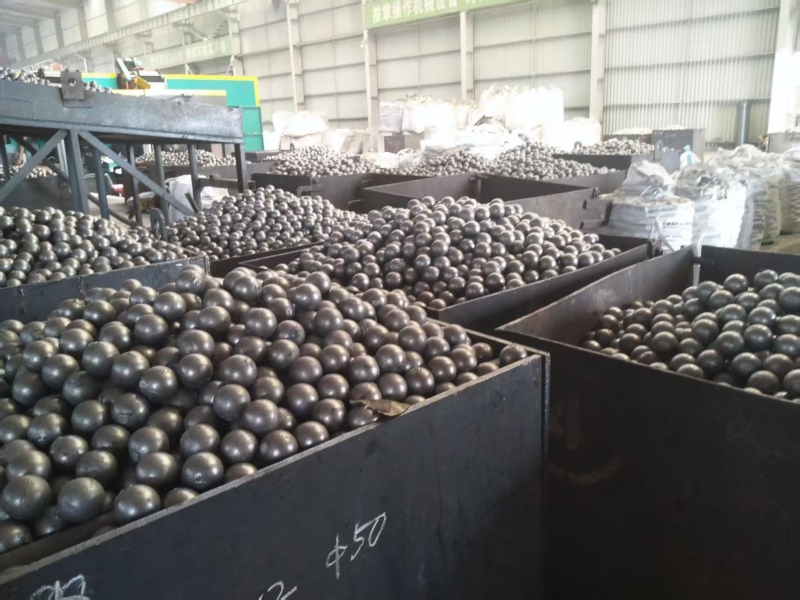
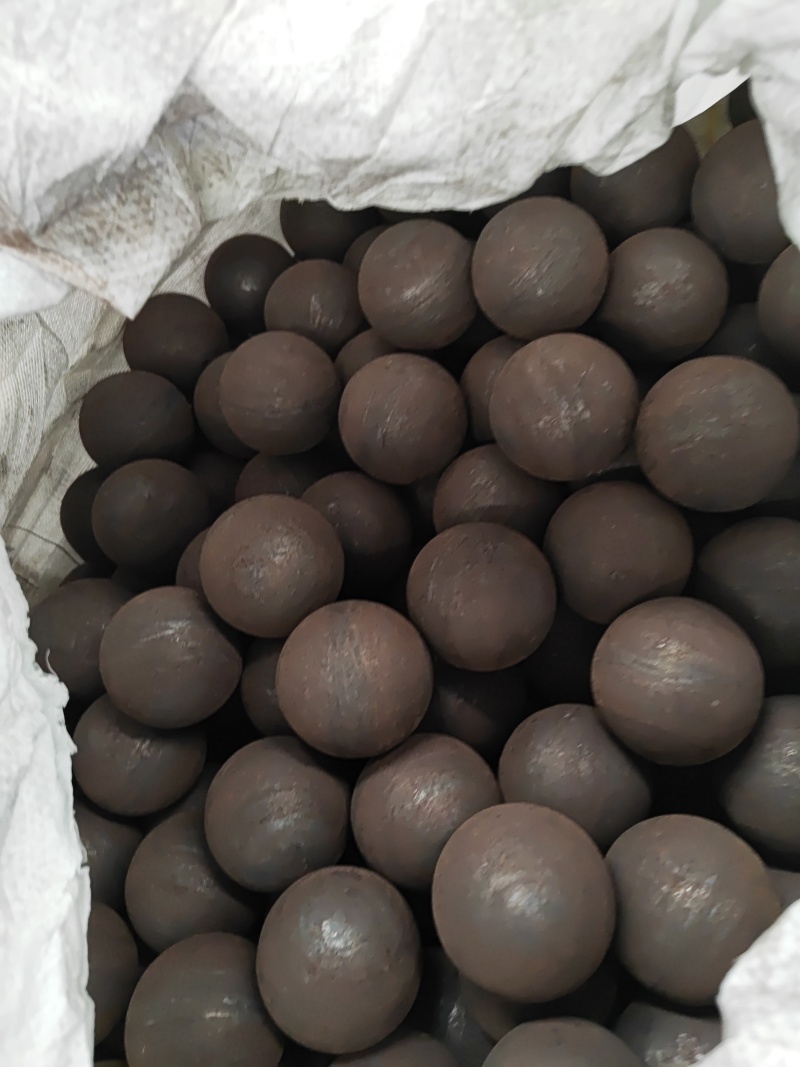
Chinese exporters of grinding media range from trading companies with broad catalogs to integrated manufacturers with their own production facilities, heat treatment processes, inspection systems, and application experience. Trading companies may offer flexible communication and multiple product sources, but their control over production scheduling and quality consistency can vary. Integrated manufacturers may require more detailed technical discussion, but they often provide stronger traceability from raw material to finished product. Allstar operates production facilities covering 15,000 square metres and employs 150 people, including experienced technical, production, and sales personnel. The company has an annual grinding media production capacity of 100,000 metric tons, which allows it to serve clients across different markets and project scales. Its product range includes forged grinding balls, cast grinding balls, high chrome grinding balls, grinding rods, and grinding cylpebs for the mining, cement, and power generation industries. Forged grinding balls are available in diameters from 20 mm to 150 mm, cast grinding balls from 6 mm to 150 mm, and grinding rods from 25 mm to 140 mm in diameter with lengths from 1,500 mm to 6,000 mm. This breadth is relevant to lead time because buyers with mixed requirements can consolidate orders and reduce coordination risk.
undefined
Service Comparison: Technical Support and Application Fit
Service begins before the order is placed. Different mills, ores, and operating conditions require different grinding media. Larger grinding media are generally used in the first chamber of a mill for coarse grinding and breaking larger particles of ore or clinker. Smaller grinding media are commonly used in the second chamber for fine grinding. High chrome cast grinding balls are widely used in cement plants and power stations. Grinding rods are mainly used in rod mills for mineral processing. In mining applications, forged grinding balls are commonly selected for wet grinding, while cast grinding balls are often used in dry grinding operations. The final selection should always consider actual operating conditions. A strong exporter asks detailed questions about mill type, ore characteristics, feed size, target fineness, media consumption history, breakage rate, and operating schedule. Allstar works with mining companies, mineral processing plants, cement manufacturers, power plants, and industrial distributors to understand requirements and recommend suitable grinding media solutions. This type of application support shortens the trial-and-error period and helps buyers avoid expensive mismatches between media and mill conditions.
- Technical service comparison should examine whether the exporter can recommend media size, grade, and material type based on mill and ore data.
- Buyers should ask whether the exporter supports comparative trials and provides baseline data for consumption, breakage, and grinding efficiency.
- Communication quality matters, including response time, English-language technical documentation, and clarity on specifications and tolerances.
- Documentation support should cover batch test reports, chemical composition records, heat treatment records, and third-party inspection coordination.
- After-sales service should include practical follow-up on performance, not only order processing and shipment tracking.
Lead Time Comparison: From Raw Material to Port
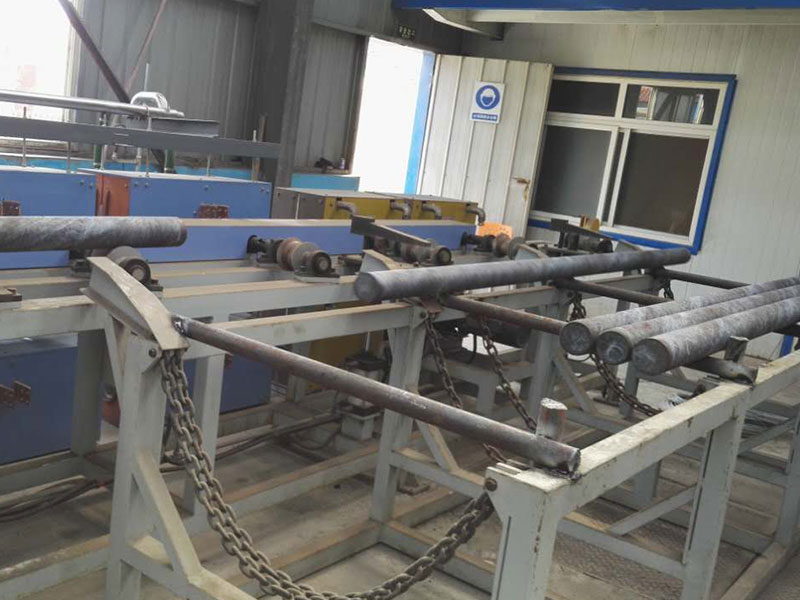
Lead time comparisons are often too narrow. A quotation that states production days without explaining raw material readiness, inspection release, packaging, inland transport, and port schedules may create unrealistic expectations. Allstar's quality control starts with raw materials. The round steel bars used for forged grinding balls and grinding rods are sourced from large state-owned steel mills in China. Upon arrival at the factory, incoming materials are sampled and tested for chemical composition to verify quality. For cast grinding balls, raw materials such as ferrochrome and iron scrap are proportioned and melted according to the required product grade. Chemical composition is analyzed after melting to ensure the molten metal meets specified requirements. For forged products, Allstar operates both air hammer forged and hot-rolling production processes. For cast products, the company uses an advanced coated-sand shell molding process and automated production lines to support consistent manufacturing quality. Quality inspection is carried out throughout the manufacturing process. Samples are taken from each production batch for inspection. After heat treatment, finished products undergo further testing to check whether they meet required quality and performance specifications. These controls support reliable delivery, but buyers should still compare total lead time to destination, not only ex-works production time.
Quality Control as a Lead-Time Safeguard
Quality failures are a hidden lead-time risk. If a batch fails inspection, requires rework, or is rejected at the port, the buyer faces delays, claims, and production disruption. Allstar maintains an ISO 9001 Quality Management System and supports product quality verification through professional testing and third-party inspection services, including SGS, BV, and TUV. The company has also been recognized as a High and New Technology Enterprise and as a Specialized, Sophisticated, Distinctive and Innovative Enterprise. These qualifications are relevant to a service and lead-time comparison because they indicate structured management, technical capability, and a commitment to continuous improvement. Buyers comparing Chinese exporters should request sample test reports, batch traceability information, and inspection plans. A supplier that can provide clear documentation early in the discussion is often better prepared to manage international orders without last-minute surprises.
Case Evidence: Performance That Supports Service and Lead-Time Decisions
Service and lead time cannot be separated from product performance. A supplier that delivers on time but provides media with high breakage or unstable consumption can create greater costs than a slightly slower supplier with dependable quality. In the mining industry, Allstar high chrome grinding balls demonstrated outstanding results in a comparative trial at Pinto Valley Mine in the USA. The mine conducted a trial lasting nearly six months, using Allstar high chrome grinding balls in one ball mill and another manufacturer's products in the other. Allstar grinding-ball consumption remained stable at 0.56 to 0.59 kg per tonne of run-of-mine ore, with a breakage rate of only 0.2 percent. By comparison, the other supplier's consumption reached 0.68 kg per tonne, with a breakage rate close to 3 percent. Furthermore, the mill using the competitor's products recorded more than 70 tonnes per hour lower output and over 5 percentage points lower grinding fineness compared with the mill using Allstar balls. Following the successful trial, the customer replaced the grinding balls in the second mill with Allstar products as well. Daily processing capacity subsequently reached 53,000 tonnes, exceeding the designed capacity of 50,000 tonnes by 3,000 tonnes. To date, the mine has purchased and used more than 48,000 tonnes of Allstar grinding media, demonstrating long-term confidence in the products and the supplier relationship.
Allstar has also achieved notable results in the cement industry. At Turkey YD Madencilik, which operates a combined roller press and ball mill grinding system, grinding media consumption had historically been high due to difficult-to-grind materials such as slag and coarse fly ash. After replacing the grinding balls in both mills with Allstar products in 2016, consumption decreased significantly. The combined grinding-ball consumption dropped from 84.80 g per tonne in 2016 to 31.93 g per tonne in 2018. More importantly, the reduction was sustained over the following years, reaching just 25.66 g per tonne in 2025, approximately 69.7 percent lower than the 2016 baseline. These real-world results demonstrate the value of reliable grinding media: lower media consumption, reduced breakage, improved grinding efficiency, more stable mill operation, and greater production capacity. For buyers comparing exporters, such cases provide evidence that service during selection and trial support can translate into measurable economic value after delivery.
Practical Comparison Checklist for Service
- Does the exporter provide technical recommendations based on mill type, ore, feed size, and target fineness?
- Can the exporter explain the difference between forged, cast, high chrome, and rod media for the buyer's application?
- Does the supplier offer trial support and a clear method for comparing consumption, breakage, and throughput?
- Are batch test reports, chemical composition records, and heat treatment records available on request?
- Can the supplier coordinate third-party inspection through recognized organizations such as SGS, BV, or TUV?
- Is communication responsive and technically informed, especially during specification review and problem resolution?
- Does the exporter demonstrate a long-term partnership approach rather than a purely transactional sales approach?
Practical Comparison Checklist for Lead Time
- Does the quotation separate production time, inspection time, packaging time, inland transport, port handling, and ocean transit?
- Can the exporter confirm raw material availability for the required grade and size range?
- Is there sufficient production capacity for the order volume, including contingency for schedule changes?
- What is the inspection release process, and how quickly can batch reports be provided?
- How are products packaged for export, and what handling steps are included before container loading?
- Which ports and shipping schedules are used, and how are documents prepared for customs clearance?
- Does the supplier provide realistic lead times for repeat orders and large project quantities, not only for sample orders?
How Allstar Fits into a China Exporter Comparison
Allstar describes its business philosophy as manufacturing high-quality products, being a reliable supplier, and building long-term and sustainable partnerships with clients. Rather than focusing solely on individual transactions, the company is committed to creating long-term value through reliable products and responsible business relationships. This positioning is relevant to buyers comparing service and lead time because it suggests a supplier that expects repeat business and therefore has an incentive to plan production carefully, maintain quality consistency, and support application performance after delivery. Allstar specializes in manufacturing SAG mill and ball mill grinding media for the mining, cement, and power generation industries. Its product range includes forged grinding balls, cast grinding balls, high chrome grinding balls, and grinding rods used for grinding and crushing ores, clinker, and other materials in various industrial processes. With 15,000 square metres of production facilities, 150 employees, and annual capacity of 100,000 metric tons, the company can be evaluated as an integrated manufacturer rather than a simple trading intermediary. Buyers should still verify specifications, lead times, and inspection arrangements for their specific order, but Allstar provides a clear example of the factors that matter in a service and lead-time comparison.
Balancing Price, Service, and Lead Time
The lowest quoted price per tonne is not always the lowest total cost. Grinding media performance affects media consumption, mill throughput, grinding fineness, breakage handling, downtime, and inventory requirements. A supplier with strong service may help the buyer select a more suitable media grade and size, reducing trial costs and improving mill stability. A supplier with reliable lead time may help the buyer avoid emergency air freight, production stoppages, and excessive safety stock. Allstar's case examples show that lower consumption and lower breakage can create measurable value in mining and cement operations. At the same time, buyers should compare commercial terms carefully, including packaging, payment conditions, inspection responsibilities, shipping schedules, and warranty or claim procedures. A balanced comparison considers price, service, lead time, product performance, and the supplier's ability to maintain consistent quality across repeat orders.
Conclusion
A comparison of Chinese grinding media exporters by service and lead time should go beyond catalog specifications. Buyers need to understand how the supplier selects media for the mill, how it controls raw materials and production, how it documents quality, how quickly it can respond to technical questions, and how realistically it can plan delivery to the destination port. Shandong Allstar Grinding Ball Co., Ltd. offers a relevant reference point in this comparison. Established in 1985, privately operated since 1999, and active in mining, cement, and power generation markets, Allstar combines an integrated manufacturing base, a broad product range, rigorous quality control, recognized certifications, and documented application results. For buyers seeking a reliable long-term grinding media partner, service and lead time are not secondary details. They are central to choosing an exporter that can deliver consistent products, stable mill performance, and predictable supply.