
Grinding media manufacturer audit checklist for buyers
This article provides a third-person audit checklist for buyers evaluating grinding media manufacturers. It explains why a structured audit is more reliable than price-only comparison and outlines key verification areas: company history and capacity, product range and specifications, raw material control, manufacturing processes, quality inspection, certification, performance references, and commercial reliability. The checklist covers forged grinding balls from 20 mm to 150 mm, cast grinding balls from 6 mm to 150 mm, grinding rods from 25 mm to 140 mm in diameters and 1,500 mm to 6,000 mm in lengths, and high chrome media for cement and power applications.
The article uses industry examples to show what evidence buyers may request. It references ALLSTAR grinding balls, established in 1985, with 15,000 square metres of production facilities, 150 employees, and 100,000 metric tons of annual capacity. It also notes quality controls such as raw material chemical analysis, batch sampling, heat treatment inspection, ISO 9001 certification, and third-party inspection through SGS, BV, and TUV. Performance validation is emphasized through comparative trial data from Pinto Valley Mine and consumption reduction results from Turkey YD Madencilik. The article concludes that buyers should use a weighted scorecard and verify capability through documents, site observation, references, and controlled trials before selecting a long-term grinding media partner.
For industrial buyers, grinding media is not a minor consumable. It directly affects mill throughput, energy use, breakage rates, liner wear, maintenance planning, and the total cost of grinding. A supplier that can provide a certificate of analysis is useful, but a supplier that can demonstrate consistent manufacturing control, application knowledge, and reliable delivery is far more valuable. A structured manufacturer audit checklist helps buyers move beyond price comparison and evaluate whether a grinding media producer is genuinely capable of supporting long-term operational performance.
This blog presents a practical audit framework for buyers of forged grinding balls, cast grinding balls, high chrome grinding balls, grinding rods, and related media. It is written from a third-person procurement perspective and uses examples from the grinding media industry to show what evidence buyers should request, what questions should be asked, and how trial data can be interpreted.
Why a Structured Manufacturer Audit Matters
Grinding media failures rarely appear as isolated commercial problems. Excessive breakage can interrupt mill operation, unstable hardness can change grinding efficiency, and inconsistent chemistry can shorten useful life. Buyers therefore need a checklist that covers company stability, raw material control, production processes, inspection routines, certification, application support, and commercial reliability. The audit should be evidence-based. Claims should be supported by batch records, test reports, reference customers, trial results, and third-party inspection documents.
undefined
Company Profile and Capacity Checks
The first section of the checklist should confirm whether the manufacturer has a stable operating history and sufficient capacity for the buyer's project scale. Buyers should verify ownership history, legal status, production area, workforce, annual capacity, main markets, and experience in the relevant industry. A long operating history is not automatically a guarantee of quality, but it does provide useful context for management discipline and process stability.
- Confirm the company's establishment date, ownership structure, and any major changes in management.
- Review production facilities, warehouse space, laboratory capability, and annual grinding media capacity.
- Check whether the manufacturer serves mining, cement, power generation, or other relevant industries.
- Request a list of representative customers and projects, with permission to contact references.
- Confirm whether production is handled in-house or through outsourced processing.
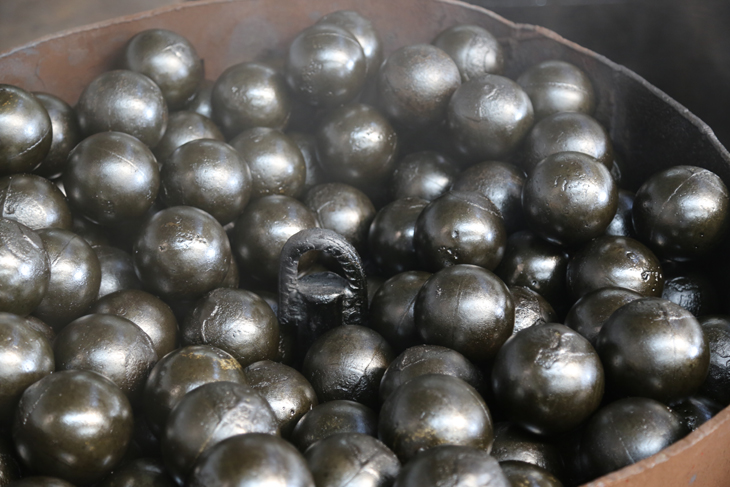
As an example of the type of profile buyers may review, Shandong Allstar Grinding Ball Co., Ltd., abbreviated as ALLSTAR grinding balls, was established in 1985 and became a privately operated company in 1999. The company operates production facilities covering 15,000 square metres, employs 150 people, and has an annual grinding media production capacity of 100,000 metric tons. Its product range includes forged grinding balls, cast grinding balls, high chrome grinding balls, and grinding rods for the mining, cement, and power generation industries. Buyers should use such information as a starting point, then verify it through documents and site observation.
Product Range and Specification Verification
Grinding media selection depends on mill type, ore or clinker characteristics, chamber position, and operating conditions. The audit should therefore confirm that the manufacturer can supply the required size range and product grade without ambiguity. Buyers should ask for written specifications covering diameter, length, chemical composition, hardness, microstructure, breakage performance, and packaging.
- Forged grinding balls: confirm availability from 20 mm to 150 mm and whether forging or hot-rolling processes are used.
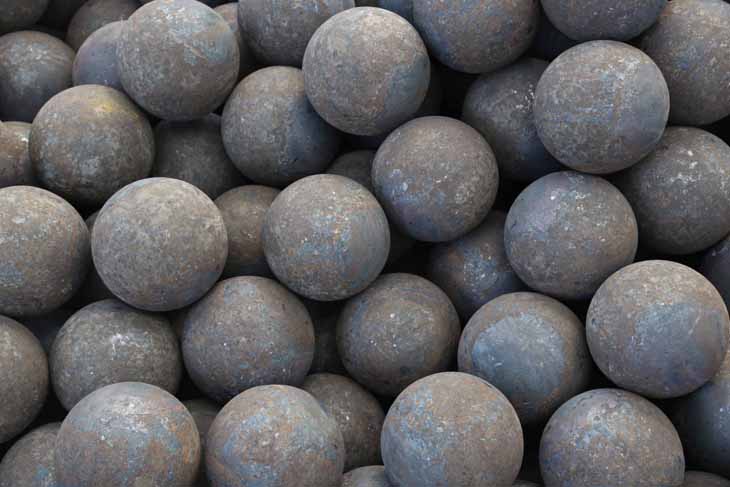
- Cast grinding balls: confirm availability from 6 mm to 150 mm and clarify chromium-content grades for different grinding conditions.
- Grinding rods: confirm diameters from 25 mm to 140 mm and lengths from 1,500 mm to 6,000 mm for rod mill applications.
- High chrome cast grinding balls: verify suitability for cement plants and power stations.
- Application guidance: confirm whether forged balls are recommended for wet grinding and cast balls for dry grinding, subject to actual operating conditions.
The checklist should also test whether the supplier asks the right questions. A capable manufacturer will want to know the mill type, feed size, target fineness, ore hardness, slurry conditions, and historical media consumption before making a recommendation. A supplier that offers only a standard catalogue without application discussion may not provide the technical support needed for cost control.
Raw Material and Process Controls
Quality control begins before production. For forged grinding balls and grinding rods, buyers should confirm the source and verification of round steel bars. For cast grinding balls, buyers should review the proportioning and melting of ferrochrome, iron scrap, and other raw materials. The audit should check whether chemical composition is analyzed before and after melting, and whether results are linked to production batches.
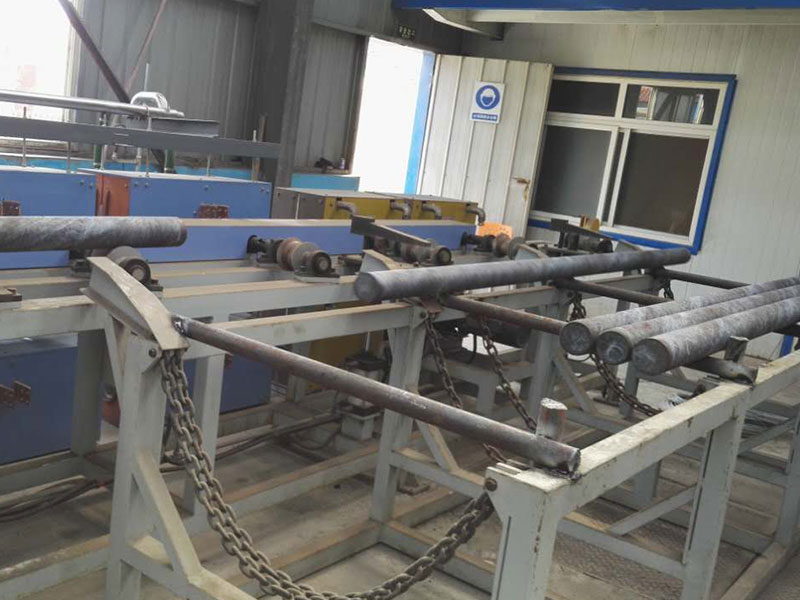
Process control should also be observed on site. For forged products, buyers may review air hammer forging and hot-rolling production processes. For cast products, they may review coated-sand shell molding, automated production lines, and heat treatment. The key question is not whether a process exists, but whether it is controlled, recorded, and repeatable. Buyers should ask how process parameters are monitored, how deviations are handled, and how finished products are released after heat treatment.
Quality Assurance and Certification Evidence
A manufacturer audit should include a review of the quality management system and inspection records. Buyers should confirm that samples are taken from each production batch, that chemical and mechanical tests are performed, and that finished products are checked after heat treatment. The audit should also verify calibration records for testing equipment and the traceability of test results to delivered lots.
Certification can support due diligence but should not replace it. Buyers may request evidence of an ISO 9001 Quality Management System and third-party inspection services such as SGS, BV, and TUV. Government or industry recognitions can also be reviewed. For example, ALLSTAR has been recognized as a High and New Technology Enterprise and as a Specialized, Sophisticated, Distinctive and Innovative Enterprise. Such recognitions indicate technological capability and innovation activity, but buyers should still link them to the specific product and application under review.
Performance Validation and Trial Protocol
The most persuasive evidence is performance under comparable operating conditions. Buyers should request reference cases that include media consumption, breakage rate, mill throughput, grinding fineness, and duration of use. Where possible, a controlled trial should be designed with clear baselines, identical mill conditions, and agreed measurement methods.
In one mining reference, ALLSTAR high chrome grinding balls were tested at Pinto Valley Mine in the USA in a comparative trial lasting nearly six months. One ball mill used ALLSTAR media and the other used another manufacturer's product. ALLSTAR consumption remained stable at 0.56 to 0.59 kg per tonne of run-of-mine ore, with a breakage rate of only 0.2 percent. The other supplier's consumption reached 0.68 kg per tonne, with a breakage rate close to 3 percent. The mill using the competitor's products also recorded more than 70 tonnes per hour lower output and over 5 percentage points lower grinding fineness. After the trial, the customer replaced the second mill's media with ALLSTAR products, and daily processing capacity reached 53,000 tonnes, exceeding the designed capacity of 50,000 tonnes. The mine has since purchased and used more than 48,000 tonnes of ALLSTAR grinding media.
A cement industry reference also illustrates the value of application-based validation. At Turkey YD Madencilik, which operates a combined roller press and ball mill grinding system, grinding media consumption had historically been high because of difficult-to-grind materials such as slag and coarse fly ash. After the grinding balls in both mills were replaced with ALLSTAR products in 2016, combined consumption fell from 84.80 g/t in 2016 to 31.93 g/t in 2018. The reduction was sustained, reaching 25.66 g/t in 2025, approximately 69.7 percent lower than the 2016 baseline.
Commercial, Logistics, and Partnership Due Diligence
The final part of the checklist should cover commercial reliability. Buyers should review lead times, packaging standards, container loading capability, documentation, claim handling, and technical support. They should also confirm whether the manufacturer can provide stable supply over multiple years and whether it has experience serving international markets. A low initial price can be misleading if it comes with inconsistent quality, delayed shipments, or weak technical response.
- Confirm production lead time and available capacity during peak seasons.
- Review packaging, marking, moisture protection, and container loading procedures.
- Check documentation for inspection reports, certificates, and traceability.
- Clarify warranty terms, claim procedures, and responsibility for breakage or quality disputes.
- Assess technical support for media selection, trial design, and consumption analysis.
A Practical Audit Scorecard
Buyers can convert the checklist into a simple scorecard. A useful weighting might assign 20 percent to company stability and capacity, 20 percent to product range and specification control, 25 percent to raw material and process control, 20 percent to quality assurance and certification, and 15 percent to performance references and commercial reliability. The exact weighting should reflect the buyer's risk profile and project scale.
Conclusion
A grinding media manufacturer audit should be treated as a technical and commercial risk assessment, not a formality. Buyers who verify capacity, specifications, raw material controls, inspection records, certifications, trial performance, and supply reliability are better positioned to select a partner that supports stable mill operation and lower total grinding costs. Manufacturers such as ALLSTAR illustrate how long operating history, documented quality control, application experience, and measurable trial results can be presented as evidence. The strongest purchasing decision is based on verified capability, comparable performance data, and a clear understanding of how the supplier will support the buyer over the full life of the grinding media contract.


