
Grinding rod hardness and toughness balance explained
The article explains that grinding rod performance depends on a balance between hardness and toughness rather than on a single hardness value. In rod mills, rods must resist abrasive wear while also tolerating impact, bending, and fatigue. Hardness improves wear resistance but can increase brittleness and breakage risk if toughness is insufficient. Toughness supports straightness, fatigue resistance, and stable mill operation, but a rod that is too soft may wear quickly. The article discusses how material composition, heat treatment, production process, and quality control affect this balance. It notes that ALLSTAR, established in 1985 and privately operated since 1999, manufactures grinding rods from 25 mm to 140 mm in diameter and 1,500 mm to 6,000 mm in length, along with forged, cast, and high chrome grinding balls. The company operates 15,000 square metres of production facilities, employs 150 people, and has an annual capacity of 100,000 metric tons. Quality control starts with round steel bars from large state-owned steel mills, followed by chemical composition testing, controlled production, heat treatment, batch sampling, and final inspection. ALLSTAR maintains ISO 9001 and uses third-party inspection services such as SGS, BV, and TÜV. The article recommends selecting rods according to ore abrasiveness, feed size, mill conditions, and total cost, not hardness alone. It emphasizes consistency, application data, and supplier experience. The conclusion is that the best rod is not the hardest one, but the one that delivers stable wear life, low breakage risk, and reliable mill performance in the specific application. ALLSTAR’s approach combines material control, process discipline, and practical selection support for mining, cement, and power generation customers.
In rod milling, the grinding rod is often treated as a simple consumable steel bar, yet its performance is governed by a carefully engineered balance between hardness and toughness. For mining and mineral processing operations, that balance influences wear life, straightness, breakage risk, mill stability, and overall grinding cost. Shandong Allstar Grinding Ball Co., Ltd., known as ALLSTAR grinding balls, has manufactured grinding media since 1985 and approaches rod performance as a materials and application problem rather than a single hardness specification.
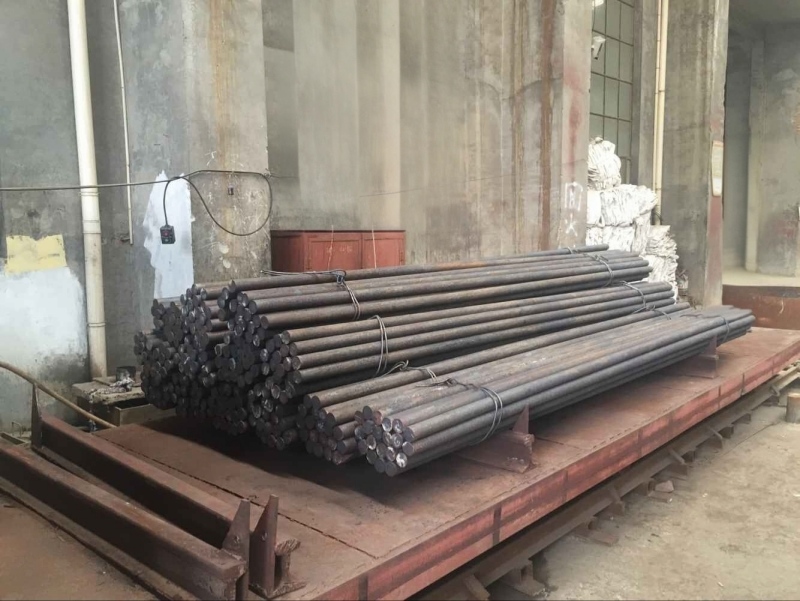
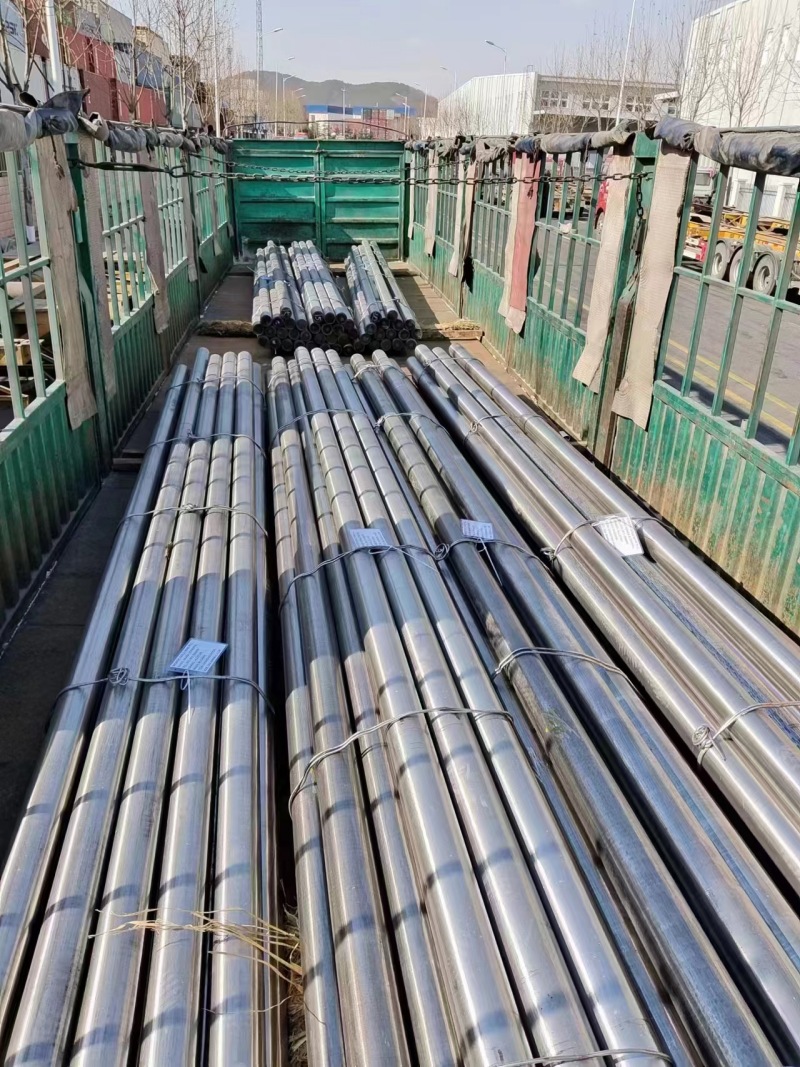
Grinding rods are mainly used in rod mills for mineral processing. ALLSTAR produces grinding rods in diameters from 25 mm to 140 mm and lengths from 1,500 mm to 6,000 mm. Because these rods are long, heavy, and exposed to repeated impact, abrasion, and bending loads, a rod that is only hard may wear slowly but fail suddenly, while a rod that is only tough may bend or wear too quickly. The useful solution lies in the middle range, where hardness and toughness support each other.
Why Rod Mills Demand a Different Balance
Rod mills rely on line contact and cascading action rather than the point impact of a ball mill. The rods must remain straight enough to roll and tumble in a controlled way. If a rod bends, the charge can become unstable, grinding efficiency can fall, and rod breakage or mill downtime may follow. Hardness helps the rod resist abrasive wear from ore, while toughness helps it absorb impact and resist bending and fracture. The correct balance depends on ore abrasiveness, feed size, mill speed, rod charge, and the target product size.
Hardness resists wear but can reduce tolerance
Hardness is usually associated with wear resistance. A harder rod can resist scratching and abrasion from hard ore particles, which may reduce diameter loss and extend service life. However, higher hardness is not automatically better. If the steel is too hard and insufficiently tough, small cracks can propagate under impact, leading to chipping, spalling, or complete breakage. In a rod mill, a broken rod can disrupt the entire charge and create handling and safety issues. Hardness therefore must be supported by a microstructure that can absorb energy.
undefined
Toughness supports straightness and reliability
Toughness describes the ability of a material to deform without fracturing. In grinding rods, toughness contributes to straightness retention, fatigue resistance, and tolerance of accidental impact during charging and operation. A rod with good toughness can bend slightly under load and recover, rather than crack. It also resists the propagation of small defects that may originate from rolling, forging, heat treatment, or handling. For long rods, toughness is not a secondary property; it is central to stable mill operation.
Hardness Is Not a Single Number
Two rods can report the same surface hardness and still perform very differently. The difference often lies in the hardness profile, microstructure, residual stress, and consistency from bar to bar. A hard surface with a brittle core may fail under bending, while a uniform through-hardened structure may offer more predictable behavior. ALLSTAR considers chemical composition, heat treatment, and production process together. For forged products, the company operates air hammer forged and hot-rolling processes; for cast products, it uses coated-sand shell molding and automated lines. For grinding rods, the objective is a controlled balance rather than a single headline value.
Quality control begins with raw materials. The round steel bars used for forged grinding balls and grinding rods are sourced from large state-owned steel mills in China. Incoming materials are sampled and tested for chemical composition before production. This step matters because hardness and toughness start with steel cleanliness, alloy content, and consistency. After heat treatment, finished products are tested again to check whether they meet the required quality and performance specifications.
How ALLSTAR Approaches the Balance
ALLSTAR was established in 1985, originally as a state-owned enterprise, and became a privately operated company in 1999. Since then, the company has continued to uphold rigorous management standards and strict quality control practices. Its production facilities cover 15,000 square metres and employ 150 people, including experienced technical, production, and sales personnel. With an annual grinding media production capacity of 100,000 metric tons, ALLSTAR serves mining, cement, and power generation industries with forged grinding balls, cast grinding balls, high chrome grinding balls, and grinding rods.
The company’s business philosophy is to manufacture high-quality products, be a reliable supplier, and build long-term and sustainable partnerships. That philosophy is relevant to rod selection because the right balance cannot be copied from a catalogue without understanding the application. ALLSTAR works with mining companies, mineral processing plants, cement manufacturers, power plants, and industrial distributors to review mill type, ore characteristics, and operating conditions before recommending grinding media.
Raw material and process control
For rods, the steel bar is the foundation. Chemical composition is checked on arrival, and production follows established process controls. Heat treatment is used to develop the desired combination of hardness and toughness. Sampling is carried out during production, and finished products undergo further inspection. ALLSTAR maintains an ISO 9001 Quality Management System and supports product quality verification through professional testing and third-party inspection services, including SGS, BV, and TÜV. These controls help reduce batch-to-batch variation, which is important when a mill operator is trying to stabilize rod consumption and mill performance.
Selection Guidance for Rod Mill Operators
Rod selection should begin with the grinding task, not with a hardness target alone. Operators should consider ore hardness and abrasiveness, feed size, required product fineness, mill diameter and speed, rod charge weight, and historical wear patterns. A highly abrasive ore may justify a harder rod, but if impact and bending loads are also high, toughness must remain sufficient. Conversely, a rod that is too soft may wear quickly, lose diameter, and require more frequent replacement, increasing handling and downtime costs.
- Match the rod to the duty: coarse grinding, fine grinding, and different ore types place different demands on wear resistance and impact tolerance.
- Review total cost, not only purchase price: wear rate, breakage rate, straightness, mill throughput, and downtime all affect the real cost of a grinding rod.
- Check consistency: stable hardness, dimensions, straightness, and microstructure help maintain a predictable rod charge.
- Use application data: consumption records, breakage reports, and mill performance data provide a better basis than a single specification.
ALLSTAR’s product range includes grinding rods designed for rod mills, alongside forged grinding balls from 20 mm to 150 mm, cast grinding balls from 6 mm to 150 mm, and high chrome grinding balls for cement plants and power stations. In mining, forged grinding balls are commonly selected for wet grinding, while cast grinding balls are often used in dry grinding operations. The final selection should always consider actual operating conditions. The same principle applies to rods: the best choice is the one that balances wear life, toughness, and mill behavior in the specific circuit.
Quality Assurance and Practical Value
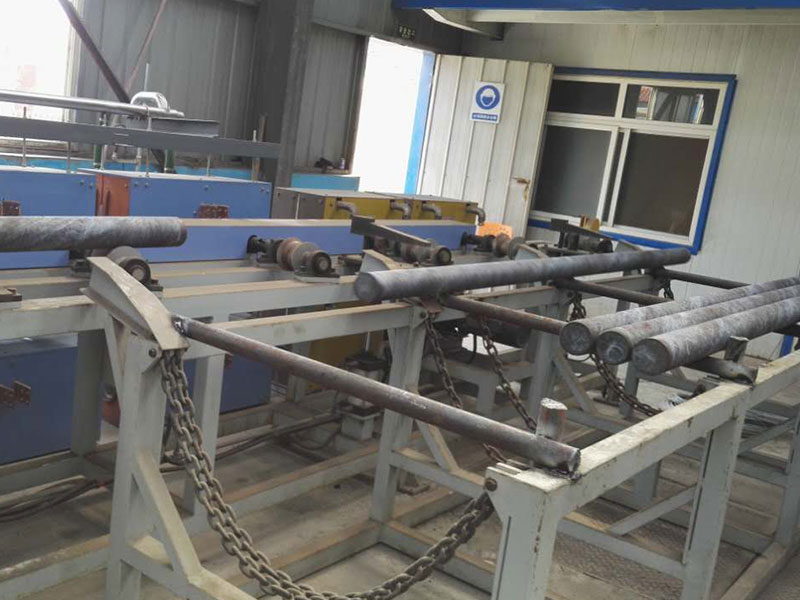
ALLSTAR’s quality approach is built on incoming material testing, controlled melting and forming, heat treatment, batch sampling, and final inspection. For cast products, raw materials such as ferrochrome and iron scrap are proportioned and melted according to the required grade, and chemical composition is analyzed after melting. For forged products, production is supported by air hammer forging and hot rolling. These practices reflect a broader commitment to consistent manufacturing quality and reliable grinding media.
The company has also received government and industry recognition, including High and New Technology Enterprise status and Specialized, Sophisticated, Distinctive and Innovative Enterprise recognition. Such recognition supports the company’s focus on technological advancement, specialized manufacturing, and continuous innovation. For rod mill operators, the practical value is a supplier that can discuss hardness and toughness as part of a system, not as isolated numbers.
Conclusion
Grinding rod hardness and toughness balance is best understood as an engineered compromise. Hardness protects against abrasive wear, while toughness protects against bending, impact, and breakage. The right balance helps a rod mill maintain a stable charge, achieve consistent grinding performance, control media consumption, and reduce unplanned downtime. ALLSTAR grinding balls approaches this challenge through raw material control, process discipline, heat treatment, inspection, and application experience. For operations seeking reliable grinding rods, the objective is not the hardest rod available, but the rod that delivers the most stable and economical performance in the mill where it is used.


