
Grinding rod supplier checklist for procurement teams
This article presents a grinding rod supplier checklist for procurement teams in mining, cement, and power generation. It explains that grinding rods should be evaluated as performance-critical wear parts rather than simple commodity purchases. The checklist covers product range, dimensional capability, raw material control, manufacturing process, inspection, application fit, production capacity, delivery reliability, certifications, and proven performance. It uses Shandong Allstar Grinding Ball Co., Ltd., known as ALLSTAR grinding balls, as a reference for the type of information buyers should request. The company was established in 1985, became privately operated in 1999, and manufactures forged grinding balls, cast grinding balls, high chrome grinding balls, and grinding rods. Its grinding rods are available in diameters from 25 mm to 140 mm and lengths from 1,500 mm to 6,000 mm. The article notes the importance of raw material testing, batch inspection, heat treatment controls, ISO 9001 certification, and third-party verification through SGS, BV, and TÜV. It also highlights application factors such as mill type, ore characteristics, wet or dry grinding, and chamber-specific media selection. Reference cases are included to show how documented performance can support supplier evaluation. At Pinto Valley Mine, ALLSTAR high-chrome grinding balls reportedly achieved stable consumption of 0.56 to 0.59 kg per tonne with a 0.2 percent breakage rate, compared with 0.68 kg per tonne and close to 3 percent for another supplier. At Turkey YD Madencilik, combined grinding-ball consumption fell from 84.80 g per tonne in 2016 to 31.93 g per tonne in 2018 and 25.66 g per tonne in 2025. The article concludes that procurement teams should assess total cost of ownership, traceability, technical support, capacity, and long-term partnership potential. A structured checklist helps buyers compare suppliers on quality, reliability, and measurable value rather than price alone.
For procurement teams in mining, cement, and power generation, grinding rods are not interchangeable commodity items. They are wear parts that influence mill throughput, grinding efficiency, maintenance planning, and total operating cost. A structured supplier checklist helps buyers compare potential vendors on manufacturing capability, quality control, application knowledge, delivery reliability, and proven performance rather than price alone. The checklist should be used as a risk management tool and as a framework for technical and commercial due diligence.
Shandong Allstar Grinding Ball Co., Ltd., known as ALLSTAR grinding balls, provides a useful reference point for the type of information procurement teams should request. Established in 1985, the company was originally a state-owned enterprise and became privately operated in 1999. It has continued to uphold rigorous management standards and strict quality control practices, with integrity as a fundamental principle of business operations. ALLSTAR specializes in manufacturing SAG mill and ball mill grinding media for the mining, cement, and power generation industries, including forged grinding balls, cast grinding balls, high chrome grinding balls, and grinding rods.
Why a Grinding Rod Supplier Checklist Matters
Grinding rods are mainly used in rod mills for mineral processing. Their diameter, length, straightness, hardness, wear resistance, and breakage resistance can affect rod mill operation and downstream grinding performance. A supplier that understands the relationship between mill type, ore characteristics, and grinding media selection is better placed to recommend suitable products and reduce the risk of premature failure.
Procurement teams should therefore evaluate suppliers on both product specifications and process controls. The checklist should confirm that the supplier can produce the required rod dimensions, verify chemical composition and mechanical properties, provide batch traceability, and support continuous supply. It should also test whether the supplier can explain how its grinding rods fit the intended application rather than simply quoting a size and grade.
undefined
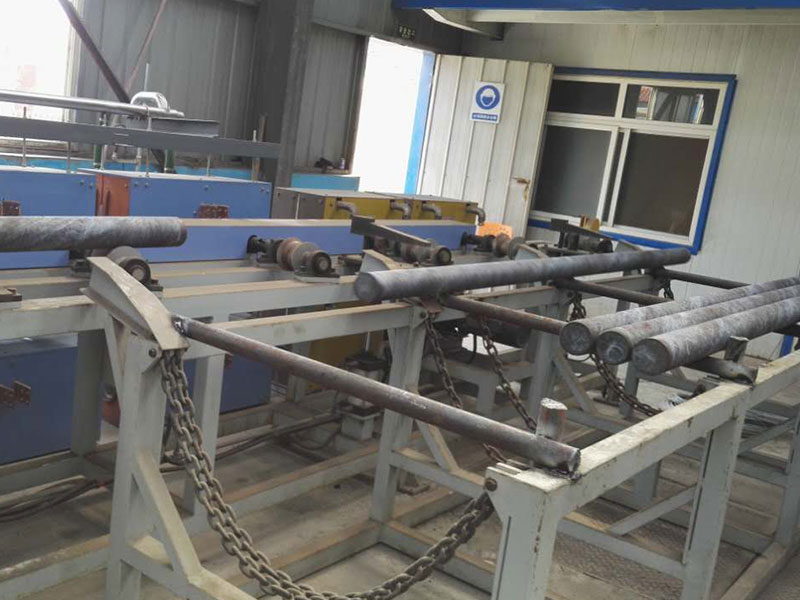
Checklist Item 1: Product Range and Dimensional Capability
A capable supplier should offer clear dimensional ranges and manufacturing options. ALLSTAR offers grinding rods in diameters from 25 mm to 140 mm and lengths from 1,500 mm to 6,000 mm, mainly designed for rod mills. Its wider grinding media range includes forged grinding balls from 20 mm to 150 mm, cast grinding balls from 6 mm to 150 mm, and different chromium-content grades for various grinding conditions.
Procurement teams should ask for a product matrix that shows available diameters, lengths, tolerances, straightness requirements, surface condition, and packing methods. They should also confirm whether the supplier can produce repeatable dimensions across batches and whether custom sizes are possible. For rod mills, length consistency and straightness deserve particular attention because poor dimensional control can complicate charging, increase jamming risk, and affect mill balance.
Questions to ask about product range
- Can the supplier supply grinding rods within the required diameter and length range?
- Are dimensional tolerances and straightness limits clearly stated?
- Does the supplier offer related grinding media for SAG mills, ball mills, and rod mills?
- Can the supplier provide reference specifications for different ore and mill conditions?
Checklist Item 2: Raw Material Control and Manufacturing Process
Quality control starts with raw materials. For forged grinding balls and grinding rods, the round steel bars used by ALLSTAR are sourced from large state-owned steel mills in China. Upon arrival at the factory, incoming materials are sampled and tested for chemical composition to verify quality. For cast grinding balls, raw materials such as ferrochrome and iron scrap are proportioned and melted according to the required product grade. Chemical composition is analyzed after melting to ensure that the molten metal meets specified requirements.
For forged products, ALLSTAR operates both air hammer forged and hot-rolling production processes. For cast products, it uses an advanced coated-sand shell molding process and automated production lines to support consistent manufacturing quality. These details matter to procurement teams because they indicate whether a supplier controls the inputs and process variables that affect wear life, hardness distribution, and breakage resistance.
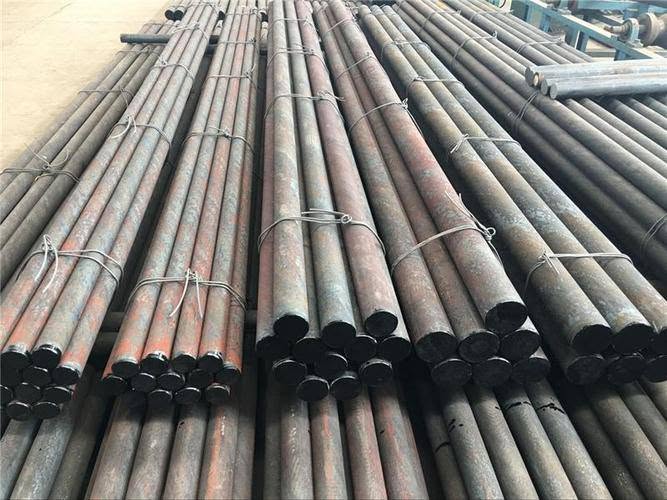
During supplier audits, buyers should verify material certificates, incoming inspection records, melting and heat treatment controls, and batch identification. They should ask how nonconforming material is segregated and how process parameters are monitored. A supplier that can document these controls is better prepared to deliver consistent grinding rods than one that relies on final visual inspection alone.
Checklist Item 3: Application Fit and Technical Support
Different mills, ores, and operating conditions require different grinding media. Larger grinding media are generally used in the first chamber of a mill for coarse grinding and breaking larger particles of ore or clinker. Smaller grinding media are commonly used in the second chamber for fine grinding. High chrome cast grinding balls are widely used in cement plants and power stations. Grinding rods are mainly used in rod mills for mineral processing. In mining applications, forged grinding balls are commonly selected for wet grinding, while cast grinding balls are often used in dry grinding operations.
The final selection should always consider actual operating conditions. Procurement teams should look for a supplier that asks about ore hardness, feed size, target fineness, mill speed, pulp chemistry, and maintenance practices. ALLSTAR works with mining companies, mineral processing plants, cement manufacturers, power plants, and industrial distributors to understand requirements and recommend suitable grinding media solutions. That application-oriented approach is a useful criterion in the checklist because proper selection helps improve grinding performance, maintain stable mill operation, manage media consumption, and control overall grinding costs.
Checklist Item 4: Production Capacity and Delivery Reliability
Supply continuity is critical in grinding operations. A supplier with limited capacity or unstable production scheduling can create inventory risk and unplanned downtime. ALLSTAR operates production facilities covering 15,000 square metres and employs 150 people, including experienced technical, production, and sales personnel. With an annual grinding media production capacity of 100,000 metric tons, the company is equipped to meet requirements across different markets and project scales.
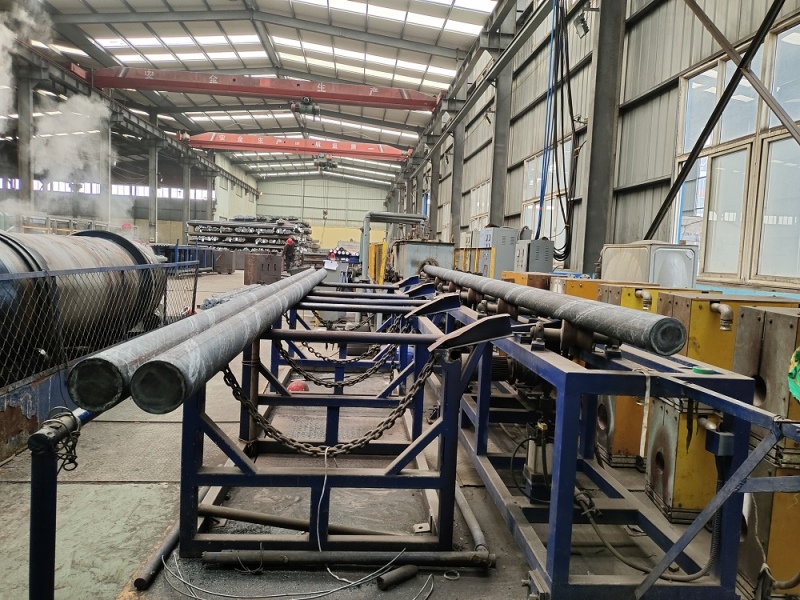
Procurement teams should compare stated capacity with actual order history, lead times, and seasonal constraints. They should ask for production planning procedures, minimum order quantities, packaging standards, and shipping experience. For grinding rods, packaging and handling are especially important because long rods require suitable protection during storage and transport. A supplier should be able to explain how rods are bundled, labelled, and protected against bending or surface damage.
Questions to ask about capacity and delivery
- What is the annual and monthly production capacity for grinding rods?
- What are typical lead times for first orders and repeat orders?
- How are rods packaged and protected during transport?
- Can the supplier provide batch-specific inspection documents with each shipment?
Checklist Item 5: Inspection, Testing, and Quality Assurance
Quality inspection should be carried out throughout the manufacturing process. At ALLSTAR, samples are taken from each production batch for inspection. After heat treatment, finished products undergo further testing to check whether they meet required quality and performance specifications. The company aims to deliver consistent and reliable grinding media to customers worldwide.
Procurement teams should request the supplier's inspection plan and sample reports. They should confirm which tests are performed, how often they are performed, and whether third-party verification is available. ALLSTAR maintains an ISO 9001 Quality Management System and supports product quality verification through professional testing and third-party inspection services, including SGS, BV, and TÜV. These credentials help buyers verify that quality claims are supported by documented systems rather than informal assurances.
The checklist should also cover traceability. Buyers should be able to link delivered rods to a production batch, raw material source, heat treatment record, and final inspection result. If a performance issue occurs, traceability allows the supplier and customer to investigate quickly and take corrective action.
Checklist Item 6: Proven Performance and Reference Cases
Technical specifications are important, but proven performance under actual operating conditions provides additional confidence. In the mining industry, ALLSTAR high-chrome grinding balls demonstrated outstanding results in a comparative trial at Pinto Valley Mine, USA. The mine conducted a trial lasting nearly six months, using ALLSTAR high-chrome grinding balls in one ball mill and another manufacturer's products in the other.
The results were compelling. ALLSTAR grinding-ball consumption remained stable at 0.56 to 0.59 kg per tonne of run-of-mine ore, with a breakage rate of only 0.2 percent. By comparison, the other supplier's consumption reached 0.68 kg per tonne, with a breakage rate close to 3 percent. Furthermore, the mill using the competitor's products recorded more than 70 tonnes per hour lower output and over 5 percentage points lower grinding fineness compared with the mill using ALLSTAR balls. Following the successful trial, the customer replaced the grinding balls in the second mill with ALLSTAR products as well. Daily processing capacity subsequently reached 53,000 tonnes, exceeding the designed capacity of 50,000 tonnes by 3,000 tonnes. To date, the mine has purchased and used more than 48,000 tonnes of ALLSTAR grinding media.
ALLSTAR has also achieved notable results in the cement industry. At Turkey YD Madencilik, which operates a combined roller press and ball mill grinding system, grinding media consumption had historically been high due to difficult-to-grind materials such as slag and coarse fly ash. After replacing the grinding balls in both mills with ALLSTAR products in 2016, consumption decreased significantly. The combined grinding-ball consumption dropped from 84.80 g per tonne in 2016 to 31.93 g per tonne in 2018. More importantly, the reduction was sustained over the following years, reaching just 25.66 g per tonne in 2025, approximately 69.7 percent lower than the 2016 baseline.
For procurement teams, reference cases should be relevant to the intended application. A supplier's experience in rod mills, similar ore types, comparable mill sizes, and comparable operating conditions can help predict whether its grinding rods will perform reliably. Buyers should ask for contactable references, trial data, and documented before-and-after results where available.
Checklist Item 7: Certifications and Third-Party Verification
ALLSTAR's commitment to technological advancement, specialized manufacturing, and continuous innovation has been recognized through government certifications and industry qualifications. It is recognized as a High and New Technology Enterprise for technological capabilities, research and development activities, and innovation achievements. It is also recognized as a Specialized, Sophisticated, Distinctive and Innovative Enterprise for specialized expertise, advanced manufacturing capabilities, distinctive products, and innovation-driven development.
Certifications are not a substitute for product testing, but they provide useful evidence of management discipline and manufacturing focus. Procurement teams should verify certificate validity, scope, and issuing bodies. They should also confirm whether third-party inspection can be arranged before shipment and whether the supplier can provide test reports for chemical composition, hardness, dimensions, and other agreed properties.
Checklist Item 8: Commercial Reliability and Long-Term Partnership
ALLSTAR's business philosophy is to manufacture high-quality products, be a reliable supplier, and build long-term and sustainable partnerships with clients. Rather than focusing solely on individual transactions, the company is committed to creating long-term value through reliable products and responsible business relationships. This philosophy aligns with the needs of procurement teams that seek stable supply, predictable quality, and responsive technical support.
Commercial evaluation should cover price structure, payment terms, warranty conditions, claims handling, and communication channels. The lowest initial price may not deliver the lowest total cost if media consumption is high, breakage rates are unstable, or delivery delays interrupt operations. A supplier that supports long-term planning and continuous improvement can help reduce total grinding costs over the contract period.
Practical Supplier Checklist for Procurement Teams
The following checklist summarizes the key points procurement teams should confirm before approving a grinding rod supplier. It can be adapted to different project scales and technical requirements.
- Product range: Confirm grinding rod diameters from 25 mm to 140 mm, lengths from 1,500 mm to 6,000 mm, and related grinding media options.
- Material control: Verify raw material sources, chemical composition testing, and incoming inspection records.
- Manufacturing process: Review forging, hot-rolling, casting, heat treatment, and automated production controls where relevant.
- Quality assurance: Confirm batch sampling, final testing, ISO 9001 certification, and third-party inspection options such as SGS, BV, and TÜV.
- Application knowledge: Assess whether the supplier can match grinding rods to mill type, ore characteristics, and operating conditions.
- Capacity and delivery: Compare annual capacity, lead times, packaging, and export experience.
- Proven performance: Request relevant reference cases, trial results, and documented consumption data.
- Traceability: Confirm batch identification and document linkage from raw material to finished product.
- Commercial terms: Evaluate total cost of ownership, claims handling, technical support, and long-term supply commitment.
Conclusion
A grinding rod supplier checklist helps procurement teams move beyond simple price comparison and evaluate the factors that influence grinding performance and supply stability. Product range, raw material control, manufacturing discipline, inspection, application support, capacity, certifications, and proven performance should all be considered. Suppliers such as ALLSTAR grinding balls demonstrate how documented quality systems, specialized manufacturing, and real-world results can support procurement decisions. With a structured checklist, buyers can reduce risk, improve supplier selection, and build more reliable long-term partnerships in grinding media procurement.


