
Grinding rods manufacturer inspection for export orders
Shandong Allstar Grinding Ball Co., Ltd., known as ALLSTAR grinding balls, manufactures grinding rods and other grinding media for mining, cement, and power generation industries. Established in 1985 and privately operated since 1999, the company maintains rigorous management and strict quality control, with integrity as a core principle. Its product range includes forged grinding balls from 20 mm to 150 mm, cast grinding balls from 6 mm to 150 mm, high chrome grinding balls, and grinding rods from 25 mm to 140 mm in diameter and 1,500 mm to 6,000 mm in length. Grinding rods are mainly used in rod mills for mineral processing. The company operates 15,000 square metres of production facilities, employs 150 people, and has annual capacity of 100,000 metric tons. For export orders, inspection begins with raw materials. Round steel bars for forged products and grinding rods are sourced from large state-owned Chinese steel mills and sampled for chemical composition on arrival. Cast raw materials such as ferrochrome and iron scrap are proportioned, melted, and analyzed. Production uses air hammer forging, hot rolling, coated-sand shell molding, and automated lines. Inspection is carried out throughout manufacturing, with samples taken from each production batch and finished products tested after heat treatment for dimensions, straightness, surface condition, hardness, and other required properties. Export inspection also covers packaging, marking, quantity, and loading. ALLSTAR maintains ISO 9001 quality management and supports third-party inspection through SGS, BV, and TÜV. It has been recognized as a High and New Technology Enterprise and as a Specialized, Sophisticated, Distinctive and Innovative Enterprise. Performance evidence includes a Pinto Valley Mine trial where ALLSTAR high chrome balls showed stable consumption of 0.56 to 0.59 kg per tonne and a 0.2 percent breakage rate, compared with 0.68 kg per tonne and close to 3 percent for another supplier, and Turkey YD Madencilik results where combined grinding-ball consumption fell from 84.80 g/t in 2016 to 31.93 g/t in 2018 and 25.66 g/t in 2025. These cases illustrate the company’s quality discipline and customer value focus. ALLSTAR’s philosophy is to manufacture high-quality products, be a reliable supplier, and build long-term sustainable partnerships. Its inspection approach for grinding rods export orders is therefore structured to verify specification compliance, traceability, documentation, and shipment readiness, supporting reliable rod mill performance and lower overall grinding costs for international customers.
For buyers sourcing grinding rods for rod mills, export order inspection is not a formality. It is the point where specification, manufacturing discipline, documentation, and shipment readiness meet. Shandong Allstar Grinding Ball Co., Ltd., known as ALLSTAR grinding balls, approaches grinding rods manufacturer inspection for export orders as a structured process that begins with raw material verification and continues through production, heat treatment, testing, packaging, and final loading. The company has manufactured grinding media since 1985, when it operated as a state-owned enterprise, and has continued under private ownership since 1999 while maintaining rigorous management standards and strict quality control practices. Integrity remains a fundamental principle of its business operations.
ALLSTAR specializes in SAG mill and ball mill grinding media for mining, cement, and power generation industries. Its portfolio includes forged grinding balls, cast grinding balls, high chrome grinding balls, and grinding rods. The company operates production facilities covering 15,000 square metres and employs 150 people, including experienced technical, production, and sales personnel. With annual grinding media production capacity of 100,000 metric tons, ALLSTAR is equipped to meet requirements of clients across different markets and project scales. For export orders, this capacity is supported by inspection routines that aim to deliver consistent and reliable products rather than merely completed shipments.
Grinding Rods Within the ALLSTAR Product Range
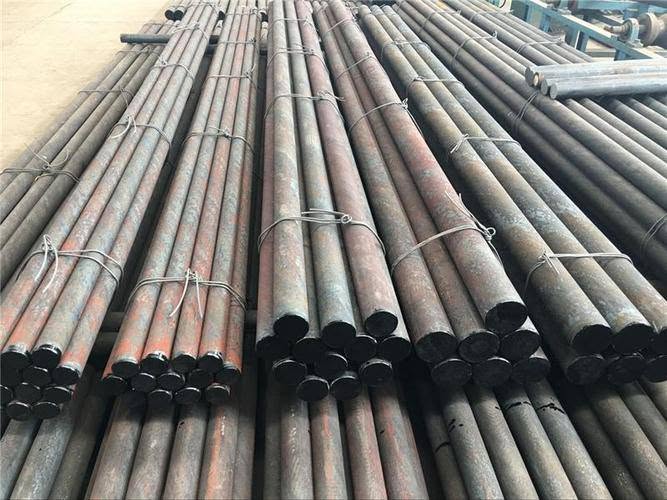
Grinding rods are available in diameters from 25 mm to 140 mm and lengths from 1,500 mm to 6,000 mm, mainly designed for rod mills. They sit alongside forged grinding balls from 20 mm to 150 mm, cast grinding balls from 6 mm to 150 mm, and high chrome grinding balls for demanding grinding conditions. The product range serves mining operations such as gold, copper, platinum, iron ore, nickel, phosphate, and lead-zinc mines, as well as cement plants and power stations. Rod mills are mainly used in mineral processing, where the grinding action of the rod charge differs from ball milling and places particular demands on rod straightness, dimensional consistency, surface condition, and metallurgical quality.
undefined
Different grinding media are selected according to mill type, material characteristics, and operating conditions. Larger grinding media are generally used in the first chamber of a mill for coarse grinding and breaking larger particles of ore or clinker, while smaller grinding media are commonly used in the second chamber for fine grinding. High chrome cast grinding balls are widely used in cement plants and power stations. In mining applications, forged grinding balls are commonly selected for wet grinding, while cast grinding balls are often used in dry grinding operations. For grinding rods, the final selection should always consider actual operating conditions, including rod mill size, feed size, target fineness, and the wear profile expected by the customer.
Why Export Order Inspection Matters
Export orders add layers of risk that domestic deliveries may not expose. Shipping schedules, port handling, long transit times, and different regulatory expectations mean that a grinding rods manufacturer must verify not only product performance but also documentation, marking, packaging, and loading. Inspection protects the buyer from receiving rods that are dimensionally out of tolerance, incorrectly heat treated, poorly packed, or accompanied by incomplete certificates. It also protects the manufacturer by creating traceable records that can be reviewed if a question arises after arrival.
ALLSTAR maintains an ISO 9001 Quality Management System and supports product quality verification through professional testing and third-party inspection services, including SGS, BV, and TÜV. These external checks are valuable for export orders because they provide independent confirmation that the goods match the agreed specification. The company has also been recognized as a High and New Technology Enterprise and as a Specialized, Sophisticated, Distinctive and Innovative Enterprise, reflecting its technological capabilities, research and development activities, specialized expertise, advanced manufacturing capabilities, distinctive products, and innovation-driven development.
Inspection Begins with Raw Materials
Quality control starts with raw materials. The round steel bars used for forged grinding balls and grinding rods are sourced from large state-owned steel mills in China. Upon arrival at the factory, incoming materials are sampled and tested for chemical composition to verify their quality. This step is essential for grinding rods because chemical composition influences hardenability, wear resistance, and the consistency of heat treatment. A batch that does not meet the required composition can be identified before it enters production, reducing the risk of downstream defects.
For cast grinding balls, raw materials such as ferrochrome and iron scrap are proportioned and melted according to the required product grade. Chemical composition is analyzed after melting to ensure that the molten metal meets the specified requirements. Although grinding rods are typically forged or hot-rolled rather than cast, the same principle applies across the plant: material verification is the first control point. For forged products, ALLSTAR operates both air hammer forged and hot-rolling production processes. For cast products, it uses an advanced coated-sand shell molding process and automated production lines to support consistent manufacturing quality.
Pre-Production Order Review
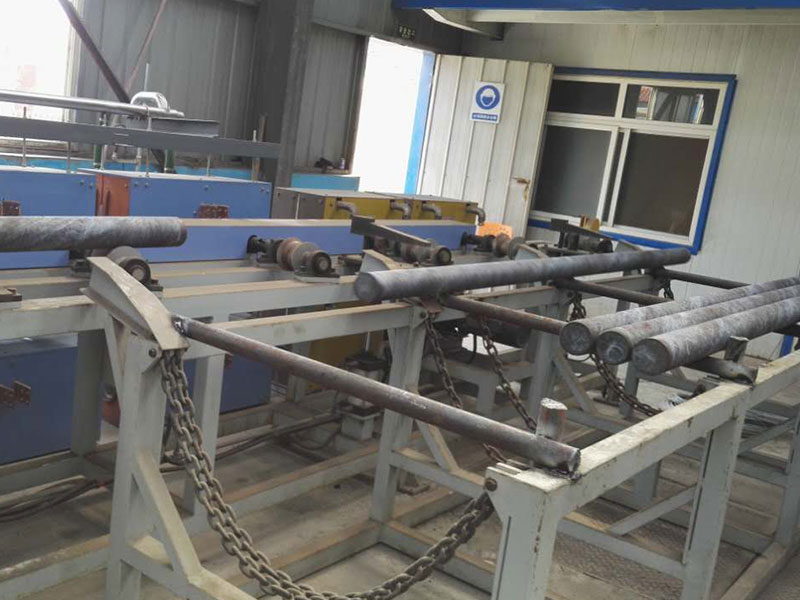
Before an export order enters the production schedule, the manufacturer reviews the purchase specification, drawing or standard, quantity, diameter, length, end finish, hardness range, packaging method, marking requirements, and destination. This review is especially important for grinding rods because length and straightness requirements can vary by rod mill and by customer handling practice. The review also confirms the inspection plan, the sampling frequency, and the documents that must accompany the shipment. Clear agreement at this stage prevents later disputes over tolerances, test methods, or packaging.
Batch Identification and Traceability
Traceability supports inspection. Each production batch is identified so that raw material certificates, process records, heat treatment parameters, and test results can be linked to the finished rods. Samples are taken from each production batch for inspection. After heat treatment, finished products undergo further testing to check whether they meet the required quality and performance specifications. For export orders, this traceability is often summarized in inspection reports and mill certificates that accompany the shipment.
In-Process and Final Inspection of Grinding Rods
Grinding rods pass through a sequence that may include billet selection, heating, rolling or forging, straightening, cutting to length, heat treatment, and final inspection. Inspection is carried out throughout the manufacturing process rather than being left to the end. Dimensional checks verify diameter and length against the ordered range. Straightness checks are important because excessive bend can affect rod charging, mill operation, and handling safety. Surface inspection looks for cracks, laps, seams, and other defects that could lead to premature failure. End conditions are checked to confirm that rods are suitable for the customer’s handling and feeding arrangements.
Mechanical and metallurgical testing provides evidence of performance. Hardness testing is commonly used to confirm that heat treatment has produced the required range. Chemical composition is checked to confirm material grade. Depending on the order and standard, additional tests may be requested to examine microstructure or other properties. Because grinding rods are long products, sampling and test location must be planned carefully so that results represent the batch. The manufacturer aims to deliver consistent and reliable grinding media to customers worldwide, and export inspection records are part of that commitment.
Dimensional and Geometric Inspection
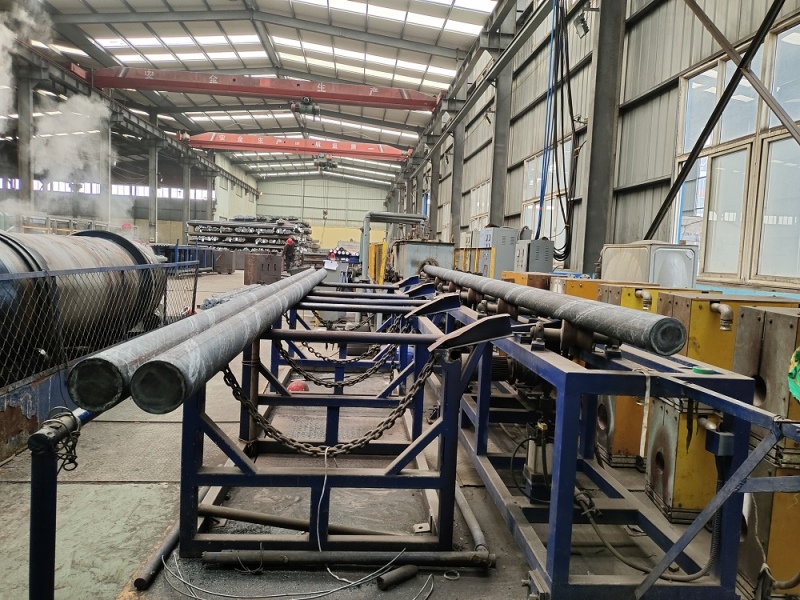
For export orders, dimensional inspection typically covers diameter, length, straightness, and end squareness or end condition. The ordered diameter may fall anywhere from 25 mm to 140 mm, and length may range from 1,500 mm to 6,000 mm. Because these ranges are broad, the inspection plan must be specific to the order rather than generic. A rod mill that requires a particular length for its charge may also have handling constraints that make straightness and end finish especially important. Inspection records should show the measured values and the acceptance criteria used.
Surface and Internal Quality Checks
Surface quality is inspected visually and, where required, with additional methods. The aim is to identify conditions that could act as stress raisers or cause breakage during service. Internal quality is supported by process control and by testing selected samples. For forged products, the combination of material verification, controlled heating, forging or hot rolling, and heat treatment provides the foundation for consistent quality. Final inspection then confirms that the finished rods meet the required quality and performance specifications before packing.
Third-Party Inspection and Export Documentation
Many export buyers request third-party inspection before shipment. ALLSTAR supports product quality verification through professional testing and third-party inspection services, including SGS, BV, and TÜV. A typical third-party inspection for grinding rods may include a review of quantity, dimensions, surface condition, marking, packaging, and loading. The inspector may also review test reports and certificates. The exact scope depends on the buyer’s instructions and the agreed contract.
Documentation is part of the product. Export orders usually require a packing list, commercial invoice, certificate of origin where applicable, mill test certificates or inspection reports, and shipping marks. For grinding rods, the documents should identify the diameter, length, quantity, batch, and applicable standard. Clear documentation helps customs clearance and gives the buyer a record for incoming inspection. It also reinforces the manufacturer’s position as a reliable supplier that understands the full export process.
Application-Focused Selection and Inspection
Different mills, ores, and operating conditions require different grinding media. Proper grinding media selection helps customers improve grinding performance, maintain stable mill operation, manage media consumption, and control overall grinding costs. ALLSTAR works with mining companies, mineral processing plants, cement manufacturers, power plants, and industrial distributors to understand their requirements and recommend suitable grinding media solutions. For rod mills, this may involve reviewing feed size, target product size, mill speed, and the wear pattern observed with previous rods.
Inspection should reflect the application. A rod order for a mineral processing plant may place emphasis on straightness, length tolerance, and surface quality, while another order may place greater emphasis on hardness range or chemical composition. By linking inspection criteria to the intended use, the manufacturer can help the buyer avoid mismatches between the delivered product and the mill’s operating needs. The final selection should always consider actual operating conditions, and the inspection plan should support that selection.
Packaging, Marking, and Loading Inspection
Grinding rods are long and heavy, so packaging and loading require attention. Export orders are checked for bundle security, end protection, moisture protection where required, and marking clarity. Shipping marks should match the buyer’s instructions and the packing list. Loading inspection confirms that bundles are arranged safely, that quantities are correct, and that the container or vessel stowage plan is followed. These checks reduce the risk of damage during handling and transit.
For a grinding rods manufacturer inspection for export orders, the final loading check is the last opportunity to catch a problem before the goods leave the factory. The inspection team verifies that the correct product, quantity, and packaging are presented for shipment. Photographs and inspection records may be retained for traceability. When third-party inspection is used, the loading check can be witnessed and documented independently.
Performance Evidence Behind the Quality Culture
ALLSTAR’s quality culture is supported by performance in actual operating conditions. In the mining industry, ALLSTAR high chrome grinding balls demonstrated outstanding results in a comparative trial at Pinto Valley Mine, USA. The mine conducted a trial lasting nearly six months, using ALLSTAR high chrome grinding balls in one ball mill and another manufacturer’s products in the other. ALLSTAR grinding ball consumption remained stable at 0.56 to 0.59 kg per tonne of run-of-mine ore, with a breakage rate of only 0.2 percent. By comparison, the other supplier’s consumption reached 0.68 kg per tonne, with a breakage rate close to 3 percent. The mill using the competitor’s products recorded more than 70 tonnes per hour lower output and over 5 percentage points lower grinding fineness compared with the mill using ALLSTAR balls.
Following the successful trial, the customer replaced the grinding balls in the second mill with ALLSTAR products as well. Daily processing capacity subsequently reached 53,000 tonnes, exceeding the designed capacity of 50,000 tonnes by 3,000 tonnes. To date, the mine has purchased and used more than 48,000 tonnes of ALLSTAR grinding media, demonstrating long-term confidence in the products. In the cement industry, at Turkey YD Madencilik, operating a combined roller press and ball mill grinding system, grinding media consumption had historically been high due to difficult-to-grind materials such as slag and coarse fly ash. After replacing the grinding balls in both mills with ALLSTAR products in 2016, consumption decreased significantly. The combined grinding-ball consumption dropped from 84.80 g/t in 2016 to 31.93 g/t in 2018, and reached just 25.66 g/t in 2025, approximately 69.7 percent lower than the 2016 baseline.
These results concern grinding balls, but they illustrate the same manufacturing discipline that supports grinding rods: raw material control, process consistency, heat treatment discipline, and batch inspection. For export buyers, the value is lower grinding media consumption, reduced breakage, improved grinding efficiency, more stable mill operation, and greater production capacity. The company understands that clients need more than grinding balls with specified hardness or chemical composition. They need consistent quality, dependable performance, and lower overall grinding costs.
Customer Value and Long-Term Partnership
ALLSTAR’s business philosophy is simple: to manufacture high-quality products, be a reliable supplier, and build long-term and sustainable partnerships with clients. Rather than focusing solely on individual transactions, the company is committed to creating long-term value for clients through reliable products and responsible business relationships. This philosophy shapes the approach to grinding rods manufacturer inspection for export orders. Inspection is not treated as a barrier to shipment but as a way to protect the customer’s project, the manufacturer’s reputation, and the relationship between both parties.
With production facilities of 15,000 square metres, 150 employees, and annual capacity of 100,000 metric tons, ALLSTAR can serve clients across different markets and project scales. Its experienced technical, production, and sales personnel support communication from inquiry through order review, production, inspection, and shipment. For buyers who need grinding rods for rod mills, the combination of manufacturing experience since 1985, strict quality control, and third-party inspection support provides a practical basis for export orders.
Conclusion
Grinding rods manufacturer inspection for export orders is a comprehensive activity that connects material sourcing, production control, heat treatment, testing, documentation, packaging, and loading. Shandong Allstar Grinding Ball Co., Ltd. approaches this activity with a long manufacturing history, a broad grinding media portfolio, ISO 9001 quality management, and support for SGS, BV, and TÜV inspection. For international buyers, the result is a more transparent order process and a better chance of receiving grinding rods that match the agreed specification and perform reliably in rod mill operations. ALLSTAR continues to position itself as a trusted long-term grinding media partner for clients worldwide, with proven performance, reliable quality, and greater value for global industries.


