
How a grinding ball manufacturer controls wear life
This article explains how a grinding ball manufacturer controls wear life through a coordinated system rather than a single product property. It focuses on Shandong Allstar Grinding Ball Co., Ltd., known as ALLSTAR grinding balls, and describes the main technical and operational levers that influence media performance. Wear life begins with raw material control. Forged products use round steel bars sourced from large state-owned steel mills and are sampled for chemical composition on arrival. Cast products use proportioned ferrochrome and iron scrap, with chemical analysis after melting to confirm the required grade. These steps reduce variability before production begins. Chemistry is then matched to the grinding duty, because forged, cast, high chrome, and rod products serve different mill types and operating conditions. The article explains that larger media are used for coarse grinding and smaller media for fine grinding, while wet mining, dry grinding, cement, and power applications require different selections. Manufacturing control continues through air hammer forging, hot rolling, coated-sand shell casting, and automated production lines. Heat treatment is presented as the critical stage for balancing hardness and toughness. Inspection is carried out throughout production, with batch sampling and post-heat-treatment testing. ISO 9001 and third-party inspection by SGS, BV, and TÜV support quality verification. Application engineering is also essential, because wear life depends on mill type, ore characteristics, media size, and operating conditions. Field evidence is used to show the results of this approach. At Pinto Valley Mine in the USA, a nearly six-month comparative trial found ALLSTAR high chrome balls at 0.56 to 0.59 kg per tonne with a 0.2 percent breakage rate, compared with 0.68 kg per tonne and close to 3 percent breakage for another supplier. The customer later expanded use to the second mill, and daily capacity reached 53,000 tonnes against a 50,000-tonne design. At Turkey YD Madencilik, combined grinding ball consumption fell from 84.80 g/t in 2016 to 31.93 g/t in 2018 and 25.66 g/t in 2025, about 69.7 percent lower than the baseline. The article concludes that wear life is controlled through raw material discipline, chemistry, forming, heat treatment, inspection, application support, and long-term customer feedback.
Wear life is one of the most closely watched performance indicators in industrial grinding. For a grinding ball manufacturer, however, wear life is not a single number that appears on a specification sheet. It is the result of a chain of decisions that begins with raw material selection, continues through chemistry, forming, heat treatment, inspection, and application engineering, and extends into the field through trial data, customer feedback, and long-term service. Shandong Allstar Grinding Ball Co., Ltd., known as ALLSTAR grinding balls, has built its manufacturing approach around this idea. The company does not treat wear life as an isolated property of hardness or chromium content. It treats wear life as a manufacturing outcome that must be controlled from the first incoming steel bar or scrap charge to the final batch release and customer application.
This article examines how a grinding ball manufacturer controls wear life in practical terms. It looks at the technical levers, the production disciplines, and the field evidence that connect manufacturing decisions to grinding performance. The example of ALLSTAR is useful because the company has operated since 1985, has served mining, cement, and power generation industries, and has accumulated application data from comparative trials and long-term customer relationships. Those elements show that wear life control is not a marketing claim. It is a system of choices that must be repeated consistently across thousands of tonnes of production.
The Economic Logic of Wear Life
In a grinding mill, wear life affects far more than the frequency of media replenishment. Grinding media consumption influences the direct cost of consumables, the stability of the mill charge, the power draw, the grinding fineness, the wear of liners, the frequency of downtime, and the safety of the operation. A ball that wears too quickly increases consumption in kilograms per tonne of ore or clinker. A ball that breaks prematurely can damage liners, block discharge systems, and disturb the grinding circuit. A ball that is too hard but insufficiently tough may resist abrasion in one condition yet fail by fracture in another. A ball that is too soft may deform, lose shape, and deliver poor grinding efficiency.
undefined
For this reason, a responsible manufacturer does not promise wear life by hardness alone. It studies the relationship between wear resistance and toughness. It considers the ore or clinker being ground, the mill type, the size of the feed, the pulp chemistry, the mill speed, the liner profile, and the operating target for fineness. The manufacturer then selects or develops a product grade that can deliver stable performance in that specific duty. This is why two grinding balls with similar surface hardness can perform very differently in the field. The difference lies in the balance of microstructure, internal soundness, dimensional consistency, and application fit.
ALLSTAR frames its business philosophy around this broader view. The company states that it aims to manufacture high-quality products, be a reliable supplier, and build long-term and sustainable partnerships with clients. Rather than focusing only on individual transactions, it seeks to create long-term value through reliable products and responsible business relationships. In grinding media, that long-term value is closely tied to wear life, because wear life determines how much media a customer must buy, how often the mill must be stopped, and how predictable the grinding circuit can be.
Starting at the Raw Material Gate
Wear life control begins before any ball is forged or cast. The raw material is the foundation of the final product. For forged grinding balls and grinding rods, ALLSTAR sources round steel bars from large state-owned steel mills in China. Upon arrival at the factory, incoming materials are sampled and tested for chemical composition to verify their quality. This step is essential because variations in carbon, manganese, chromium, silicon, sulfur, phosphorus, and trace elements can alter hardenability, toughness, and wear behavior. A steel bar that appears acceptable in size may still create problems if its chemistry is outside the required range or if segregation and inclusions are not controlled.
For cast grinding balls, the raw material strategy is different but equally important. Raw materials such as ferrochrome and iron scrap are proportioned and melted according to the required product grade. Chemical composition is analyzed after melting to ensure that the molten metal meets the specified requirements. The manufacturer must control not only the major alloying elements but also the residual elements that can affect castability, hardness, and toughness. The charge mix must be consistent, the melting process must be controlled, and the pouring temperature must be suitable for the mold and product size. Each of these variables can influence the internal quality of the cast ball and therefore its wear life.
Incoming material control is also a traceability issue. When a batch of grinding media is produced, the manufacturer should be able to connect the finished product to the raw material lot, the production line, the heat treatment batch, and the inspection results. This traceability allows the manufacturer to investigate field performance, identify the source of a deviation, and make corrective adjustments before the issue becomes widespread. For a customer, traceability provides confidence that the product was manufactured under controlled conditions and that any performance question can be examined with real production data.
Matching Chemistry to the Grinding Duty
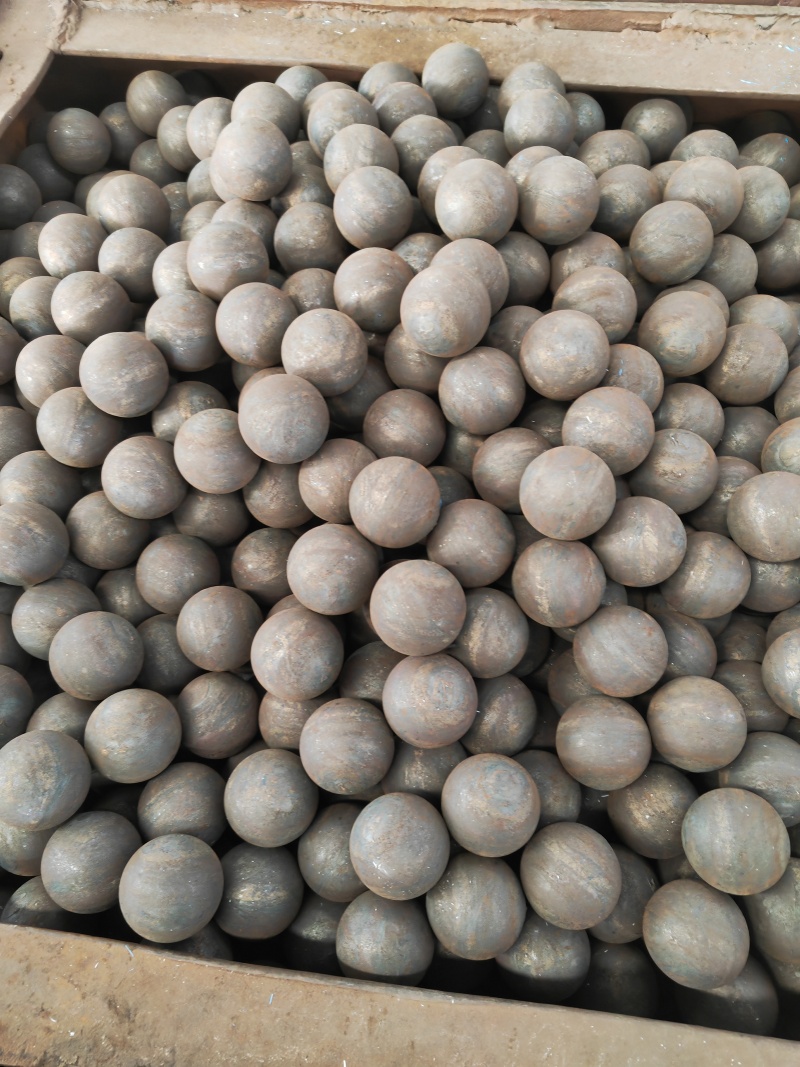
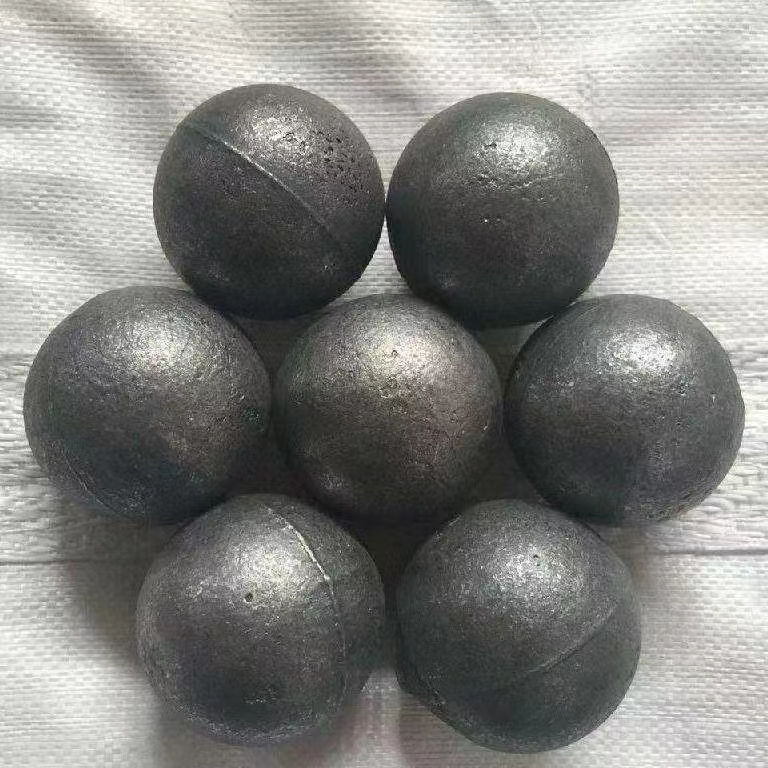
Grinding media are not universal products. Different mills, ores, and operating conditions require different media. ALLSTAR manufactures forged grinding balls, cast grinding balls, high chrome grinding balls, grinding rods, and grinding cylpebs. The forged grinding balls are available in diameters from 20 mm to 150 mm and are manufactured through forging or hot-rolling processes. The cast grinding balls are available in diameters from 6 mm to 150 mm and include different chromium-content grades for various grinding conditions. The grinding rods are available in diameters from 25 mm to 140 mm and lengths from 1,500 mm to 6,000 mm, mainly designed for rod mills.
These product families serve a wide range of mining operations, including gold, copper, platinum, iron ore, nickel, phosphate, and lead-zinc mines, as well as cement plants and power stations. The selection of grinding media is based on the mill type, the material characteristics, and the operating conditions. Larger grinding media are generally used in the first chamber of a mill for coarse grinding and breaking larger particles of ore or clinker. Smaller grinding media are commonly used in the second chamber for fine grinding. High chrome cast grinding balls are widely used in cement plants and power stations. Grinding rods are mainly used in rod mills for mineral processing. In mining applications, forged grinding balls are commonly selected for wet grinding, while cast grinding balls are often used in dry grinding operations. The final selection should always consider the actual operating conditions.
Chemistry is one of the main levers for controlling wear life, but it must be matched to the duty. A high-chromium cast ball may offer excellent abrasion resistance in a cement or power application, while a forged ball may provide the toughness needed in a wet mining mill with impact conditions. A grinding rod must have the right combination of hardness and straightness for rod mill service. The manufacturer must understand that a grade that performs well in one mill may not perform well in another if the ore hardness, feed size, pulp chemistry, or mill speed is different. For this reason, ALLSTAR works with mining companies, mineral processing plants, cement manufacturers, power plants, and industrial distributors to understand their requirements and recommend suitable grinding media solutions.
Hardness Is Only One Part of Wear Resistance
Customers often ask for a specific surface hardness because hardness is easy to measure and easy to compare. Hardness is important, but it is not sufficient. Wear resistance in grinding media depends on the microstructure, the distribution of carbides, the toughness of the matrix, the internal soundness of the ball, and the stability of the ball shape during service. A ball with high surface hardness but a brittle core may break under impact. A ball with good toughness but insufficient hardness may wear rapidly by abrasion. The manufacturer must find the balance that suits the application.
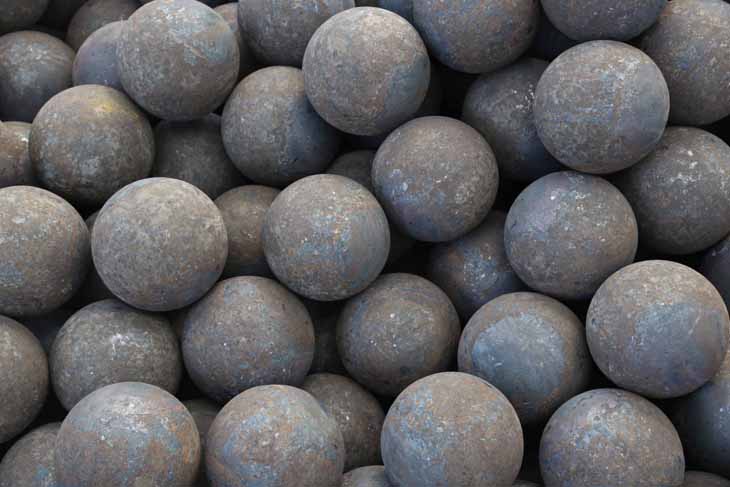
This balance is especially important in large-diameter balls used in SAG mills and the first chambers of ball mills. These balls must withstand high impact energy while resisting abrasive wear. If the hardness is too high and the toughness is too low, the ball may crack or spall. If the hardness is too low, the ball may deform and lose grinding efficiency. The manufacturing process must therefore deliver a controlled hardness profile, a sound internal structure, and a consistent size and shape. These properties are not created by chemistry alone. They are created by the combination of steel quality, forming process, heat treatment, and inspection.
Forging, Hot Rolling, and Casting: Shaping Wear Resistance
For forged products, ALLSTAR operates both air hammer forged and hot-rolling production processes. For cast products, the company uses an advanced coated-sand shell molding process and automated production lines to support consistent manufacturing quality. Each process has its own control points, and each can influence wear life if it is not managed carefully.
In forging, the steel bar is cut to length, heated to the proper temperature, and formed into a ball by air hammer forging or hot rolling. The heating temperature, the deformation amount, the forming speed, and the cooling pattern all affect the internal structure of the ball. If the temperature is too high, the steel may develop coarse grains or surface defects. If the temperature is too low, the deformation may be insufficient or the ball may crack. The forging process should produce a dense, sound internal structure with a consistent shape and a good surface finish. The ball should be round, dimensionally stable, and free from laps, cracks, and other surface defects that could act as stress concentrators in service.
In hot rolling, the control of bar temperature, roll speed, roll gap, and cooling is equally important. The rolling process can produce good dimensional consistency and a favorable grain structure when the parameters are stable. The manufacturer must monitor the process continuously and check the finished product for size, roundness, surface quality, and internal soundness. Small deviations in size or shape can affect the ball charge behavior, the grinding efficiency, and the wear pattern in the mill.
In casting, the coated-sand shell molding process and automated production lines help support consistent mold quality and pouring conditions. The molten metal must be prepared to the correct chemistry, poured at the correct temperature, and solidified under controlled conditions. The mold design, sand quality, coating, pouring speed, and cooling rate all influence the final microstructure and the risk of shrinkage, porosity, and segregation. Cast grinding balls with internal defects may appear acceptable on the surface but fail prematurely in service. The manufacturer must therefore inspect not only the external appearance but also the internal quality and the hardness distribution.
Dimensional Consistency and Mill Behavior
Wear life is also influenced by dimensional consistency. Balls that are undersized or oversized can change the ball charge, the grinding dynamics, and the wear rate. Balls that are out of round can roll differently and may create uneven wear on liners. Rods that are bent or have inconsistent diameter can affect rod mill performance and cause operational problems. The manufacturer must control size tolerance, roundness, straightness, and surface condition as part of the wear life control program. These properties are not secondary details. They are part of the product performance envelope.
ALLSTAR produces forged balls from 20 mm to 150 mm, cast balls from 6 mm to 150 mm, and rods from 25 mm to 140 mm in diameter and 1,500 mm to 6,000 mm in length. This range requires disciplined production planning and process control across different sizes and product types. A manufacturer that can maintain consistency across this range is better positioned to support customers with different mill configurations and project scales.
Heat Treatment: The Hardness and Toughness Balance
Heat treatment is one of the most important stages in controlling wear life. After forming, grinding media are heat treated to achieve the required hardness, toughness, and microstructure. The exact process depends on the product type and grade, but the principle is the same: the manufacturer must create a controlled balance between wear resistance and impact resistance. If the quench is too severe or the tempering is insufficient, the ball may become brittle. If the hardness is too low, the ball may wear quickly. The heat treatment process must be repeatable and must be verified by testing.
For forged grinding balls, the heat treatment must be matched to the steel chemistry and the ball size. Larger balls require different heating and cooling conditions than smaller balls because the heat transfer and the hardenability requirements are different. The manufacturer must control furnace temperature, holding time, quenching medium, quench intensity, and tempering temperature. For cast grinding balls, the heat treatment must account for the cast microstructure, the chromium content, and the presence of carbides. The goal is to produce a product with good surface hardness, adequate core toughness, and a stable microstructure that can withstand the grinding environment.
Quality inspection is carried out throughout the manufacturing process. Samples are taken from each production batch for inspection. After heat treatment, finished products undergo further testing to check whether they meet the required quality and performance specifications. This batch-based inspection approach is important because wear life is a statistical outcome. Even a small percentage of defective balls can create problems in a mill if those balls break early or wear unevenly. The manufacturer must aim for a narrow distribution of properties, not just a satisfactory average.
Breakage Rate as a Wear Life Indicator
Breakage rate is one of the clearest indicators of whether the hardness and toughness balance has been achieved. A low breakage rate suggests that the balls can withstand the impact and fatigue conditions of the mill. A high breakage rate suggests that the product is too brittle, has internal defects, or is not properly matched to the application. In the field, breakage can reduce grinding efficiency, damage liners, and increase downtime. For this reason, a grinding ball manufacturer must treat breakage rate as a key performance metric alongside wear consumption.
ALLSTAR has reported field results that illustrate this point. In a comparative trial at Pinto Valley Mine in the USA, high chrome grinding balls from ALLSTAR were tested against another manufacturer's products in two ball mills. The trial lasted nearly six months. The results showed that ALLSTAR grinding ball consumption remained stable at 0.56 to 0.59 kg per tonne of run-of-mine ore, with a breakage rate of only 0.2 percent. By comparison, the other supplier's consumption reached 0.68 kg per tonne, with a breakage rate close to 3 percent. The mill using the competitor's products also recorded more than 70 tonnes per hour lower output and over 5 percentage points lower grinding fineness compared with the mill using ALLSTAR balls.
These results are significant because they connect manufacturing control to operational outcomes. Lower consumption means better wear life. Lower breakage means better toughness and internal quality. Higher output and better fineness mean that the grinding circuit is working more efficiently. The customer subsequently replaced the grinding balls in the second mill with ALLSTAR products as well. Daily processing capacity reached 53,000 tonnes, exceeding the designed capacity of 50,000 tonnes by 3,000 tonnes. To date, the mine has purchased and used more than 48,000 tonnes of ALLSTAR grinding media, demonstrating long-term confidence in the product.
Inspection and Quality Assurance Across the Batch
Wear life control depends on inspection that is both systematic and practical. A manufacturer cannot rely on a final visual check alone. It must inspect raw materials, monitor in-process parameters, test semi-finished products, and verify finished products before shipment. ALLSTAR maintains an ISO 9001 Quality Management System and supports product quality verification through professional testing and third-party inspection services, including SGS, BV, and TÜV. These systems help provide confidence that the product meets the agreed specifications and that the manufacturing process is under control.
Incoming material inspection verifies chemical composition and quality. In-process inspection checks dimensions, surface condition, and process parameters. After heat treatment, finished products are tested for hardness, microstructure, impact resistance, and other properties as required. Batch samples are retained and traced so that performance can be reviewed if a customer reports an issue. This traceability is important for continuous improvement. If a field trial shows a change in wear rate or breakage rate, the manufacturer can compare the production data with the field data and identify potential causes.
Third-party inspection adds another layer of assurance. Customers in mining, cement, and power generation often require independent verification of quality before shipment. SGS, BV, and TÜV inspections can confirm chemical composition, hardness, dimensions, and other specified properties. For a manufacturer, these inspections are not just a customer requirement. They are a discipline that helps maintain consistency and prevents drift in production standards.
Application Engineering: Wear Life Is a System Outcome
A grinding ball manufacturer can control the quality of the product it produces, but wear life is also affected by how the product is used. Mill type, ore hardness, feed size, pulp density, pH, mill speed, liner condition, ball charge, and operating strategy all influence wear. This is why application engineering is a critical part of wear life control. The manufacturer must help the customer select the right media size, grade, and charge for the specific duty.
ALLSTAR works with mining companies, mineral processing plants, cement manufacturers, power plants, and industrial distributors to understand their requirements and recommend suitable grinding media solutions. The company considers the mill type, the material characteristics, and the operating conditions. In mining, forged grinding balls are commonly selected for wet grinding, while cast grinding balls are often used in dry grinding operations. High chrome cast grinding balls are widely used in cement plants and power stations. Grinding rods are mainly used in rod mills for mineral processing. Larger media are used for coarse grinding in the first chamber, while smaller media are used for fine grinding in the second chamber.
Proper grinding media selection helps customers improve grinding performance, maintain stable mill operation, manage media consumption, and control overall grinding costs. The manufacturer should not simply sell the hardest ball available. It should recommend the product that delivers the best balance of wear life, breakage resistance, grinding efficiency, and cost per tonne. This requires technical knowledge, application experience, and a willingness to work with the customer over time.
Measuring Wear Life in the Customer's Context
Wear life is often expressed in grams per tonne or kilograms per tonne of material processed. This unit is useful because it normalizes media consumption against production. A mill that processes more tonnes per day may consume more media in absolute terms, but its specific consumption may be lower. The manufacturer and customer should track specific consumption, breakage rate, mill throughput, grinding fineness, power draw, and liner wear together. This combined view provides a more accurate picture of performance than any single metric.
Field trials should be designed carefully. The trial should use a clear baseline, a defined test period, consistent ore feed, and reliable measurement methods. If possible, comparative trials should run in parallel mills under similar conditions. This is what made the Pinto Valley trial informative. The mine used ALLSTAR high chrome grinding balls in one ball mill and another manufacturer's products in the other. The comparison provided direct evidence of differences in consumption, breakage, output, and fineness. Such trials require commitment from both the manufacturer and the customer, but they generate data that can guide future selection and improvement.
Field Evidence in Cement Grinding
The cement industry presents different wear challenges from mining. Cement grinding often involves clinker, slag, fly ash, and other materials with varying grindability. A combined roller press and ball mill system can be sensitive to media consumption, breakage, and grinding efficiency. ALLSTAR has reported significant results at Turkey YD Madencilik, which operates a combined roller press and ball mill grinding system. Grinding media consumption had historically been high due to difficult-to-grind materials such as slag and coarse fly ash.
After replacing the grinding balls in both mills with ALLSTAR products in 2016, consumption decreased significantly. The combined grinding ball consumption dropped from 84.80 grams per tonne in 2016 to 31.93 grams per tonne in 2018. More importantly, the reduction was sustained over the following years, reaching just 25.66 grams per tonne in 2025, approximately 69.7 percent lower than the 2016 baseline. This long-term trend is important because it shows that the improvement was not a short-term effect. It reflects a durable change in wear life and grinding performance.
These real-world results demonstrate the value of controlled grinding media quality. Lower media consumption, reduced breakage, improved grinding efficiency, more stable mill operation, and greater production capacity are all connected. A manufacturer that controls raw materials, chemistry, forming, heat treatment, and inspection can deliver products that perform consistently in demanding applications. A manufacturer that also provides application support can help customers capture the full benefit of that quality.
Manufacturing Scale and Consistency
Wear life control requires more than technical knowledge. It requires manufacturing capacity, process discipline, and a quality culture that can be maintained over time. ALLSTAR was established in 1985 and was originally a state-owned enterprise. It became a privately operated company in 1999. Since then, the company has continued to uphold rigorous management standards and strict quality control practices. Integrity has always been a fundamental principle of its business operations. This history helps explain why the company emphasizes consistency and long-term relationships rather than short-term transactions.
ALLSTAR operates production facilities covering 15,000 square metres and employs 150 people, including experienced technical, production, and sales personnel. With an annual grinding media production capacity of 100,000 metric tons, the company is equipped to meet the requirements of clients across different markets and project scales. The product range includes forged grinding balls, cast grinding balls, high chrome grinding balls, grinding rods, and grinding cylpebs. These products are used for grinding and crushing ores, clinker, and other materials in various industrial processes.
The company has also received government and industry recognition for its technological and manufacturing capabilities. It has been recognized as a High and New Technology Enterprise for its technological capabilities, research and development activities, and innovation achievements. It has also been recognized as a Specialized, Sophisticated, Distinctive and Innovative Enterprise for its specialized expertise, advanced manufacturing capabilities, distinctive products, and innovation-driven development. These certifications are not substitutes for product performance, but they indicate a commitment to manufacturing discipline and continuous improvement.
What Customers Should Look for in a Grinding Ball Manufacturer
Customers who want to control wear life should look beyond price per tonne of media. They should evaluate the manufacturer's ability to control the entire production chain and to support the product in the field. The following questions can help structure that evaluation.
- Does the manufacturer control raw material chemistry and maintain traceability from raw material to finished batch?
- Does the manufacturer use appropriate forging, hot rolling, or casting processes for the product type and size?
- Does the manufacturer control heat treatment to balance hardness and toughness, and does it verify the result by batch testing?
- Does the manufacturer measure breakage rate and wear consumption in real applications, not only in laboratory tests?
- Does the manufacturer provide application engineering support for mill type, ore characteristics, media size, and operating conditions?
- Does the manufacturer maintain a quality management system and use third-party inspection when required?
- Does the manufacturer have the capacity and experience to supply consistent products over the life of a project?
- Does the manufacturer treat wear life as a shared performance outcome and work with the customer to improve it over time?
These questions reflect the reality that wear life is a system outcome. A low price per tonne may appear attractive, but if the media consumption is high, the breakage rate is elevated, or the mill throughput is reduced, the total cost may be much higher. A manufacturer that can demonstrate controlled quality and field performance is often the better long-term partner.
Continuous Improvement and Long-Term Partnerships
Wear life control is not a one-time achievement. Ore bodies change, mill configurations change, and customer requirements change. A manufacturer must continue to monitor performance, collect field data, and adjust its products and recommendations. ALLSTAR's business philosophy emphasizes long-term and sustainable partnerships with clients. This approach supports continuous improvement because it creates a feedback loop between manufacturing and application. Field data can reveal opportunities to improve a product grade, adjust a heat treatment parameter, or refine a media selection recommendation.
The company's experience in mining and cement demonstrates the value of this feedback loop. In the Pinto Valley trial, the comparison with another supplier provided clear evidence of differences in consumption, breakage, output, and fineness. The customer then expanded the use of ALLSTAR products to the second mill, and the mine achieved daily processing capacity above its design capacity. In the Turkey cement application, the long-term reduction in grinding ball consumption showed that the improvement was sustained over years. These outcomes are the result of product quality, application support, and a relationship built on trust.
For a grinding ball manufacturer, wear life control also requires attention to safety and environmental responsibility. Broken or deformed media can create safety risks and operational disruptions. Excessive media consumption increases resource use and waste. By improving wear life and reducing breakage, the manufacturer helps customers operate more efficiently and more safely. This is part of the broader value that a responsible supplier can provide.
Conclusion
How does a grinding ball manufacturer control wear life? The answer is not a single formula. It is a disciplined system that starts with raw material selection, continues through chemistry, forming, heat treatment, and inspection, and extends into application engineering and field performance. The manufacturer must control the steel or cast chemistry, maintain process stability, balance hardness and toughness, verify quality by batch, and recommend the right product for the duty. It must also listen to the customer, measure performance in the mill, and improve continuously.
ALLSTAR grinding balls illustrates this approach in practice. The company has operated since 1985, serves mining, cement, and power generation industries, and manufactures forged grinding balls, cast grinding balls, high chrome grinding balls, grinding rods, and grinding cylpebs. Its production facilities cover 15,000 square metres, its annual capacity is 100,000 metric tons, and its quality system is supported by ISO 9001 and third-party inspection services. Field results at Pinto Valley Mine and Turkey YD Madencilik show that controlled manufacturing and application support can deliver lower consumption, lower breakage, improved grinding efficiency, and greater production capacity.
Wear life is therefore best understood as a partnership outcome. The manufacturer controls the product, the process, and the technical support. The customer controls the application, the operating conditions, and the measurement of performance. When both sides work together with reliable data and a long-term perspective, wear life can be improved in a measurable and sustainable way. That is the practical meaning of proven performance, reliable quality, and greater value for global industries.


