
How a grinding rods manufacturer controls heat treatment
This article explains how a grinding rods manufacturer controls heat treatment to deliver hardness, toughness, straightness and reliability in rod mills. Using Shandong Allstar Grinding Ball Co., Ltd. as an example, it describes a quality chain that begins with incoming steel bar verification and continues through controlled heating, austenitizing, quenching, tempering, stress relief, straightening and batch inspection. The manufacturer must match furnace profiles and cooling conditions to steel grade and rod dimensions, because long products require uniform treatment and low residual stress. ALLSTAR operates both air hammer forged and hot-rolling processes, maintains ISO 9001 systems and uses third-party inspection support such as SGS, BV and TÜV. The article also links heat treatment discipline to customer value: stable mill operation, lower breakage, controlled media consumption and predictable grinding costs. Trial results and long-term customer experience are presented as evidence that consistent manufacturing and quality control support performance in mining, cement and power generation applications.
Heat treatment is one of the most important yet least visible stages in the production of grinding rods. A grinding rods manufacturer must balance hardness, toughness, straightness and internal stress so that the finished rod performs reliably in rod mills. For Shandong Allstar Grinding Ball Co., Ltd., known as ALLSTAR grinding balls, heat treatment is not a standalone workshop step. It is a controlled process that begins with raw material verification and continues through heating, quenching, tempering, straightening, inspection and traceability. The company has specialized in grinding media since 1985, and its experience shows that consistent heat treatment is central to stable product quality.
A Quality Chain That Starts Before the Furnace
ALLSTAR manufactures grinding rods in diameters from 25 mm to 140 mm and lengths from 1,500 mm to 6,000 mm, mainly for rod mills in mineral processing. The round steel bars used for forged grinding balls and grinding rods are sourced from large state-owned steel mills in China. When materials arrive, samples are taken and tested for chemical composition. This incoming inspection matters because heat treatment cannot correct an unsuitable steel grade. Carbon, alloying elements and trace impurities influence how a rod responds to heating, quenching and tempering. By verifying raw materials first, the manufacturer establishes a reliable baseline for the heat treatment cycle.
The company operates production facilities covering 15,000 square metres and employs 150 people, including technical, production and sales personnel. Its annual grinding media production capacity reaches 100,000 metric tons. This scale requires repeatable procedures rather than informal adjustments. ALLSTAR maintains an ISO 9001 Quality Management System and supports product quality verification through professional testing and third-party inspection services, including SGS, BV and TÜV. These systems provide a framework for controlling heat treatment parameters, recording results and maintaining consistency across production batches.
undefined
Controlled Heating and Austenitizing
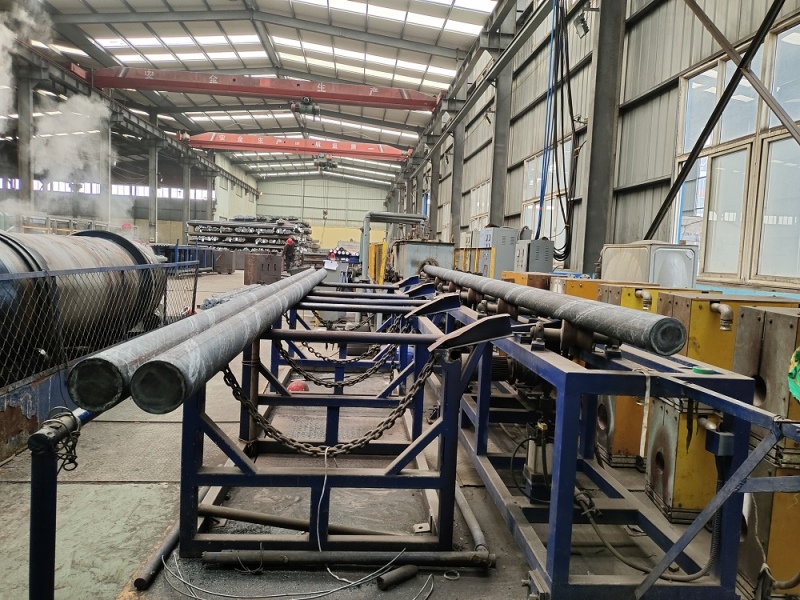
For forged grinding rods, the heat treatment process typically begins with controlled heating to the austenitizing temperature. The objective is to create a suitable microstructure before quenching. If heating is too fast, the rod may develop thermal gradients that lead to distortion or internal stress. If the temperature is too low or too high, the final hardness and toughness balance may be compromised. A grinding rods manufacturer therefore controls furnace temperature, holding time and heating rate according to the steel grade and rod dimensions. Larger diameters require different thermal profiles from smaller diameters because heat penetrates more slowly.
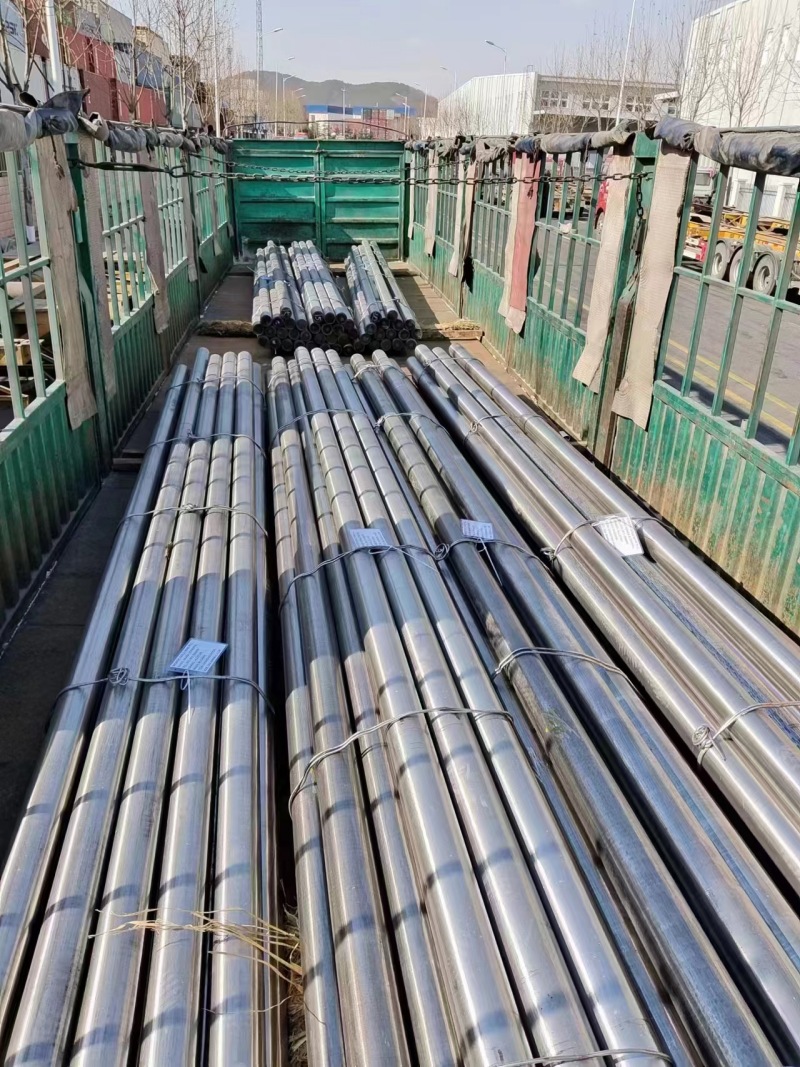
ALLSTAR operates both air hammer forged and hot-rolling production processes for forged products. These forming methods influence the subsequent heat treatment because they affect grain structure and residual stress. The heat treatment plan is therefore matched to the product route, the bar size and the intended application. For rod mills, the product must not only be hard enough to resist wear but also tough enough to withstand impact and bending loads. This balance is achieved through disciplined process control rather than a single hardness target.
Quenching: The Critical Balance
Quenching is often the most sensitive stage. The rod is cooled at a controlled rate to transform the microstructure and develop hardness. The choice of quenching medium, circulation, temperature and immersion time must be carefully managed. A cooling rate that is too slow may fail to produce the required hardness. A cooling rate that is too severe may increase the risk of cracking, distortion or excessive residual stress. For long grinding rods, straightness and dimensional stability are also important. The manufacturer must consider how the rod is supported and moved during quenching so that cooling remains as uniform as practical.
At ALLSTAR, samples are taken from each production batch for inspection. After heat treatment, finished products undergo further testing to check whether they meet the required quality and performance specifications. This batch-based approach helps identify deviations before products reach customers. The company aims to deliver consistent and reliable grinding media to customers worldwide, and heat treatment records form part of that assurance.
Tempering and Stress Relief
Quenched steel is hard but often too brittle for service. Tempering is therefore used to reduce brittleness, relieve internal stress and adjust the final combination of hardness and toughness. The tempering temperature and holding time are selected according to the steel grade and the required performance. For grinding rods, the goal is a product that wears evenly, resists breakage and maintains straightness during use. Tempering is not a simple after-treatment. It is a deliberate step that fine-tunes the material for the mechanical demands of a rod mill.
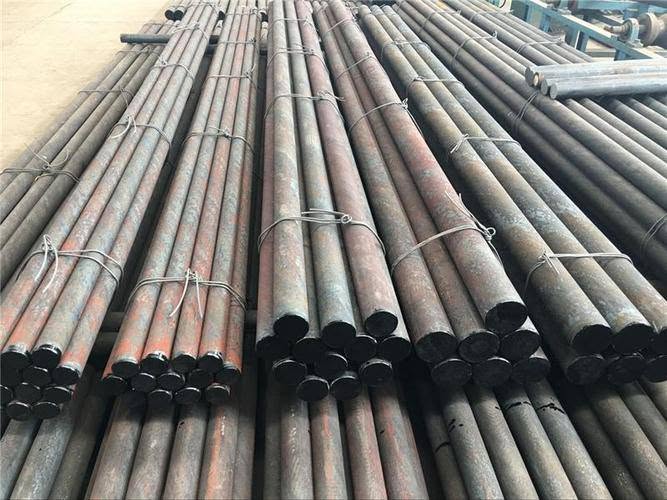
Stress relief is especially relevant for long products. Grinding rods must remain straight enough to avoid jamming, excessive vibration or uneven wear in the mill. If residual stress remains too high, the rod may bend during storage or service. The manufacturer therefore combines heat treatment control with straightening and dimensional checks. Each operation supports the next, and the final product reflects the cumulative discipline of the whole process.
Inspection, Traceability and Customer Value
Quality inspection is carried out throughout the manufacturing process. Chemical composition is checked before production, samples are taken from each batch, and finished products are tested after heat treatment. Hardness, microstructure, surface condition and dimensional accuracy are among the characteristics that help confirm product suitability. Traceability allows the manufacturer to link finished rods to production records, raw material batches and heat treatment conditions. This is valuable when customers require verification or when internal teams investigate a performance question.
ALLSTAR serves the mining, cement and power generation industries. Its product range includes forged grinding balls, cast grinding balls, high chrome grinding balls and grinding rods. Grinding rods are mainly used in rod mills for mineral processing, while forged grinding balls are commonly selected for wet grinding and cast grinding balls are often used in dry grinding operations. The final selection should always consider the actual operating conditions. Proper grinding media selection helps customers improve grinding performance, maintain stable mill operation, manage media consumption and control overall grinding costs.
Proven Performance Supports Process Confidence
The value of controlled heat treatment is ultimately demonstrated in service. ALLSTAR high-chrome grinding balls achieved strong results in a comparative trial at Pinto Valley Mine in the USA. Over a trial lasting nearly six months, ALLSTAR consumption remained stable at 0.56 to 0.59 kg per tonne of run-of-mine ore, with a breakage rate of only 0.2 percent. The other supplier recorded consumption of 0.68 kg per tonne and a breakage rate close to 3 percent. The mill using ALLSTAR products also showed higher output and grinding fineness. Such results reflect the importance of consistent manufacturing and quality control.
In the cement industry, Turkey YD Madencilik replaced grinding balls in both mills with ALLSTAR products in 2016. Combined grinding-ball consumption fell from 84.80 g/t in 2016 to 31.93 g/t in 2018 and reached 25.66 g/t in 2025. These outcomes show how material selection, manufacturing control and application understanding work together. For grinding rods, the same principle applies. Heat treatment control helps deliver lower breakage, stable operation and predictable wear.
Conclusion
A grinding rods manufacturer controls heat treatment through a chain of disciplined decisions: verified raw materials, controlled heating, carefully managed quenching, appropriate tempering, stress relief, straightening and batch inspection. ALLSTAR combines decades of manufacturing experience with rigorous quality management and practical application knowledge. The company was established in 1985, became privately operated in 1999 and has continued to uphold strict quality control and integrity in business. For customers in mining, cement and power generation, the result is a grinding rods supplier focused on reliable products, long-term partnerships and measurable value.


