
How to audit a cast grinding balls factory for export supply
This article explains how an export buyer should audit a cast grinding balls factory in a structured and evidence-based way. The audit should begin with a clear product scope covering chromium grades, diameters from 6 mm to 150 mm, applications, hardness, breakage limits, packaging, and delivery requirements. A desk review should verify legal status, capacity, certifications, quality documentation, export experience, and third-party inspection arrangements such as SGS, BV, or TÜV. On site, the auditor should examine raw material receiving, ferrochrome and iron scrap proportioning, melting, chemical analysis after melting, molding, casting, heat treatment, finishing, and batch traceability. Quality control should be tested by tracing a finished batch back to its heat number, chemical composition, process records, and final test results. The auditor should also assess capacity from real bottlenecks, labor, equipment, maintenance, packaging, container loading, and documentation. Application performance should be checked through consumption data, breakage rate, mill throughput, and grinding fineness, with reference cases verified against trial conditions and customer confirmation. The article uses ALLSTAR grinding balls as an example of an established manufacturer with 15,000 square metres of facilities, 150 employees, 100,000 metric tons of annual capacity, ISO 9001, and third-party inspection support, while stressing that every supplier must be independently verified. Commercial stability, safety, environmental controls, corrective action, and follow-up closure are also essential. The final audit report should separate observations from conclusions and include risk ratings and corrective actions. A well-designed audit protects the buyer from quality failures, supply disruption, and reputational risk, and it supports a reliable long-term export supply relationship.
Cast grinding balls are critical consumable wear parts in mining, cement, and power generation. For an export buyer, the decision to place a long-term order should not rest on a price list or a hardness certificate alone. A structured factory audit is needed to confirm that the supplier can produce the required chromium grade, size range, breakage resistance, and consistent quality at the promised volume. The audit should be evidence-based, risk-focused, and application-oriented. It should combine desk review, on-site process verification, product testing, export readiness checks, and commercial due diligence. The auditor should treat the factory as a manufacturing system rather than as a single product sample.
1. Define the Audit Objective and Product Scope
Before the visit, the buyer should define the exact product scope. For cast grinding balls, the scope may include low-chrome, medium-chrome, and high-chrome grades; diameters from 6 mm to 150 mm; applications in dry grinding, cement mills, power stations, and selected mining duties. The auditor should record the required chemical composition, hardness range, breakage limit, dimensional tolerance, packaging, and delivery schedule. The scope should also identify whether the supplier will provide technical selection support, because different mills and ores require different grinding media. A supplier that understands mill type, material characteristics, and operating conditions is better placed to recommend suitable products than a supplier that only quotes size and price.
A useful benchmark is the profile of an established manufacturer such as Shandong Allstar Grinding Ball Co., Ltd., known as ALLSTAR grinding balls. The company was established in 1985, became privately operated in 1999, and has maintained rigorous management and quality control practices. Its production facilities cover 15,000 square metres, with 150 employees and an annual grinding media capacity of 100,000 metric tons. Such a profile does not replace an audit, but it shows the kind of information an auditor should verify: legal status, history, capacity, workforce, product range, certifications, and export experience.
2. Conduct a Desk Review Before the Factory Visit
The desk review should establish whether the factory can support the buyer's specification and export program. The auditor should request business licenses, product catalogs, process flow diagrams, equipment lists, capacity calculations, customer references, quality manuals, ISO 9001 certificates, third-party inspection reports, and samples of batch records. If the supplier claims government recognition, the auditor should verify the scope and validity of titles such as High and New Technology Enterprise or Specialized, Sophisticated, Distinctive and Innovative Enterprise. These recognitions may indicate technical capability and innovation, but they should be checked against actual production and testing evidence.
undefined
The auditor should also review export documentation capability. This includes commercial invoices, packing lists, certificates of origin, inspection certificates, and arrangements for third-party inspection by SGS, BV, or TÜV. The buyer should confirm that the factory can pack for sea freight, protect against moisture, mark cartons or drums correctly, and load containers without damaging the balls. If the supplier cites performance cases, the auditor should request trial reports and customer confirmations. For example, performance claims from a mine or cement plant are useful only when the mill conditions, media size, ore type, consumption unit, and breakage measurement method are clear.
3. Audit Raw Material Receiving and Melting Control
Quality control for cast grinding balls starts with raw materials. The factory should have an approved supplier list, incoming inspection records, and clear segregation of different scrap and ferroalloy grades. For cast products, raw materials such as ferrochrome and iron scrap should be proportioned and melted according to the required product grade. The auditor should watch the weighing and charging process, review heat numbers, and confirm that chemical composition is analyzed after melting. The spectrometer should be calibrated, the laboratory should retain samples, and the results should be linked to the heat and finished batch.
The auditor should check how the factory controls chromium content, carbon, manganese, silicon, sulfur, and phosphorus. These elements affect hardness, wear resistance, toughness, and breakage behavior. The auditor should also inspect scrap cleanliness, because oil, sand, and mixed metals can introduce variability. A factory that cannot trace a finished ball back to a heat number and chemical analysis presents a significant export risk. Traceability is not administrative decoration; it is the basis for complaint investigation and corrective action.
4. Verify Molding, Casting, and Dimensional Control
For cast grinding balls, molding and casting determine surface quality, internal soundness, and dimensional consistency. The auditor should examine the molding method, pattern condition, sand quality, coating control, mold assembly, pouring temperature, and pouring practice. An advanced coated-sand shell molding process and automated production lines can support consistent manufacturing quality, but the auditor should confirm that process parameters are recorded and monitored. The auditor should also check how the factory controls shrinkage, porosity, sand inclusion, and cold shuts.
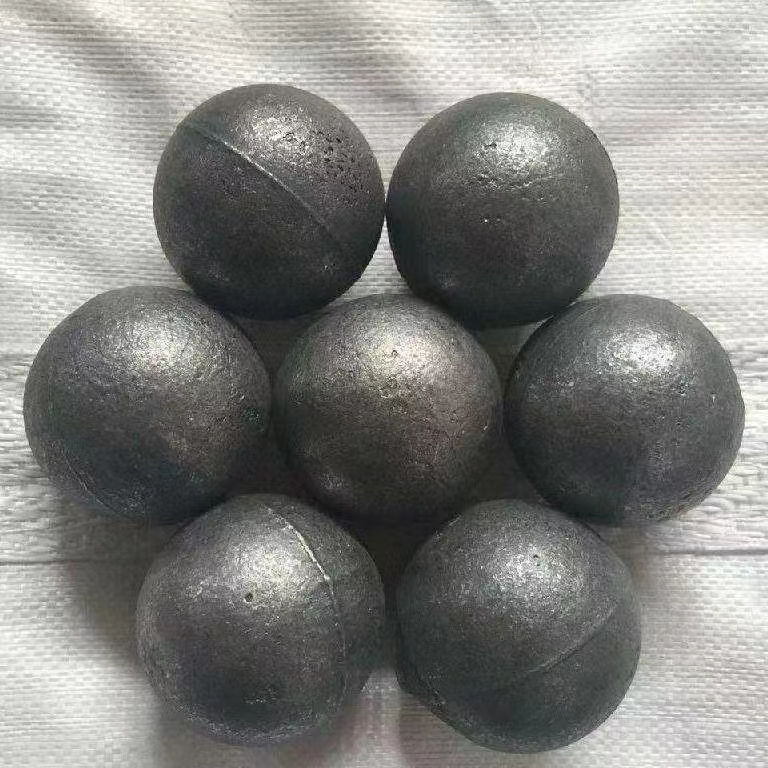
Dimensional control should cover the full declared range, from small balls to large balls. The auditor should verify gauges, sampling frequency, and records for diameter, ovality, and surface defects. Visual inspection should be defined, not left to individual judgment. The auditor should ask how rejected balls are segregated and whether rework is permitted. For export supply, consistency across batches matters as much as the performance of a single sample.
5. Review Heat Treatment and Finishing
Heat treatment is a critical control point for cast grinding balls. The auditor should review furnace loading, austenitizing temperature and time, quench medium, tempering temperature, and cooling practice. Furnace temperature uniformity surveys and thermocouple calibration records should be available. The auditor should check whether heat treatment batches are linked to production batches and whether hardness is tested after treatment. Hardness alone is not enough; the auditor should also consider microstructure, impact toughness, and internal stress, especially for high-chrome balls used in demanding mills.
Finishing should include grinding, shot blasting where applicable, visual inspection, dimensional inspection, and final sorting. The auditor should verify that damaged or cracked balls are removed before packing. If the factory offers breakage testing or drop testing, the method and acceptance criteria should be documented. The auditor should also check housekeeping, because poor handling can create surface damage after final inspection.
6. Evaluate Quality Assurance and Laboratory Capability
The factory should operate a quality management system that covers incoming inspection, in-process control, final inspection, nonconforming product control, and corrective action. For cast grinding balls, samples should be taken from each production batch. After heat treatment, finished products should undergo further testing to confirm that they meet the required quality and performance specifications. The auditor should review test records for chemical composition, hardness, microstructure, dimensions, surface condition, and breakage where specified.
- The laboratory should have calibrated spectrometers, hardness testers, and metallurgical equipment.
- Batch records should link raw materials, melting, casting, heat treatment, testing, and packing.
- Customer complaints should be investigated with root cause analysis and corrective action.
- Third-party inspection reports from SGS, BV, or TÜV should be available when required.
- ISO 9001 certification should be supported by internal audits and management review records.
A factory may present impressive certificates, but the auditor should test the system by selecting a finished batch and tracing it backward. If the batch record is incomplete or the test result cannot be reproduced, the quality system is weak regardless of the certificate on the wall.
7. Assess Capacity, Export Readiness, and Supply Reliability
Capacity should be calculated from the bottleneck process, not from a brochure. The auditor should review melting capacity, molding line capacity, heat treatment capacity, finishing capacity, and labor availability. Shift patterns, utilization, raw material inventory, spare parts, and maintenance records should be checked. A declared annual capacity of 100,000 metric tons is meaningful only when it is supported by equipment, manpower, and order history. The buyer should also confirm lead times for repeat orders and the factory's ability to handle seasonal demand.
Export readiness includes packaging, marking, loading, and documentation. The auditor should inspect packing materials, pallet strength, drum condition, moisture protection, and container loading practice. The factory should have a clear procedure for final release before shipment. The buyer should confirm Incoterms, payment terms, warranty, and after-sales technical support. For long-term supply, the auditor should also consider financial stability, insurance, and business continuity.
8. Validate Application Performance and Reference Cases
An audit should not stop at hardness and chemical composition. The buyer needs evidence of performance under actual grinding conditions. The auditor should request consumption data in kg per tonne or g per tonne, breakage rate, mill throughput, and grinding fineness. These results should be linked to specific mill types, ore characteristics, and operating conditions. For example, ALLSTAR high-chrome grinding balls were tested at Pinto Valley Mine in the USA in a trial lasting nearly six months. The reported consumption remained stable at 0.56 to 0.59 kg per tonne of run-of-mine ore, with a breakage rate of only 0.2 percent, while the comparison product reached 0.68 kg per tonne and a breakage rate close to 3 percent. The mill using the competitor's products also recorded more than 70 tonnes per hour lower output and over 5 percentage points lower grinding fineness.
In the cement industry, ALLSTAR reported results at Turkey YD Madencilik, where a combined roller press and ball mill system had historically high grinding media consumption due to difficult-to-grind materials. After replacing the grinding balls in both mills in 2016, combined consumption dropped from 84.80 g per tonne in 2016 to 31.93 g per tonne in 2018, and later reached 25.66 g per tonne in 2025. Such cases are valuable, but the auditor should verify the trial conditions, measurement method, and customer confirmation. Reference cases support a supplier's technical case; they do not replace independent batch testing.
9. Include Commercial, Safety, and ESG Checks
Export supply audits should also cover safety and environmental controls. The auditor should inspect dust collection, ventilation, furnace safety, molten metal handling, protective equipment, waste sand disposal, and wastewater management. Labor practices and working hours should be reviewed at a high level. These checks protect the buyer from reputational and supply disruption risks. The auditor should confirm that permits are valid and that the factory has a system for incident reporting and emergency response.
10. Prepare the Audit Report and Follow-Up Plan
The audit report should separate observations from conclusions. It should include the product scope, audit date, participants, documents reviewed, processes observed, samples taken, test results, nonconformities, risk rating, and required corrective actions. The buyer should agree on a follow-up schedule and verify closure of major findings before placing a large order. A factory that responds openly to findings and provides objective evidence is usually a better long-term partner than a factory that presents only polished sales material.
In conclusion, auditing a cast grinding balls factory for export supply requires a balanced review of process control, product testing, capacity, export readiness, and application performance. The auditor should verify raw material traceability, melting chemistry, molding practice, heat treatment, batch inspection, packaging, and documentation. Proven performance and certifications are useful indicators, but they must be checked against records and samples. A rigorous audit reduces the risk of excessive breakage, unstable consumption, delayed shipments, and quality disputes, and it helps the buyer build a reliable long-term supply relationship.


