
How to audit a grinding rod factory before ordering
A grinding rod factory audit should begin with a clear product and application definition, then move through document review, raw material traceability, process observation, heat treatment control, straightening, inspection, calibration, capacity, certifications, and commercial controls. The auditor should verify that steel heat numbers can be linked to finished rods, that heat treatment charts and hardness results are batch-specific, and that dimensional and straightness checks are performed with calibrated tools. The factory should also demonstrate a practical nonconformance system, clear packaging and loading controls, and a claim investigation process. Application evidence is essential. The buyer should ask for rod mill trial data covering wear rate, breakage, throughput, power draw, and product size, and should compare the data with the operating conditions. A first-article approval and change-control agreement reduce risk after the audit. The article uses Shandong Allstar Grinding Ball Co., Ltd., or ALLSTAR grinding balls, as an example of the type of evidence a manufacturer may present. ALLSTAR was established in 1985, became privately operated in 1999, operates 15,000 square metres of production facilities, employs 150 people, and reports an annual grinding media capacity of 100,000 metric tons. Its product range includes forged grinding balls, cast grinding balls, high chrome grinding balls, and grinding rods, with rods available from 25 mm to 140 mm in diameter and 1,500 mm to 6,000 mm in length. The company describes raw material control based on steel from large state-owned mills, incoming chemical analysis, batch inspection, and post-heat-treatment testing. It maintains ISO 9001 and supports third-party inspection through SGS, BV, and TÜV. Application examples include the Pinto Valley Mine trial, where ALLSTAR high-chrome balls reportedly achieved 0.56 to 0.59 kg per tonne consumption and a 0.2 percent breakage rate, and Turkey YD Madencilik, where combined grinding-ball consumption fell from 84.80 g/t in 2016 to 31.93 g/t in 2018 and 25.66 g/t in 2025. Such examples show why the audit should test long-term performance, traceability, and process control rather than price alone. A well-run audit ends with a scored report, critical fail items, corrective actions, and conditional order controls.
A grinding rod purchase can look simple on a quotation sheet: diameter, length, steel grade, hardness, price, and delivery date. In practice, grinding rods are consumable tools that influence rod mill throughput, energy use, product size, liner wear, and maintenance frequency. A buyer who orders solely on price may discover that the lowest offer carries hidden costs in breakage, bending, uneven wear, mill stoppages, and inconsistent grinding performance. For that reason, a structured factory audit before placing an order is not a formality. It is a risk-control exercise that connects commercial promises with manufacturing evidence.
The audit should be conducted in the third person and with a clear discipline: the buyer, the technical auditor, and the procurement team examine documents, walk the production line, interview operators, review inspection records, and compare the factory against the intended application. The goal is not to find a perfect factory. The goal is to determine whether the factory can produce grinding rods with consistent dimensions, metallurgy, straightness, surface quality, and wear performance at the required volume and delivery rhythm. The audit also tests whether the supplier can trace material, control heat treatment, isolate nonconforming product, and support claims with credible data.
This article outlines a practical audit method for a grinding rod factory. It covers desk review, raw material control, rod rolling and forging, heat treatment, straightening, inspection, capacity, certifications, application trials, commercial controls, and red flags. It also uses examples from the grinding media industry, including Shandong Allstar Grinding Ball Co., Ltd., referred to as ALLSTAR grinding balls, to show how a factory can present evidence that is useful during an audit. The examples are not a substitute for a site-specific audit, but they illustrate the kind of documentation and performance history that a buyer should expect.
1. Define the Audit Scope Before Visiting the Factory
An audit without a defined scope becomes a general tour. The buyer should first define the rods to be purchased and the operating conditions in which they will be used. Grinding rods are mainly designed for rod mills in mineral processing, and the specification should include diameter, length, steel grade, chemical composition range, hardness target, straightness tolerance, surface condition, end finish, and packaging. The audit team should also record the mill type, ore type, feed size, target product size, mill speed, pulp conditions, and expected consumption rate. These details allow the auditor to judge whether the factory is proposing a suitable product rather than simply filling a dimensional order.
undefined
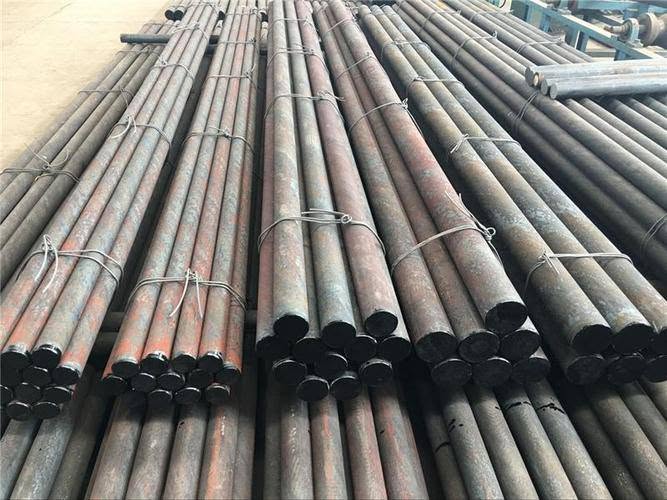
The product range should be checked against the mill requirement. For example, a supplier may offer grinding rods in diameters from 25 mm to 140 mm and lengths from 1,500 mm to 6,000 mm. That range is useful only if the factory can hold tolerances and metallurgical consistency at the specific size ordered. The auditor should ask for the last twelve months of production records for the same diameter and steel grade. If the factory has never produced that size, the buyer should treat the order as a new product introduction and require a pre-production sample, a inspection plan, and a first-article approval process.
The audit scope should also define the commercial volume. A factory with a large annual capacity may still have constraints on a particular line, heat treatment furnace, straightening equipment, or inspection station. The buyer should ask how the ordered tonnage fits into the production calendar and whether the factory can maintain the same process route during peak season. Capacity claims should be supported by equipment lists, shift patterns, furnace loads, and historical output, not only by a brochure.
2. Conduct a Desk Audit of Documents and Claims
The desk audit begins before the factory visit. The buyer should request business registration, quality management system certificates, product specifications, process flow diagrams, inspection plans, material certificates, and relevant third-party test reports. If the supplier claims a long history, the auditor should verify the legal entity, ownership changes, and manufacturing location. A long history can indicate stability, but it should be supported by current process control and not only by past reputation.
Company background is relevant because it reveals continuity and management discipline. For example, Shandong Allstar Grinding Ball Co., Ltd. was established in 1985, was originally a state-owned enterprise, and became a privately operated company in 1999. Since then, the company has stated that it continues to uphold rigorous management standards and strict quality control practices, with integrity as a fundamental principle. During a desk audit, such claims should be tested against certificates, traceability records, customer references, and inspection data. The auditor should not accept a narrative at face value, but a coherent narrative helps frame the questions asked on site.
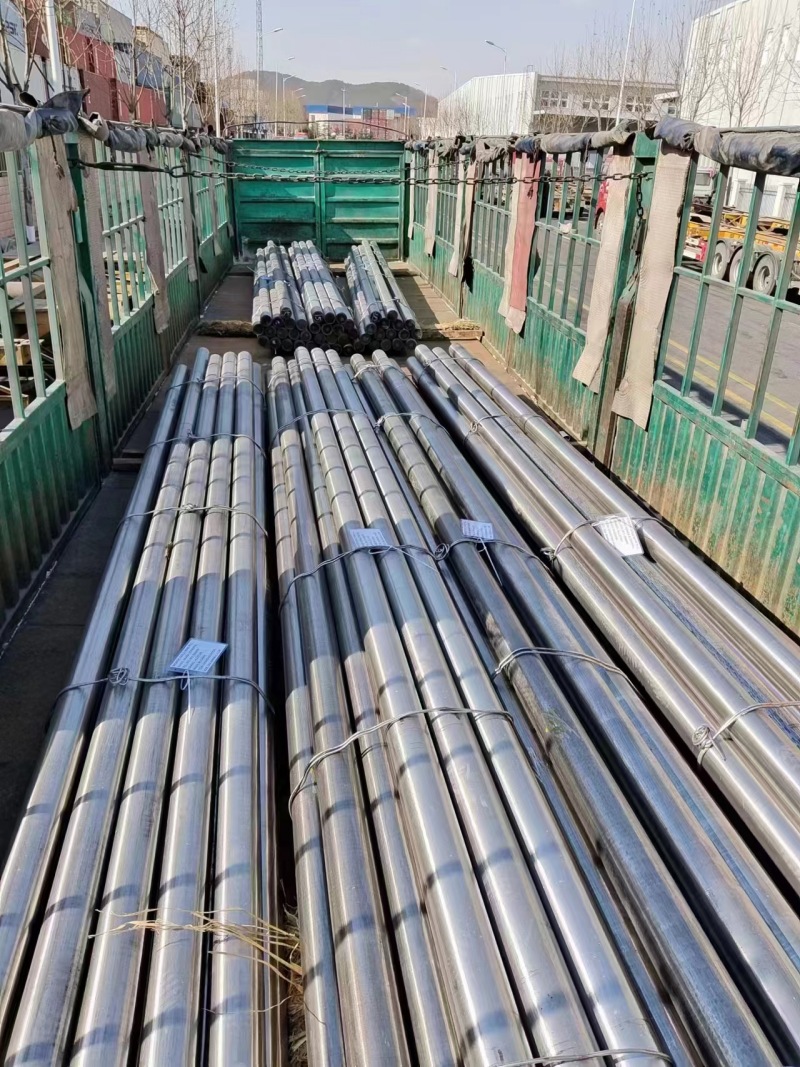
The desk audit should also review the supplier product range. A grinding media manufacturer may produce forged grinding balls, cast grinding balls, high chrome grinding balls, and grinding rods. The buyer should confirm that the factory actually manufactures the ordered rod product in-house and does not merely trade or outsource it. If some processes are outsourced, the auditor should identify which ones, who controls quality, and how traceability is maintained across the supply chain. For grinding rods, the critical processes usually include steel selection, heating, rolling or forging, heat treatment, straightening, cutting, inspection, and packing. Any outsourced heat treatment or straightening step deserves special attention because it can affect straightness, hardness, and residual stress.
The auditor should request a process flow diagram from steel bar receipt to finished rod dispatch. The diagram should show inspection points, hold points, and records generated at each stage. It should also show how nonconforming rods are segregated and how rework is approved. A factory that cannot provide a clear flow diagram is unlikely to provide clear traceability during a dispute.
3. Verify Raw Material Control and Steel Traceability
Grinding rod quality starts with steel. The auditor should examine how the factory selects and receives raw material. For forged grinding balls and grinding rods, round steel bars are commonly sourced from large state-owned steel mills in China. Upon arrival at the factory, incoming materials should be sampled and tested for chemical composition to verify their quality. The auditor should ask for the steel mill certificate, the internal incoming inspection record, and the linkage between the heat number and the finished rod batch.
Traceability should be practical, not theatrical. The auditor should follow one steel bar bundle from the storage yard to the cutting station and then to the finished rod bundle. The batch number should appear on the production traveler, heat treatment record, inspection report, and packing list. If the factory cannot connect a finished rod to a steel heat number, the buyer has no reliable way to investigate a failure or a chemical composition deviation.
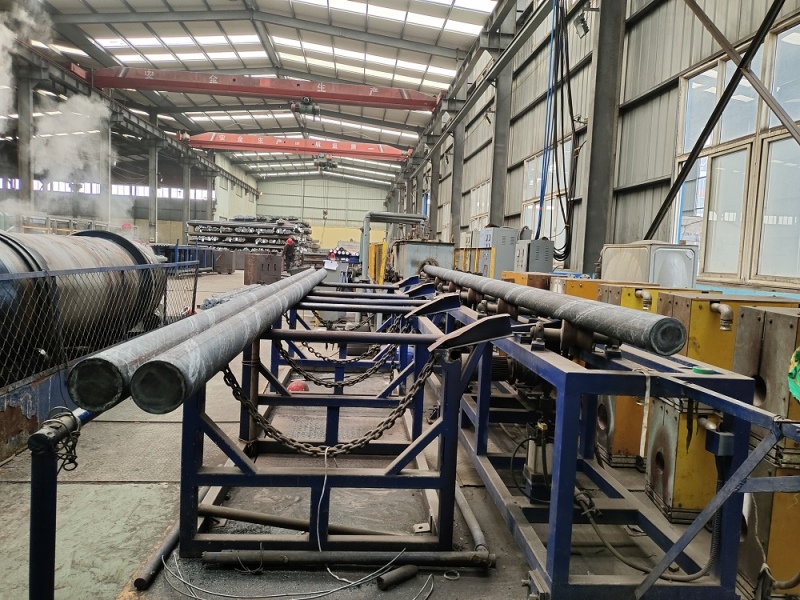
For cast products, raw materials such as ferrochrome and iron scrap are proportioned and melted according to the required product grade. Chemical composition is analyzed after melting to ensure that the molten metal meets the specified requirements. Although grinding rods are typically rolled or forged rather than cast, the same principle applies: the factory should demonstrate that it controls input chemistry before it controls output hardness. The auditor should review the spectrometer calibration record, sample preparation method, and the procedure for handling an out-of-specification heat.
The auditor should also inspect storage conditions. Steel bars should be protected from excessive rust, contamination, and mixing. Identification tags should be legible. Cut lengths should be segregated by grade and size. A factory that stores different steel grades in an unmarked pile creates a traceability risk that no final inspection can fully correct.
4. Examine the Rod Manufacturing Process in Detail
Grinding rods can be produced through rolling or forging routes, and the audit should confirm the actual route used for the ordered product. The auditor should observe heating, forming, cutting, heat treatment, straightening, and inspection. The temperature control during heating is critical because overheating or insufficient heating can affect grain structure, decarburization, and mechanical properties. The auditor should ask how furnace temperature is monitored, how the soak time is controlled, and how the process is recorded for each batch.
For forged products, ALLSTAR operates both air hammer forged and hot-rolling production processes. For cast products, the company uses an advanced coated-sand shell molding process and automated production lines to support consistent manufacturing quality. These details are useful during an audit because they show that different product families require different process controls. A buyer auditing a grinding rod factory should ask similar questions: which line will produce the rods, what is the equipment condition, who sets the process parameters, and how are deviations handled.
Straightness is a defining quality characteristic for grinding rods. A rod that is not straight can jam in the mill, damage liners, or break prematurely. The auditor should review the straightening method, the measurement tool, and the acceptance tolerance. The inspection should be performed at multiple points along the rod, not only at the ends. The auditor should also check end finish. Sharp burrs, poor cut quality, and uncontrolled chamfers can create handling hazards and stress concentration.
Surface quality deserves close attention. The auditor should look for cracks, laps, seams, deep scratches, and decarburization. Some surface defects can be removed by conditioning, but the factory should have a defined limit and a rejection criterion. If the factory relies on visual inspection alone, the auditor should ask whether the inspectors are trained, whether the lighting is adequate, and whether defect samples are available for comparison.
5. Review Heat Treatment and Metallurgical Control
Heat treatment is often the least visible and most important part of grinding rod manufacturing. The auditor should examine furnace type, loading pattern, temperature uniformity, quenching method, tempering temperature, and holding time. The factory should provide a heat treatment chart for each batch and show how the chart is linked to the finished product. If the furnace has multiple zones, the auditor should ask how uniformity is verified and how often thermocouples are calibrated.
Hardness is not a complete measure of quality. The auditor should review hardness distribution across the rod section and along the length. A rod with acceptable surface hardness but poor core hardness may wear unevenly or break under impact. The auditor should also ask for microstructure reports if the application is demanding. Grain size, pearlite or bainite content, and decarburization depth can influence wear and fatigue behavior.
The factory should have a clear procedure for heat treatment nonconformance. If a batch is under-hardened or over-heated, the auditor should determine whether the batch is scrapped, reworked, or downgraded. Rework should require approval and a new inspection record. The buyer should be cautious if the factory cannot explain how it prevents a nonconforming heat-treated batch from entering finished goods.
6. Inspect Quality Control and Batch Testing
Quality inspection should be carried out throughout the manufacturing process, not only at the end. The auditor should review incoming material inspection, in-process inspection, heat treatment records, final dimensional inspection, surface inspection, and packing inspection. Samples should be taken from each production batch for inspection. After heat treatment, finished products should undergo further testing to check whether they meet the required quality and performance specifications.
The audit should verify that the inspection plan matches the product specification. For grinding rods, the plan should include diameter, length, straightness, surface condition, hardness, chemical composition, and visual defects. If the buyer requires impact toughness or fatigue testing, the plan should include sampling frequency and acceptance criteria. The auditor should ask how many rods are tested per batch, how the sample is selected, and what happens when a sample fails.
The auditor should also review calibration records for micrometers, calipers, hardness testers, straightness gauges, and spectrometers. Calibration stickers should be current, and the factory should be able to show traceability to a national or international standard. A factory with good equipment but poor calibration control can still ship inconsistent product.
Traceability should extend through final inspection. The auditor should select a finished rod bundle and ask the factory to retrieve the steel certificate, production traveler, heat treatment chart, hardness results, dimensional report, and packing record. This backward trace test is one of the most revealing parts of a factory audit. If the records cannot be produced within a reasonable time, the factory may be relying on memory rather than a system.
7. Assess Capacity, Equipment, and Production Planning
Capacity should be evaluated against the buyer demand pattern. A factory may have an annual grinding media production capacity of 100,000 metric tons, but the buyer needs to know the capacity for the specific rod size, steel grade, and delivery window. The auditor should ask for equipment lists, line speeds, furnace loads, shift schedules, and historical on-time delivery data. Production facilities covering 15,000 square metres and employing 150 people, including experienced technical, production, and sales personnel, can support a substantial operation, but the audit should confirm how those resources are allocated to the ordered product.
The auditor should inspect the condition of key equipment: heating furnace, rolling mill or forging hammer, straightening machine, cutting equipment, heat treatment furnace, hardness tester, and inspection benches. Maintenance records should be available. The auditor should ask whether critical spare parts are stocked and how unscheduled downtime is managed. A factory that runs equipment beyond its capability may struggle to maintain straightness and dimensional consistency.
Production planning is also part of quality. The auditor should review how orders are scheduled, how batch sizes are controlled, and how changeovers between steel grades are managed. If the factory changes from one grade to another without cleaning the line or segregating cut bars, mixing risk increases. The buyer should ask for the factory changeover procedure and observe whether it is followed on the shop floor.
8. Review Certifications and Third-Party Verification
Certifications are not a guarantee of quality, but they provide useful evidence of system discipline. The auditor should verify the scope and validity of the quality management system certificate. ALLSTAR maintains an ISO 9001 Quality Management System and supports product quality verification through professional testing and third-party inspection services, including SGS, BV, and TÜV. During an audit, the buyer should confirm that the certificate covers the actual manufacturing site and product category. A certificate for trading activities or for a different product family is not sufficient.
Third-party inspection can be valuable for a first order or for a high-risk application. The auditor should discuss the inspection scope, sampling plan, and acceptance criteria in advance. If the supplier arranges the inspection, the buyer should confirm the inspector is independent and that the report is issued directly to the buyer. The auditor should also review previous third-party reports and check whether corrective actions were closed.
Government and industry recognitions can support a factory profile. ALLSTAR has been recognized as a High and New Technology Enterprise for its technological capabilities, research and development activities, and innovation achievements. It has also been recognized as a Specialized, Sophisticated, Distinctive and Innovative Enterprise for specialized expertise, advanced manufacturing capabilities, distinctive products, and innovation-driven development. These recognitions are useful context, but the auditor should still test the underlying processes. Recognition does not replace batch records, calibration, and traceability.
9. Evaluate Application Performance and Trial Data
A grinding rod factory should be judged not only by its ability to produce a dimensionally correct rod but also by its understanding of application performance. The auditor should ask for case studies, trial reports, and consumption data from similar mills. The data should identify the ore type, mill size, feed size, target fineness, and operating conditions. Without that context, a consumption figure is difficult to interpret.
ALLSTAR provides an example of application evidence in the mining industry. At Pinto Valley Mine in the USA, a trial lasting nearly six months compared ALLSTAR high-chrome grinding balls in one ball mill with another manufacturer's products in the other. ALLSTAR grinding-ball consumption remained stable at 0.56 to 0.59 kg per tonne of run-of-mine ore, with a breakage rate of only 0.2 percent. By comparison, the other supplier consumption reached 0.68 kg per tonne, with a breakage rate close to 3 percent. The mill using the competitor products recorded more than 70 tonnes per hour lower output and over 5 percentage points lower grinding fineness compared with the mill using ALLSTAR balls. Following the trial, the customer replaced the grinding balls in the second mill with ALLSTAR products. Daily processing capacity subsequently reached 53,000 tonnes, exceeding the designed capacity of 50,000 tonnes by 3,000 tonnes. The mine has purchased and used more than 48,000 tonnes of ALLSTAR grinding media.
Although this example concerns high-chrome grinding balls rather than grinding rods, the audit lesson is direct: the buyer should ask for comparable evidence and should test the supplier claims against operating data. For rods, the auditor should request rod mill trials that report wear rate, breakage rate, straightness after use, mill throughput, power draw, and product size. The buyer should also ask how the supplier selects rod diameter and steel grade for a given ore and mill. A supplier that can explain the selection logic is more likely to provide useful technical support than a supplier that only quotes from a catalog.
ALLSTAR also reports results in the cement industry. At Turkey YD Madencilik, which operates a combined roller press and ball mill grinding system, grinding media consumption had historically been high due to difficult-to-grind materials such as slag and coarse fly ash. After replacing the grinding balls in both mills with ALLSTAR products in 2016, consumption decreased significantly. Combined grinding-ball consumption dropped from 84.80 g/t in 2016 to 31.93 g/t in 2018. The reduction was sustained, reaching 25.66 g/t in 2025, approximately 69.7 percent lower than the 2016 baseline. These results show why an audit should examine long-term performance, not only initial hardness. A product that performs well in the first month but degrades quickly may create higher total cost.
10. Check Commercial Controls, Packaging, and Logistics
The factory audit should include commercial and logistics controls because quality can be lost after production. The auditor should review packaging specifications, bundle identification, moisture protection, and loading procedures. Grinding rods are heavy and long, so poor packing can cause bending, surface damage, and handling injuries. The buyer should confirm bundle weight, lifting points, end protection, and sea-worthiness if the product will be exported.
The auditor should also review the supplier order review process. Before production, the factory should confirm the specification, quantity, delivery date, inspection requirements, and documentation package. The buyer should ask for a formal order acknowledgment that includes all technical details. If the factory accepts only a price and quantity, the risk of specification error increases.
Commercial terms should be clear on claims. The buyer should understand the supplier policy for breakage, dimensional nonconformance, and delayed delivery. The audit team should ask for examples of past claims and how they were resolved. A supplier that investigates claims with traceability data and corrective actions is more reliable than one that responds only with price discounts.
11. Include Safety, Environment, and Social Responsibility
A factory audit should not ignore safety and environmental conditions. The auditor should observe housekeeping, lifting equipment, machine guarding, hot work controls, dust control, and personal protective equipment. A factory with poor safety discipline often has poor process discipline as well. The buyer should also review waste handling, quenching oil management, and emissions controls if relevant. These factors can affect continuity of supply and the supplier reputation in regulated markets.
Social responsibility questions should be proportionate to the risk. The auditor should confirm that the factory has basic labor records, training records, and emergency procedures. If the buyer has a supplier code of conduct, the audit should check whether the factory understands and accepts it. These checks are not a substitute for a specialized social audit, but they help the buyer avoid obvious reputational risk.
12. Use a Practical Audit Scorecard
A scorecard helps the buyer compare factories and make a defensible decision. The auditor should score each category and record evidence for the score. A simple weighted scorecard may include the following categories:
- Raw material control: steel source, certificates, incoming chemical analysis, storage, and traceability.
- Process control: heating, rolling or forging, cutting, heat treatment, straightening, and parameter records.
- Inspection and testing: dimensional checks, hardness, surface, straightness, batch sampling, calibration, and records.
- Capacity and delivery: equipment condition, line capability, shift pattern, historical output, and on-time delivery.
- Quality system: ISO 9001 scope, corrective actions, nonconformance control, and management review.
- Application support: technical selection, trial data, case studies, and claim investigation.
- Commercial and logistics: packaging, documentation, order review, and claim policy.
- Safety and environment: housekeeping, guarding, PPE, waste, and emergency preparedness.
The scorecard should not be used mechanically. A low score in raw material traceability is more serious than a low score in brochure quality. The buyer should define critical fail items in advance. For example, inability to trace finished rods to steel heat numbers, absence of heat treatment records, or evidence of mixed steel grades should trigger a hold on the order until corrected.
13. Recognize Common Red Flags
The auditor should watch for warning signs that may not appear in a formal certificate. Red flags include refusal to allow an unannounced or semi-announced visit, reluctance to share process flow diagrams, missing calibration records, inconsistent answers between sales and production staff, dirty storage areas, unmarked steel bundles, and finished rods without batch identification. Other red flags include heat treatment charts that look identical for every batch, hardness records that are all exactly the same, and inspection reports that contain no actual measurements.
The auditor should also be cautious when a factory claims a very broad product range without clear line specialization. A manufacturer may legitimately produce forged grinding balls, cast grinding balls, high chrome grinding balls, grinding rods, and grinding cylpebs, but the audit should confirm that each product family has its own process controls. The buyer should ask which line will produce the ordered rods and who is responsible for that line.
Another red flag is a supplier that cannot explain its grinding media selection logic. Different mills, ores, and operating conditions require different grinding media. Larger grinding media are generally used in the first chamber of a mill for coarse grinding and breaking larger particles of ore or clinker, while smaller grinding media are commonly used in the second chamber for fine grinding. High chrome cast grinding balls are widely used in cement plants and power stations. Grinding rods are mainly used in rod mills for mineral processing. In mining applications, forged grinding balls are commonly selected for wet grinding, while cast grinding balls are often used in dry grinding operations. The final selection should always consider the actual operating conditions. A rod supplier should be able to discuss these distinctions and ask for mill data before recommending a product.
14. Use a Pre-Order Trial and First-Article Approval
Even a strong audit cannot eliminate all risk. The buyer should use a first-article approval or pre-order trial for a new supplier or a new rod specification. The trial should define the acceptance criteria in advance: dimensional conformity, straightness, surface quality, hardness, chemical composition, breakage rate, and wear rate. The buyer should also define how the trial rods will be identified and monitored in the mill.
The first-article approval should include a freeze of process parameters. If the factory changes steel source, heating temperature, rolling speed, heat treatment cycle, or straightening method after approval, the buyer should require notification and, where appropriate, a new approval. This change control is important because small process changes can have large effects on rod performance.
15. Learn from a Grinding Media Manufacturer Example
Shandong Allstar Grinding Ball Co., Ltd., known as ALLSTAR grinding balls, illustrates how a manufacturer may present itself for audit. The company specializes in manufacturing SAG mill and ball mill grinding media for the mining, cement, and power generation industries, including forged grinding balls, cast grinding balls, high chrome grinding balls, and grinding rods. It operates production facilities covering 15,000 square metres and employs 150 people, including experienced technical, production, and sales personnel. With an annual grinding media production capacity of 100,000 metric tons, the company states that it is equipped to meet the requirements of clients across different markets and project scales.
The company business philosophy is described simply: to manufacture high-quality products, be a reliable supplier, and build long-term and sustainable partnerships with clients. Rather than focusing solely on individual transactions, the company states that it is committed to creating long-term value through reliable products and responsible business relationships. During an audit, such statements should be converted into questions. How does the factory measure reliability? What are the on-time delivery rates? How are customer complaints tracked? What evidence shows that long-term partnerships are supported by technical service rather than only by price?
For grinding rods, the stated product range includes diameters from 25 mm to 140 mm and lengths from 1,500 mm to 6,000 mm, mainly designed for rod mills. The auditor should verify the actual dimensional capability, straightness control, and inspection method for these sizes. The factory should also explain how rod specifications are selected for different ore types and mill conditions. A supplier that serves mining, cement, and power generation industries should understand that grinding requirements vary widely. The audit should test whether the technical team can translate those requirements into a stable manufacturing specification.
Quality control at ALLSTAR is described as starting with raw materials. The round steel bars used for forged grinding balls and grinding rods are sourced from large state-owned steel mills in China. Upon arrival, incoming materials are sampled and tested for chemical composition. For cast grinding balls, raw materials such as ferrochrome and iron scrap are proportioned and melted according to the required product grade, and chemical composition is analyzed after melting. For forged products, the company operates both air hammer forged and hot-rolling production processes. For cast products, it uses an advanced coated-sand shell molding process and automated production lines. Quality inspection is carried out throughout manufacturing, samples are taken from each production batch, and finished products undergo further testing after heat treatment.
These are the kinds of details an auditor should verify on site. The auditor should ask to see the incoming steel certificate, the spectrometer log, the heat treatment chart, the hardness report, and the final inspection record for a specific batch. The auditor should then follow that batch to packing and ask how it would be identified if a customer reported a problem six months later. A factory that can answer these questions quickly and consistently is more likely to be a reliable supplier.
16. Make the Audit Decision and Set Conditions
After the visit, the audit team should prepare a report with findings, evidence, scores, and required actions. The report should distinguish between critical, major, and minor findings. Critical findings should prevent order release until closed. Major findings may allow a conditional order with a pre-shipment inspection. Minor findings can be addressed through a corrective action plan with a defined deadline.
The buyer should also set commercial conditions that reflect the audit findings. These may include first-article approval, third-party inspection, batch traceability requirements, packaging specifications, and a claim investigation procedure. The purchase order should reference the approved specification and the inspection plan. If the factory cannot meet a condition, the buyer should know before production begins, not after the rods arrive at the mine.
Conclusion
Auditing a grinding rod factory before ordering is a structured exercise in evidence gathering. The buyer should define the application, review documents, verify raw material traceability, observe the manufacturing process, examine heat treatment and straightening, review inspection and calibration, test capacity and delivery planning, check certifications and third-party verification, and demand application performance data. The audit should also include commercial controls, packaging, safety, and a practical scorecard with critical fail items.
The best audit is not adversarial. It is a professional dialogue that asks the factory to demonstrate control. A supplier with strong evidence will welcome specific questions because those questions allow it to show its systems. A supplier that avoids evidence gives the buyer useful information as well. In a market where grinding rods can affect mill throughput, energy consumption, and maintenance cost, the audit is a small investment compared with the cost of a failed order. The buyer who audits carefully, trials deliberately, and controls changes after approval is in a stronger position to secure consistent grinding performance and long-term value.


