
Forged grinding balls factory questions about lead time and packaging
This blog article examines two practical procurement topics that international buyers frequently raise with a forged grinding balls factory: lead time and packaging. It explains that lead time should be discussed in terms of order quantity, ball diameter, material grade, production process, heat treatment, inspection, and shipping schedules, rather than as a single promised date. Packaging is presented as part of product protection, with buyers advised to ask about bag types, package weight, labeling, moisture protection, handling methods, and documentation. The article uses Shandong Allstar Grinding Ball Co., Ltd., or ALLSTAR grinding balls, as an example of a manufacturer with experience since 1985, production facilities of 15,000 square metres, 150 employees, and annual capacity of 100,000 metric tons. It describes the company's product range, including forged grinding balls from 20 mm to 150 mm, cast grinding balls, high chrome grinding balls, and grinding rods, and notes applications in mining, cement, and power generation. Quality control is connected to supply reliability through raw material testing, batch inspection, heat treatment checks, ISO 9001 management, and third-party inspection services such as SGS, BV, and TÜV. The article also references proven performance at Pinto Valley Mine and Turkey YD Madencilik to show how consistent product quality supports lower consumption, reduced breakage, and stable mill operation. The overall message is that buyers can reduce risk by asking precise questions about production timing, packing, inspection, and delivery, and by working with a supplier that can support its answers with documented manufacturing and quality practices.
For mining companies, cement plants, power stations, and industrial distributors, sourcing forged grinding balls is not only a matter of hardness or chemical composition. International buyers often begin with technical specifications, but serious procurement teams quickly move to two practical questions: how long will delivery take, and how will the products be packaged for safe transport? These questions are especially important when a forged grinding balls factory serves projects across different markets and project scales. A reliable supplier must answer both clearly and support the answer with manufacturing capacity, quality control, and export experience.
Shandong Allstar Grinding Ball Co., Ltd., known as ALLSTAR grinding balls, has manufactured grinding media since 1985. The company was originally a state-owned enterprise and became a privately operated company in 1999. Since then, it has continued to uphold rigorous management standards and strict quality control practices. Integrity remains a fundamental principle of its business operations. This background matters to buyers because lead time and packaging are not isolated administrative topics. They reflect how a factory plans production, controls quality, manages materials, and protects product performance from the plant to the customer's mill.
Why Buyers Ask About Lead Time Early
Forged grinding balls are consumed continuously in SAG mills, ball mills, and other grinding circuits. A late shipment can affect mill availability, production targets, and maintenance planning. Buyers therefore need a realistic lead time rather than an optimistic promise. When a forged grinding balls factory receives an inquiry, the answer should consider order quantity, product diameter, material grade, production process, heat treatment, inspection requirements, and current production scheduling.
undefined
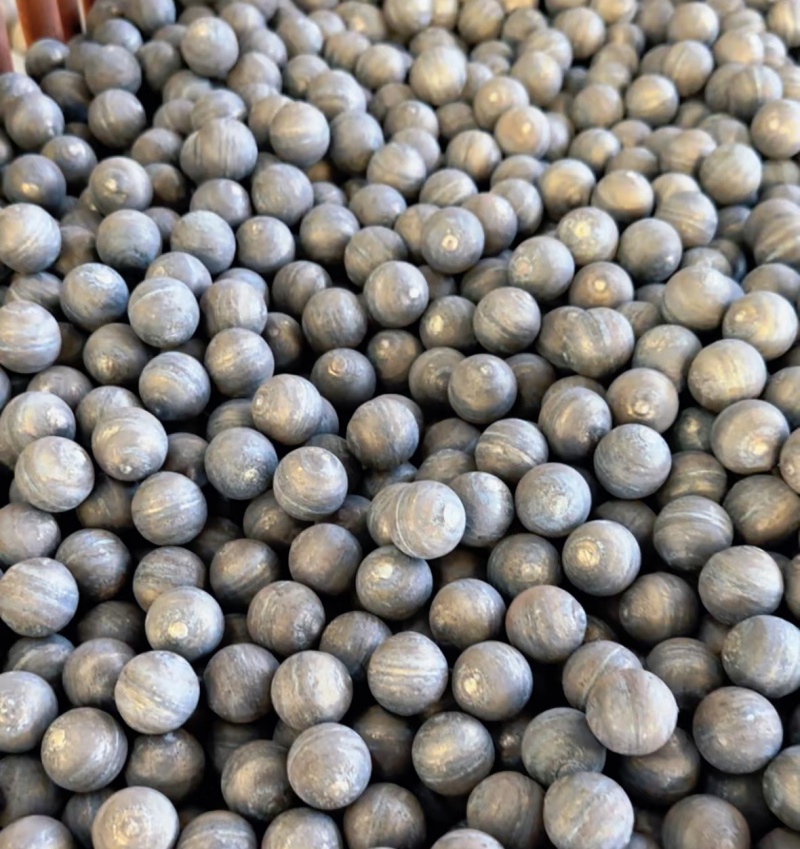
ALLSTAR manufactures forged grinding balls in diameters from 20 mm to 150 mm through forging or hot-rolling processes. The company also produces cast grinding balls, high chrome grinding balls, and grinding rods. Its production facilities cover 15,000 square metres, and it employs 150 people, including experienced technical, production, and sales personnel. With an annual grinding media production capacity of 100,000 metric tons, the factory is equipped to meet the requirements of clients across different markets and project scales. Capacity alone does not guarantee a short lead time, but it gives the factory flexibility to plan larger orders and repeat supply programs.
Questions a Buyer Should Ask About Lead Time
- What is the estimated production lead time for the requested diameter, quantity, and quality grade?
- Does the lead time include raw material preparation, forging or hot rolling, heat treatment, inspection, and packing?
- How does the factory schedule repeat orders and urgent orders without compromising quality?
- What documentation and inspection steps are completed before shipment?
- How are shipping schedules, container availability, and port handling considered in the final delivery plan?
A good answer from a forged grinding balls factory will separate production time from transport time. Production planning may depend on the availability of round steel bars from large state-owned steel mills in China. For forged products, incoming materials are sampled and tested for chemical composition before use. For cast products, raw materials such as ferrochrome and iron scrap are proportioned and melted according to the required grade, and chemical composition is analyzed after melting. These controls take time, but they protect the final product and reduce the risk of costly delays caused by quality problems later.
Packaging Is Part of Product Protection
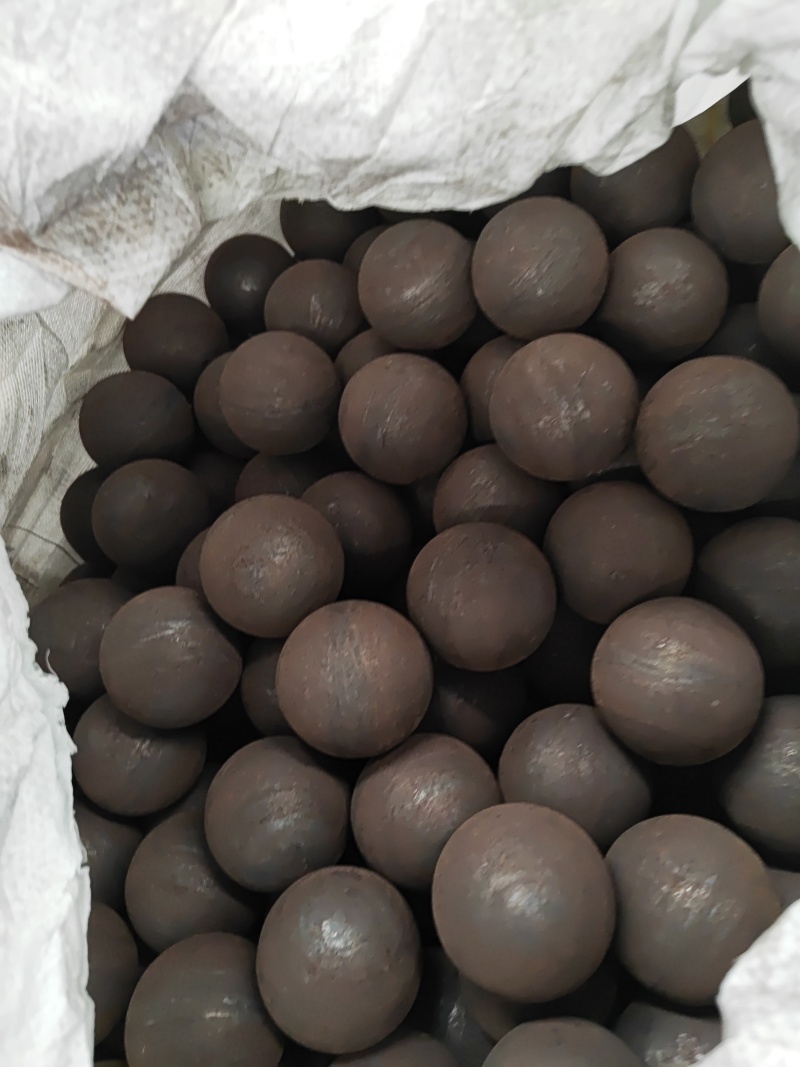
Packaging questions are equally important. Grinding balls are heavy, hard, and handled in bulk, but that does not mean packaging can be treated casually. Poor packaging can lead to damaged bags, loose products, handling difficulties, moisture exposure, and safety concerns during loading, transport, and storage. For export orders, the packaging method should match the product size, order quantity, transport mode, and customer's unloading conditions.
Buyers often ask whether forged grinding balls are packed in woven bags, ton bags, steel drums, or customized containers. They also ask about weight per package, labeling, moisture protection, and pallet requirements. The correct choice depends on the destination and the customer's material handling system. A mining site may prefer large ton bags for forklift handling, while a distributor may require smaller bags with clear labels for resale and inventory control. Cement plants and power stations may have their own storage and feeding arrangements.
Packaging Questions for a Forged Grinding Balls Factory
- What package types are available for different ball diameters and order quantities?
- What is the standard weight per bag or container, and can it be customized?
- How are products protected against moisture, contamination, and damage during sea transport?
- What labels, marks, and shipping documents are included?
- Can packaging be designed for forklift handling, crane lifting, or manual unloading?
- Are samples and inspection access available before final packing?
At ALLSTAR, quality inspection is carried out throughout the manufacturing process. Samples are taken from each production batch for inspection. After heat treatment, finished products undergo further testing to check whether they meet the required quality and performance specifications. Packaging should follow only after the products have passed the relevant checks. This sequence is important because export packaging is not a way to hide quality problems. It is a way to preserve the value of products that have already been controlled and verified.
Connecting Lead Time, Packaging, and Quality Control
Experienced buyers understand that lead time and packaging are connected to manufacturing discipline. A factory that controls raw materials, production processes, and final inspection can plan shipments with greater confidence. ALLSTAR operates both air hammer forged and hot-rolling production processes for forged products. For cast products, it uses an advanced coated-sand shell molding process and automated production lines to support consistent manufacturing quality. These process choices influence production stability, batch consistency, and the ability to meet delivery commitments.
The company also maintains an ISO 9001 Quality Management System and supports product quality verification through professional testing and third-party inspection services, including SGS, BV, and TÜV. For international customers, third-party inspection can be arranged before shipment, giving buyers additional confidence in specifications, packing, and documentation. When a buyer asks a forged grinding balls factory about lead time and packaging, the strongest answer is one that can be supported by records, inspections, and clear communication at each stage.
Application Matters When Planning Supply
ALLSTAR grinding media serve a wide range of mining operations, including gold, copper, platinum, iron ore, nickel, phosphate, and lead-zinc mines, as well as cement plants and power stations. Different grinding media are selected according to mill type, material characteristics, and operating conditions. Larger grinding media are generally used in the first chamber of a mill for coarse grinding and breaking larger particles of ore or clinker. Smaller grinding media are commonly used in the second chamber for fine grinding.
In mining applications, forged grinding balls are commonly selected for wet grinding, while cast grinding balls are often used in dry grinding operations. High chrome cast grinding balls are widely used in cement plants and power stations, and grinding rods are mainly used in rod mills for mineral processing. Because application affects product selection, it also affects lead time and packaging. A factory needs to know the mill type, ore or clinker characteristics, expected consumption, and receiving conditions before confirming the supply plan.
Proven Performance Supports Reliable Supply
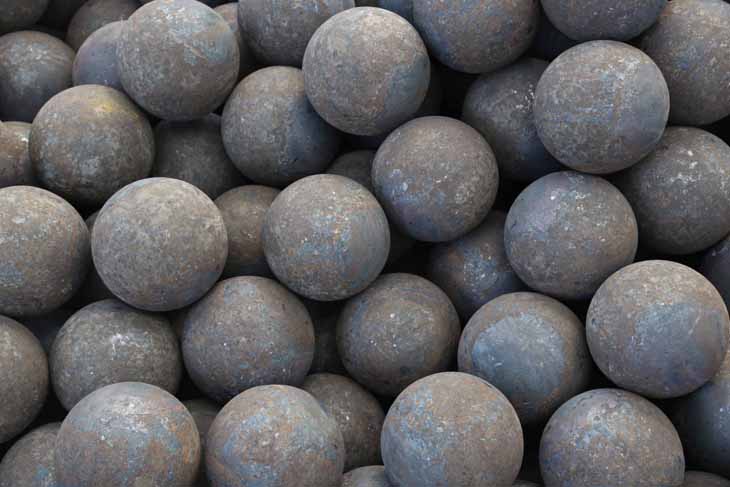
Lead time and packaging are practical concerns, but they are ultimately connected to product performance. At Pinto Valley Mine in the USA, ALLSTAR high-chrome grinding balls were tested in a comparative trial lasting nearly six months. One ball mill used ALLSTAR products, while the other used another manufacturer's products. ALLSTAR grinding-ball consumption remained stable at 0.56 to 0.59 kg per tonne of run-of-mine ore, with a breakage rate of only 0.2 percent. The other supplier's consumption reached 0.68 kg per tonne, with a breakage rate close to 3 percent. The mill using the competitor's products also recorded more than 70 tonnes per hour lower output and over 5 percentage points lower grinding fineness.
After the trial, the customer replaced the grinding balls in the second mill with ALLSTAR products. Daily processing capacity subsequently reached 53,000 tonnes, exceeding the designed capacity of 50,000 tonnes by 3,000 tonnes. The mine has purchased and used more than 48,000 tonnes of ALLSTAR grinding media. In the cement industry, Turkey YD Madencilik operated a combined roller press and ball mill grinding system. After replacing the grinding balls in both mills with ALLSTAR products in 2016, combined grinding-ball consumption dropped from 84.80 g/t in 2016 to 31.93 g/t in 2018. The reduction was sustained, reaching 25.66 g/t in 2025, approximately 69.7 percent lower than the 2016 baseline.
These results help explain why buyers ask detailed questions about supply. Lower consumption, reduced breakage, improved grinding efficiency, and stable mill operation depend on consistent product quality. A factory that can deliver that quality consistently is better positioned to answer lead-time and packaging questions responsibly. ALLSTAR combines manufacturing expertise, strict quality control, and practical application experience to deliver solutions that create measurable economic value. Its business philosophy is to manufacture high-quality products, be a reliable supplier, and build long-term and sustainable partnerships with clients.
Conclusion
For international buyers, questions about lead time and packaging are not secondary details. They reveal whether a forged grinding balls factory can plan production, control quality, protect products during transport, and support long-term supply. Shandong Allstar Grinding Ball Co., Ltd. addresses these questions through established manufacturing experience, clear product specifications, batch inspection, export-oriented packaging options, and a commitment to reliable partnerships. Buyers who ask precise questions and request documented answers can compare suppliers more effectively and reduce risk from inquiry to delivery.


